For the past decade, Chief Supply Chain Officers (CSCOs) and Logistics Directors have invested billions of capital into supply chain visibility tools. The industry built massive digital control towers, integrated millions of Internet of Things (IoT) sensors across shipping containers, and deployed highly complex predictive algorithms to tell us exactly when, where, and how a disruption was going to happen.
But visibility without autonomy is just a faster way to watch a crisis unfold.
When a sudden geopolitical shift halts cross-border transit, or a localized weather anomaly shuts down a critical port in the South China Sea, a predictive AI will instantly turn your executive dashboard red and send an urgent alert to your logistics team. However, that system still requires a human to wake up, interpret the data, call freight brokers, negotiate new spot rates, manually reroute the shipment, and update the downstream retail partners. In the high-velocity world of Fast-Moving Consumer Goods (FMCG), the 12 to 24 hours lost in that human-driven reaction time is where profit margins evaporate, working capital gets trapped, and consumer trust is broken.
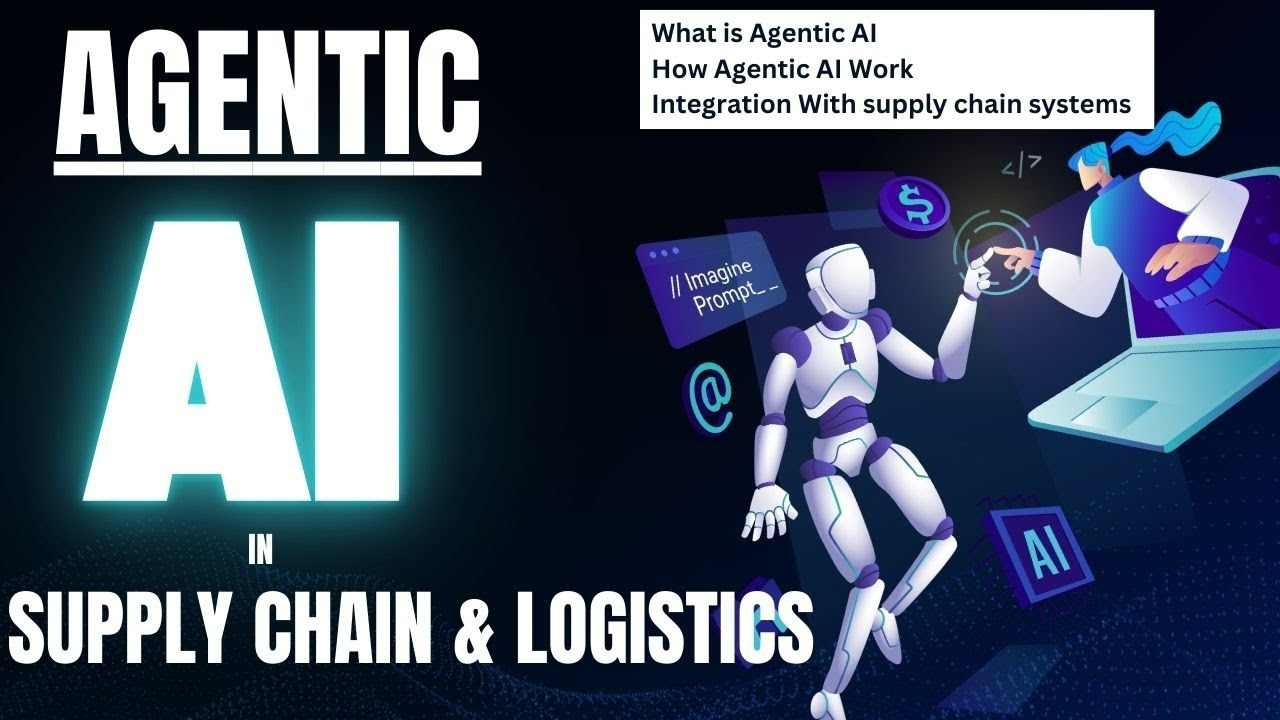
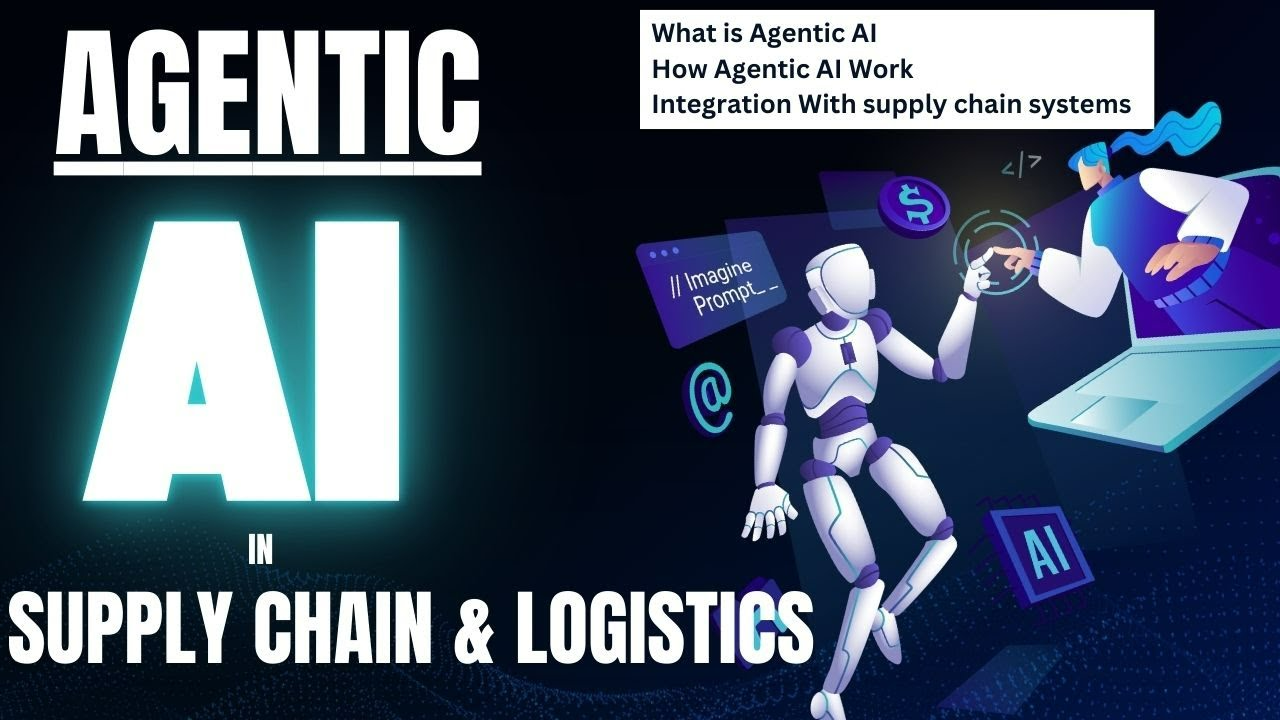
As we stand on the precipice of THAIFEX – Anuga Asia 2026, the industrial conversation has officially shifted. The frontier of FMCG logistics technology is no longer about predicting the future; it is about autonomously correcting it in real-time. Welcome to the era of the Agentic AI supply chain.
The Evolution of Supply Chain Intelligence
To fully grasp the magnitude of Agentic AI supply chain, we must trace the rapid evolution of supply chain technology over the last twenty years and recognize why legacy systems are failing under the weight of modern global trade.
- Era 1: The Reactive Supply Chain (Pre-2010): Operations were managed via static spreadsheets and rudimentary Enterprise Resource Planning (ERP) systems. Disruptions were only discovered when a container failed to arrive at the destination port or a warehouse reported a stockout. The response was entirely manual, highly inefficient, and reliant on retrospective data.
- Era 2: The Visible Supply Chain (2010–2020): The introduction of cloud computing and IoT allowed companies to track goods in transit. We finally knew exactly where the container was globally, but we had absolutely no localized ability to change its trajectory once it was on the water.
- Era 3: The Predictive Supply Chain (2020–2024): Machine learning models began analyzing historical data to forecast delays. The system could warn a CSCO that a disruption had a 75% probability of occurring next week based on weather patterns or port congestion indices. Yet, the burden of execution still fell heavily on human operators to mitigate the forecasted risk.
- Era 4: The Agentic Supply Chain (2025–Present): AI systems now possess the authorization, the API integrations, and the digital infrastructure to act independently. They do not just flag a bottleneck; they evaluate alternative solutions, interact directly with third-party carrier software, and execute the physical resolution without requiring human intervention.
Agentic AI operates as a highly skilled, localized digital colleague. It is authorized to make financial and logistical decisions within strict, pre-set corporate guardrails, transforming static digital infrastructure into self-healing logistics.
The Paradigm Shift: Predictive vs. Agentic Intelligence
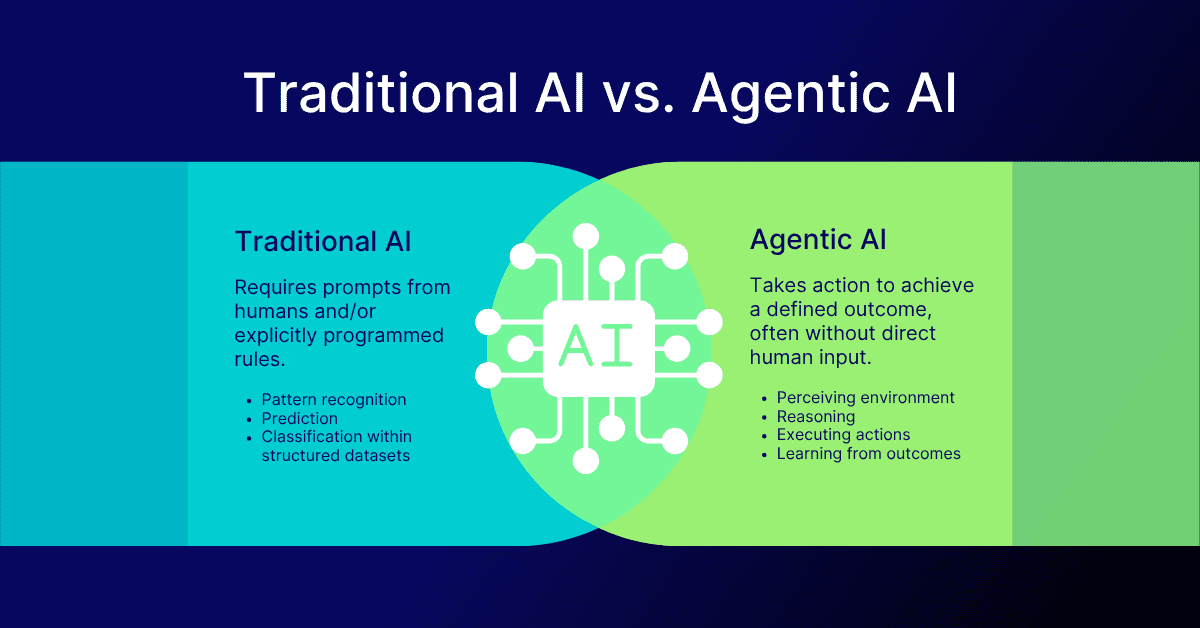
The distinction between predictive and agentic systems is not merely a software update; it is a fundamental re-engineering of how a logistics network operates.
A predictive system operates on a “read-only” basis regarding the physical world. It reads the data, processes it, and generates a report. Its ultimate output is information.
An agentic system operates on a “read-and-write” basis. Its ultimate output is action.
To achieve this, Agentic AI supply chain utilizes Large Action Models (LAMs) rather than just Large Language Models (LLMs). While an LLM can parse a complicated customs document, a LAM can actively log into a freight broker’s portal, input the alternative routing coordinates, authorize the payment via integrated financial APIs, and secure the booking. This leap from advisory software to executive software is the defining technological breakthrough of 2026.
The Anatomy of a Self-Healing Architecture
How does this theoretical architecture function in practice for a multinational brand distributing across the highly fragmented, complex markets of Southeast Asia?
Consider a standard, yet critical, supply chain shock: A localized labor strike threatens to delay a shipment of premium, short-shelf-life functional beverages bound for a major retail hub in Bangkok. Under a legacy system, the inventory becomes stalled, the cold-chain integrity is compromised, working capital is trapped in transit, and retail shelves go empty—triggering the dreaded “bullwhip effect” upstream as nervous retailers over-order to compensate.
Under M-Pacific’s Agentic AI supply chain framework—which we refer to internally as the Cognitive Orchestrator—the system “heals” the breach through a seamless, autonomous sequence:
1. Autonomous Threat Resolution and Financial Calculus
The precise moment the AI detects the delay via integrated port APIs, it runs an immediate financial calculus. It calculates the exact financial impact of a prolonged stockout (factoring in lost daily sales, retail Service Level Agreement penalties, and brand damage) versus the immediate cost of expedited rerouting.
2. Automated Freight Routing
Without waiting for a Monday morning management meeting, the AI interfaces directly with regional carrier APIs and spot-market ledgers. It identifies available capacity on alternative vessels or evaluates emerging multimodal geometries to bypass the maritime chokepoint entirely.
3. Dynamic Rate Renegotiation
The Agentic AI executes the automated freight routing by autonomously negotiating rates with these alternative carriers. Because it can process tens of thousands of pricing data points, historical rate averages, and real-time capacity constraints in milliseconds, it secures the most cost-effective alternative route instantly. It bypasses human emotional negotiation and operates purely on algorithmic efficiency.
4. Downstream Orchestration and WMS Integration
Simultaneously, the AI updates the local Warehouse Management System (WMS) in Bangkok. It adjusts labor scheduling for the receiving dock, updates the expected delivery windows, and sends automated, transparent notifications to downstream retail partners.
The disruption is identified, solved, legally bound, and fully executed before the human logistics team has even arrived at the office.
Eradicating the API Bottleneck: Autonomous Cross-Border Execution
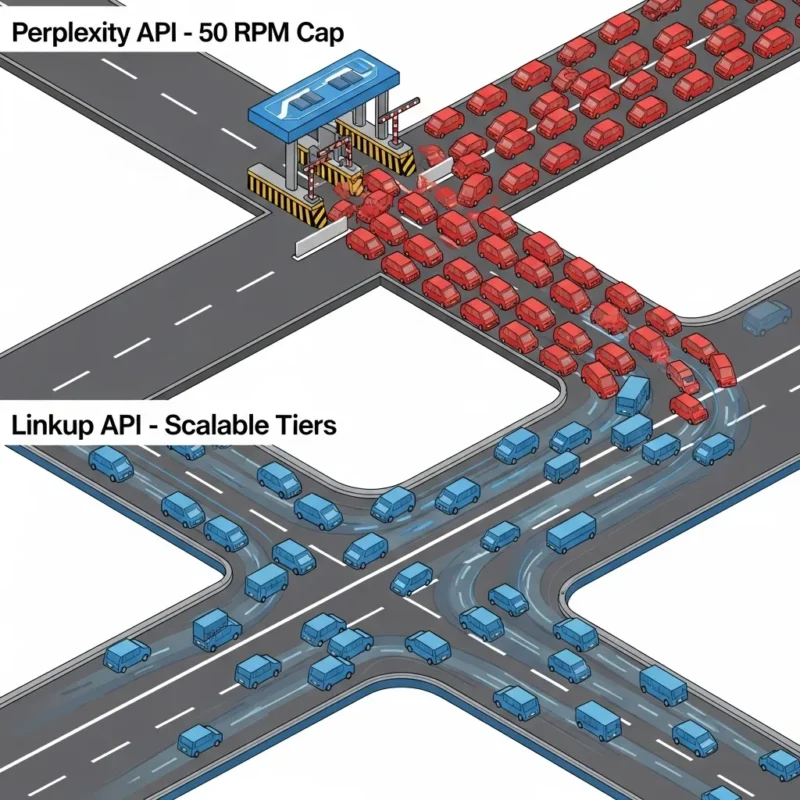
For Chief Technology Officers (CTOs) and CSCOs operating in Southeast Asia, the greatest barrier to regional supply chain velocity is not physical infrastructure; it is digital fragmentation.
The Association of Southeast Asian Nations (ASEAN) is not a standardized digital bloc. A multinational FMCG brand must navigate a labyrinth of disconnected systems: modern deep-water port software in Singapore, legacy customs portals in Vietnam, and rural third-party logistics (3PL) dispatch spreadsheets in Thailand.
Historically, attempting to unify these systems required millions of dollars in custom API middleware and Electronic Data Interchange (EDI) setups. When those direct integrations inevitably failed or a local vendor changed their software, human data-entry clerks had to bridge the gap, manually downloading PDFs from one system and retyping the data into another.
Agentic AI entirely eradicates this digital bottleneck through the deployment of Large Action Models (LAMs) and autonomous system navigation.
Unlike legacy predictive software, M-Pacific’s Cognitive Orchestrator does not require clean, perfectly integrated APIs to function. Because the Agentic AI can “see” and “interact” with digital interfaces exactly like a human operator, it bridges the digital divide across disparate regional networks seamlessly:
- Unstructured Data Extraction: If a regional carrier emails a scanned, unstructured PDF bill of lading, the AI reads it, comprehends the context, and extracts the critical transit data instantly.
- System-Agnostic Execution: The AI can autonomously log into a localized, unconnected rural customs portal in a foreign language, map the required fields, and submit the translated clearance documents without a pre-existing API bridge.
- Vendor Fluidity: Brands are no longer locked into using specific carriers simply because their IT systems are compatible. The AI can interact with any vendor’s software on the fly, allowing operations teams to pivot to faster, cheaper regional partners immediately.
By deploying Agentic AI, M-Pacific allows multinational brands to operate across Southeast Asia’s highly fragmented digital landscape as if it were one unified, frictionless platform. It shifts the burden of regional compliance and data translation away from your human capital, allowing your digital infrastructure to adapt to the market rather than forcing the market to adapt to your software.
Navigating Southeast Asian Fragmentation and “Dirty Data”
Southeast Asia presents a unique proving ground for Agentic AI supply chain. The Association of Southeast Asian Nations (ASEAN) is not a monolith; it is a highly fragmented geographic, regulatory, and infrastructural landscape. From the deep-water ports of Vietnam to the millions of “traditional trade” neighborhood shops in Thailand and Indonesia, the variables are staggering.
Legacy algorithms struggle here because they rely on clean, standardized, first-party data. M-Pacific’s Agentic AI is designed specifically for this “dirty data” environment. It utilizes hyper-localized market intelligence to navigate varying customs regulations, regional holidays (which cause massive demand spikes and labor shortages), and highly unpredictable traffic densities in ultra-urban centers.
Furthermore, our AI is deeply integrated into the shifting physical infrastructure of the region. A prime example is the ongoing development of the Thai Land Bridge. While human planners often default to familiar, traditional maritime routes through the Malacca Strait, the Agentic AI constantly evaluates the entire road-rail-sea geometry of the region. If the algorithm determines that unloading cargo on the Andaman Sea coast, moving it via rail across the Thai peninsula, and reloading it in the Gulf of Thailand is 12 hours faster and 4% cheaper on a given Tuesday, it will execute that multimodal shift automatically. It views regional infrastructure not as static routes, but as a dynamic, programmable grid.
ESG Reporting and the Sustainable Supply Chain
Beyond pure capital efficiency, Agentic AI is becoming the critical tool for corporate sustainability and compliance. As global F&B brands face mounting regulatory pressure to report and reduce their Scope 3 emissions (the indirect emissions that occur in a company’s value chain), logistics operations are under a microscope.
Traditional routing software optimizes for two variables: time and cost. Agentic AI introduces a third weighted variable: carbon output.
When M-Pacific’s Cognitive Orchestrator evaluates alternative freight routes, it pulls live data on vessel fuel efficiency, port congestion idling times, and the carbon footprint of multimodal rail versus diesel trucking. The AI can be programmed with an ESG guardrail. For example, the CSCO can instruct the system:
“Optimize for the lowest cost route, provided it does not exceed our quarterly carbon emission threshold.”
Furthermore, the system automatically logs the exact emissions of every resolved disruption, providing perfectly clean, auditable “Green Data” for corporate ESG reporting. It transforms sustainability from a manual reporting headache into an automated, systemic standard.
Overcoming the Trust Barrier: The “Centaur” Model
The primary hesitation among conservative executives regarding Agentic AI is the “Trust Barrier.” Handing over corporate authority to an algorithm to negotiate freight rates, sign digital contracts, and reroute multi-million-dollar shipments feels inherently risky.
However, the architecture of 2026 mitigates this risk entirely through strict, programmable financial guardrails. Agentic systems operate within a defined matrix of authority. A CSCO does not give the AI a blank check; they give it a playbook.
For example, the Cognitive Orchestrator can be programmed with a rule stating:
“The AI is authorized to spend up to a 15% premium on standard freight rates to ensure On-Time In-Full (OTIF) delivery for Tier 1 clients. If the required premium exceeds 15%, or if the alternative route requires crossing a sanctioned border, the AI must halt execution and immediately escalate the decision to the Head of Operations.”
This ensures that the AI handles 95% of standard logistical friction autonomously, while human executives retain absolute control over extreme, high-cost anomalies. It is a system built on robust risk mitigation, not risk acceleration.
This leads to the ultimate organizational evolution: the Centaur Model. In chess, a “Centaur” is a human player paired with an AI program—a combination that consistently defeats both solo humans and solo algorithms. In supply chain management, the Centaur Model pairs the strategic intuition and relationship-building skills of a human executive with the mathematical precision and infinite processing speed of the Agentic AI.
By removing the “human-in-the-loop” bottleneck for standard disruption management, logistics teams are freed from the exhausting cycle of reactive firefighting. Your logistics directors are elevated. They can finally focus exclusively on strategic growth, long-term vendor relationship building, product innovation, and high-level market expansion.
See the Cognitive Orchestrator Live at THAIFEX 2026
The theoretical application of Agentic AI is fascinating, but witnessing it execute live global trade is an entirely different experience. It is the difference between reading a whitepaper about the future and holding that future in your hands.
As the strategic vanguard of the VHB Group, M-Pacific is bringing this technology out of the server room and onto the exhibition floor. Next week, at the landmark 19th edition of THAIFEX – Anuga Asia 2026 (May 26th – 30th) at IMPACT Muang Thong Thani in Bangkok, we are inviting industry leaders to move beyond the industry buzzwords. We invite you to experience the tangible, operational reality of autonomous trade orchestration.
We are not just showcasing FMCG products; we are showcasing the very nervous system of modern global commerce.
The THAIFEX Hook: Do you want to see our Cognitive Orchestrator in action? Visit the M-Pacific Analytical Interface at Booth 2W23 in Hall 2. You will be able to watch our Agentic AI navigate live, anonymized trade routes, autonomously resolve logistical bottlenecks, and optimize FMCG distribution across Southeast Asia in real-time.
Stop relying on retrospective dashboards that only tell you what went wrong yesterday. Stop losing margin to the inefficiencies of human reaction time, and stop trapping your working capital in massive safety stock buffers.
The industry is gathering in Bangkok in just a few days. The brands that will dominate the remainder of the decade are those that choose to automate their resilience. Join us at Booth 2W23 to discover how M-Pacific and VHB Group are orchestrating the future of global trade, today. Secure your competitive advantage before the rest of the market catches up.