If you are looking to scale your import, retail, or distribution operations, understanding the exact Buldak Ramen Bulk Facts is the single most important step to secure high margins and keep up with relentless consumer demand. Samyang Foods’ fiery instant noodle lineup has transitioned from a viral internet sensation into one of the most profitable, highly sought-after snacks in the global food sector today. Because of this massive global momentum, buying in bulk requires an intimate knowledge of supply chain logistics, packaging configurations, and import compliance.
Whether you manage a multi-location supermarket chain, a specialty Asian grocery store, or a high-volume e-commerce storefront, navigating bulk orders of these spicy noodles can be complex. In this comprehensive guide, we unpack the critical logistics data, pallet specifications, and consumer trends that define how to successfully source, store, and sell Samyang Buldak in large quantities.
Table of Contents
- Crucial Buldak Ramen Bulk Facts for Retailers and Distributors
- Understanding Buldak Ramen Bulk Facts Regarding Flavor Popularity
- Buldak Ramen Bulk Facts: Packaging, Shipping, and Logistics
- Key Buldak Ramen Bulk Facts for Storage and Shelf Life
- Buldak Product Configurations Comparison
- Frequently Asked Questions
Crucial Buldak Ramen Bulk Facts for Retailers and Distributors
When diving into bulk purchasing, the first detail to grasp is the manufacturing origin and wholesale scaling requirements. All authentic Samyang Buldak noodles are manufactured directly in South Korea by Samyang Foods. Sourcing these products in large quantities requires buyers to work either directly with authorized global distributors or directly through verified export agents to guarantee product authenticity and prevent counterfeit stock.

For high-volume business owners, a standard wholesale order of Buldak Ramen begins at the pallet level. A single pallet of standard Samyang Buldak bag noodles typically contains 40 to 60 master cartons, depending on the specific pallet configuration and container limits. Each master carton usually holds 8 multipacks, with each multipack containing 5 individual ramen packages. This translates to 40 individual packs per carton, making a full pallet consist of between 1,600 and 2,400 individual units. Ensuring that your warehouse is equipped to handle standard industrial pallet footprints is vital before placing a purchase order.

Another major factor in bulk procurement is import compliance and labeling. Different countries have highly specific food safety requirements. For instance, the European Union (EU) and the United States Food and Drug Administration (FDA) have strict regulations regarding artificial colorings, food additives, and meat-derived flavorings. Samyang manufactures specific “export version” packages that comply with local regulatory standards, such as using artificial chicken flavoring instead of actual poultry extracts to bypass strict meat import restrictions. Purchasing the correct regional SKU is a critical bulk fact that prevents costly custom delays and product seizures.
Understanding Buldak Ramen Bulk Facts Regarding Flavor Popularity
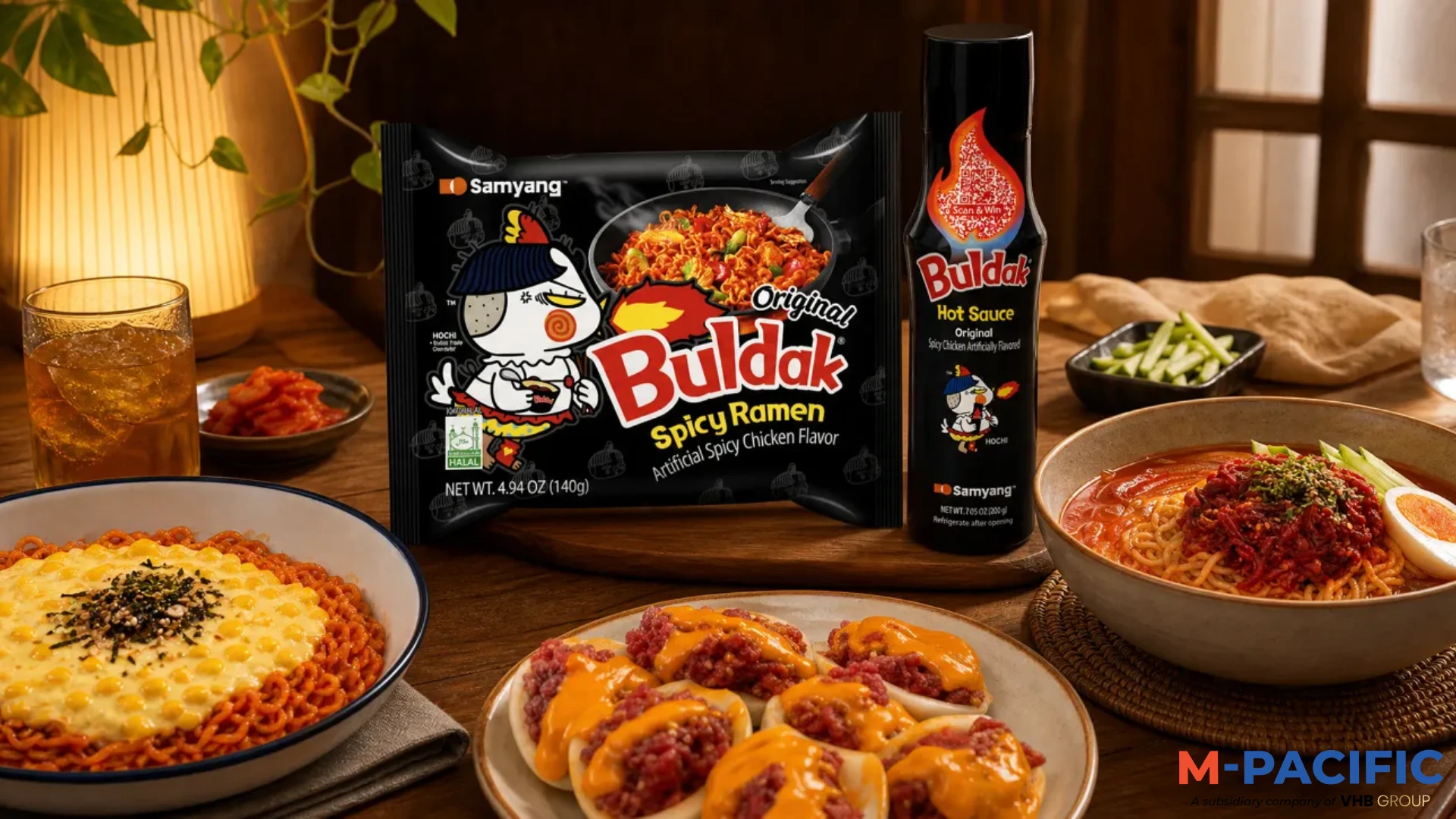
To maximize inventory turnover, wholesale buyers must understand which flavors command the highest market velocity. While the Original Hot Chicken Flavor (Black Packet) and the 2x Spicy Hot Chicken Flavor (Red Packet) remain staple sellers worldwide, consumer trends have shifted heavily toward creamy, cheesy, and fusion-style variations.
Specifically, the Carbonara flavor (Pink Packet) and the Cheese flavor (Yellow Packet) have achieved legendary status among younger demographics. According to retail movement data, the Carbonara variation often matches or even surpasses the sales velocity of the Original flavor in Western markets. Distributors should allocate their inventory ratios carefully—failing to secure enough Carbonara and 2x Spicy inventory while over-ordering niche flavors like Curry or Stew Type can lead to stagnant warehouse capital and increased storage overhead.

Buldak Ramen Bulk Facts: Packaging, Shipping, and Logistics
Shipping instant noodles in bulk is primarily an exercise in managing volumetric weight versus actual physical weight. Because instant noodles are lightweight but relatively bulky, shipping containers and transport vehicles will typically “cube out” (reach maximum volume capacity) long before they “weigh out” (reach maximum weight capacity). Understanding these spatial Buldak Ramen Bulk Facts allows logistics managers to design cost-efficient shipping strategies.

For ocean freight, a standard 20-foot dry container (TEU) can accommodate approximately 800 to 900 master cartons when floor-loaded, or roughly 10 standard pallets if palletized. A 40-foot high-cube container (HQ) can hold up to 1,800 to 2,000 master cartons floor-loaded. While floor-loading maximizes the total quantity of product per shipment and lowers per-unit ocean freight costs, it drastically increases unloading times and labor costs at your receiving warehouse. Conversely, palletized shipments can be unloaded in a fraction of the time using forklifts, but they reduce the overall carton capacity of the container by roughly 15% to 20% due to pallet dimensions and height constraints.
To ensure high quality upon arrival, it is essential to monitor shipping temperatures. While instant noodles are shelf-stable, prolonged exposure to extreme heat (exceeding 40°C or 104°F) inside steel containers during peak summer transit can degrade the quality of the noodle frying oil, leading to rancidity, stale aromas, and shortened shelf life. When shipping across tropical or equatorial routes, utilizing climate-controlled containers or arranging shipments during cooler months is highly recommended by logistics experts.
Key Buldak Ramen Bulk Facts for Storage and Shelf Life
Once your bulk order arrives at the distribution center, maintaining proper environmental control is essential to preserve the product’s integrity. Standard Samyang Buldak bag noodles have an official shelf life of approximately 12 months from the date of manufacture. However, cup and bowl variations, which utilize slightly different packaging materials and seal types, may have a shorter declared shelf life of 6 to 9 months.
To prevent premature spoilage and maintain premium quality, warehouse managers should implement a strict First-In, First-Out (FIFO) inventory management system. Store the pallets in a cool, dark, dry environment with relative humidity levels kept below 60%. Excess humidity can weaken the cardboard master cartons, leading to stack collapse and physical damage to the individual noodle bricks. Additionally, instant noodles are highly susceptible to pest infestations; therefore, keeping pallets elevated off the ground on heavy-duty racking and maintaining a rigorous pest-control protocol is mandatory for food-grade warehousing.
Buldak Product Configurations Comparison
Selecting the right product format is essential for matching your local market’s retail habits. Below is a detailed breakdown of the logistical specifications for the three primary packaging formats of Samyang Buldak Ramen.
| Format | Units Per Master Carton | Net Weight per Unit | Best Suited For | Shelf Life |
|---|---|---|---|---|
| Bag Noodles (5-Pack) | 40 Units (8 Multipacks of 5) | 140g | Supermarkets, Family Buyers, Home Cooking | 12 Months |
| Big Bowl Cup | 16 Cups | 105g | Convenience Stores, Universities, On-the-Go Consumers | 9 Months |
| Small Cup | 30 Cups | 70g | Vending, Schools, Budget and Snack Retailers | 6-9 Months |
By assessing this logistical data, importers can calculate their exact container space requirements and determine the landed cost per unit. For deeper analytical research on global instant noodle consumption statistics, you can refer to the World Instant Noodles Association (WINA), which tracks worldwide demand curves.
Frequently Asked Questions
To help you further navigate the intricacies of bulk sourcing, we have compiled answers to some of the most common questions asked by wholesale buyers and importers.
How do I verify the authenticity of a bulk supplier?
Always request official distribution agreements or direct certificates of origin issued by Samyang Foods. Be cautious of prices that fall significantly below standard market wholesale rates, as counterfeit noodles or unauthorized grey-market stocks are common risks in international trade.
Are there custom import duties for Korean ramen?
Yes, import duties vary widely based on your country\’s trade agreements with South Korea. Many countries have Free Trade Agreements (FTAs) that significantly reduce or eliminate tariffs on processed food products, but you should consult with a certified customs broker to determine the exact HS Code and duty rates applicable to your region.
Conclusion & Call to Action
In conclusion, mastering the operational logistics, flavor preferences, and packaging specifications associated with Samyang products is the absolute key to scaling your business. By leveraging these essential Buldak Ramen Bulk Facts, you can streamline your procurement, optimize storage, and ensure your business remains highly profitable. Ensuring you have an efficient logistics plan, selecting the correct regional SKUs, and balancing your inventory ratios according to flavor demands will set your business up for long-term retail success.
Ready to source high-volume instant noodles and premium products for your retail operations? Contact our international supply team today to request a custom quote, analyze container shipping schedules, and secure reliable supply chains for your business!