Understanding the Bulk Nutella Spread Origin is essential for wholesale buyers, B2B distributors, and culinary businesses looking to secure high-quality inventory in the global market. As one of the most iconic sweet snacks in the world, Nutella has grown from a regional post-war solution in Italy into a multi-billion-dollar global phenomenon. For bulk buyers, knowing exactly where your supply comes from is not just a matter of curiosity—it impacts taste profiles, texture consistency, regulatory compliance, and overall shipping logistics.
Whether you are sourcing containers for retail distribution or manufacturing bulk bakery goods, the origin of your hazelnut spread dictates its ingredient ratios and formulation standards. In this comprehensive guide, we will unpack the history, geographic manufacturing hubs, and chemical differences across global production sites so you can make informed procurement decisions.
Table of Contents
- The History of Bulk Nutella Spread Origin
- Global Manufacturing Hubs and Sourcing Coordinates
- Why Bulk Nutella Spread Origin Matters for B2B Sourcing
- Italian vs. German Production in Bulk Nutella Spread Origin
- Ingredient Sourcing and Sustainable Logistics
- Technical Comparison: EU vs. US Specifications
- Frequently Asked Questions
- Conclusion & Wholesale Inquiries
The History of Bulk Nutella Spread Origin
The definitive Bulk Nutella Spread Origin traces back to Alba, a small town in the Piedmont region of northern Italy, shortly after World War II. In the 1940s, cocoa was highly rationed and prohibitively expensive due to wartime shortages. Pietro Ferrero, a pastry maker and founder of the Ferrero Group, turned to a local agricultural abundance: hazelnuts.
By blending sweet hazelnuts with a small amount of cocoa and cocoa butter, Ferrero created a paste originally known as Giandujot (a solid loaf) and later refined it into a spreadable cream named Supercrema. In 1964, Pietro’s son, Michele Ferrero, modified the recipe to improve its spreadability and rebranded the product as “Nutella”—combining the English word “nut” with the Italian suffix for sweet “ella”. This historic origin in Alba remains the spiritual and operational anchor of the brand, though bulk distribution has scaled to every continent today.
Global Manufacturing Hubs and Sourcing Coordinates
While the cultural origin remains firmly Italian, the modern supply of bulk Nutella is decentralized across several high-capacity facilities globally. This regional diversification is crucial for wholesale procurement networks looking to optimize transit times and import duties.
Today, Ferrero operates dozens of factories worldwide. However, the primary sources for bulk retail and industrial-grade Nutella are concentrated in:
- Alba, Italy: The primary European hub supplying premium retail jars and bulk catering buckets (typically 3kg and 5kg formats) across Southern Europe and select global export lines.
- Stadtallendorf, Germany: The largest manufacturing plant in Europe, producing regional variations characterized by a matte finish and stiffer consistency, catering to Central and Northern Europe.
- Villers-Écalles, France: Responsible for producing a significant percentage of the French market’s supply, focusing highly on sustainable, localized logistics.
- Brantford, Ontario (Canada): The main hub for the North American market. If you are importing bulk Nutella into the United States or Canada, this facility is the most likely origin point for your shipments.
- Poços de Caldas, Brazil: Supplies the South American trade corridor, meeting Mercosur regulatory and labeling requirements.

Why Bulk Nutella Spread Origin Matters for B2B Sourcing
For casual consumers, a jar of Nutella is simply a delicious treat. However, for B2B distributors, commercial bakeries, and industrial food service operators, understanding the specific Bulk Nutella Spread Origin is vital for maintaining product consistency and consumer trust. Recipe formulations differ slightly based on the processing plant to align with localized food regulations, agricultural sourcing proximity, and regional consumer preferences.
For instance, European facilities utilize locally sourced beet sugar, whereas North American plants rely on cane sugar or a blend of sugar types. These minute differences influence how the spread reacts under extreme temperatures—such as baking, freezing, or whipping into pastry fillings. Furthermore, custom tariffs and import compliance documents vary significantly depending on whether your bulk containers originate from EU-compliant plants or American-based facilities.
Italian vs. German Production in Bulk Nutella Spread Origin
Within the wholesale market, there is an active debate regarding the sensory profiles of the different factory lines. Understanding the nuances of Italian vs. German Production in Bulk Nutella Spread Origin is essential when sourcing for highly discriminating retail markets or gourmet bakeries.
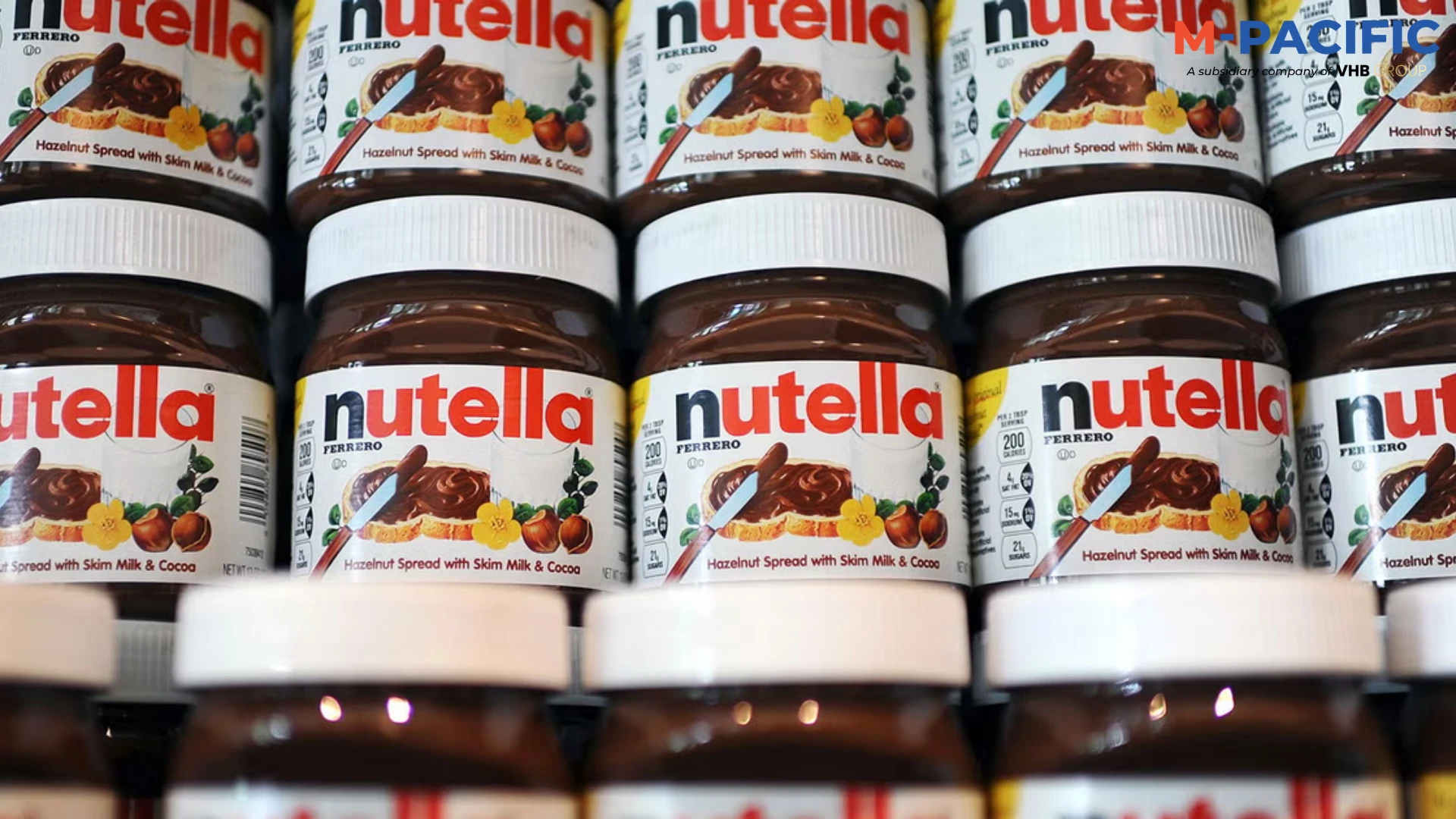
The Italian formulation (typically packaged in glass jars or standard white B2B tubs) is widely regarded as glossier, slightly sweeter, and runnier. This makes it highly compatible for drizzling over crepes, waffles, or filling delicate croissants. Conversely, the German formulation produced in Stadtallendorf tends to have a more matte appearance and a thicker, stiffer consistency. This structural difference is attributed to variations in local milk powder proteins and the fat crystallization process utilized in Northern European factories. Bakeries requiring a structural spread that won’t run under moderate ambient heat often prefer sourcing German-origin bulk stocks.
Ingredient Sourcing and Sustainable Logistics
A major aspect of identifying your bulk inventory’s origin is examining the trace elements of the supply chain. Nutella relies on a simple yet highly coordinated global ingredient network, which Ferrero manages through its Ferrero Farming Values (FFV) programs. Here is how key raw materials are funneled into bulk production lines:
- Hazelnuts: Primarily sourced from Turkey and Italy. Ferrero buys roughly 25% of the global hazelnut supply annually, ensuring strict quality control from orchard to processing line.
- Cocoa: Sourced mainly from West Africa (Ivory Coast and Ghana) as raw beans, then processed at Ferrero’s specialized cocoa-grinding plants.
- Palm Oil: Sourced sustainably from RSPO-certified plantations in Malaysia, Indonesia, and Brazil, ensuring the product maintains its iconic spreadability without separating.

Technical Comparison: EU vs. US Specifications
To assist your procurement team in choosing the correct inventory line, we have compiled a technical comparison of the primary global manufacturing lines.
| Specification Attribute | EU Origin (Alba / Stadtallendorf) | North American Origin (Brantford) |
|---|---|---|
| Primary Sweetener | Beet Sugar (locally sourced in Europe) | Cane Sugar & Beet Sugar blend |
| Texture & Viscosity | Silky & glossy (Italy); Thicker & matte (Germany) | Standardized medium spreadability |
| Common Packaging | Glass Jars, 3kg Tubs, 5kg Professional Buckets | Plastic Jars, 3kg Professional Tubs |
| Compliance Standards | EFSA Compliant, Non-GMO (EU standards) | FDA Compliant, Kosher Certification (OU) |
Conclusion & Wholesale Inquiries
Securing your inventory from a reputable and consistent supplier is the final step in leveraging the power of the Bulk Nutella Spread Origin. Understanding these sourcing parameters ensures that your food service business, wholesale distribution network, or gourmet pastry shop maintains premium consistency, exact recipe compliance, and reliable cost controls.
At M-Pacific, we specialize in high-capacity sourcing and distribution of world-leading confectioneries and sweet spreads. Contact our dedicated wholesale logistics team today to request origin certifications, spec sheets, and high-volume container pricing designed to scale your business operations efficiently.
Bulk Nutella Origin FAQ
Disclaimer: Unless otherwise stated, the images used in this article are the property of their respective owners. We do not claim ownership of any third-party images featured, and they are used here strictly for informational and educational purposes. If you are the copyright holder and wish to have an image removed, please contact us.