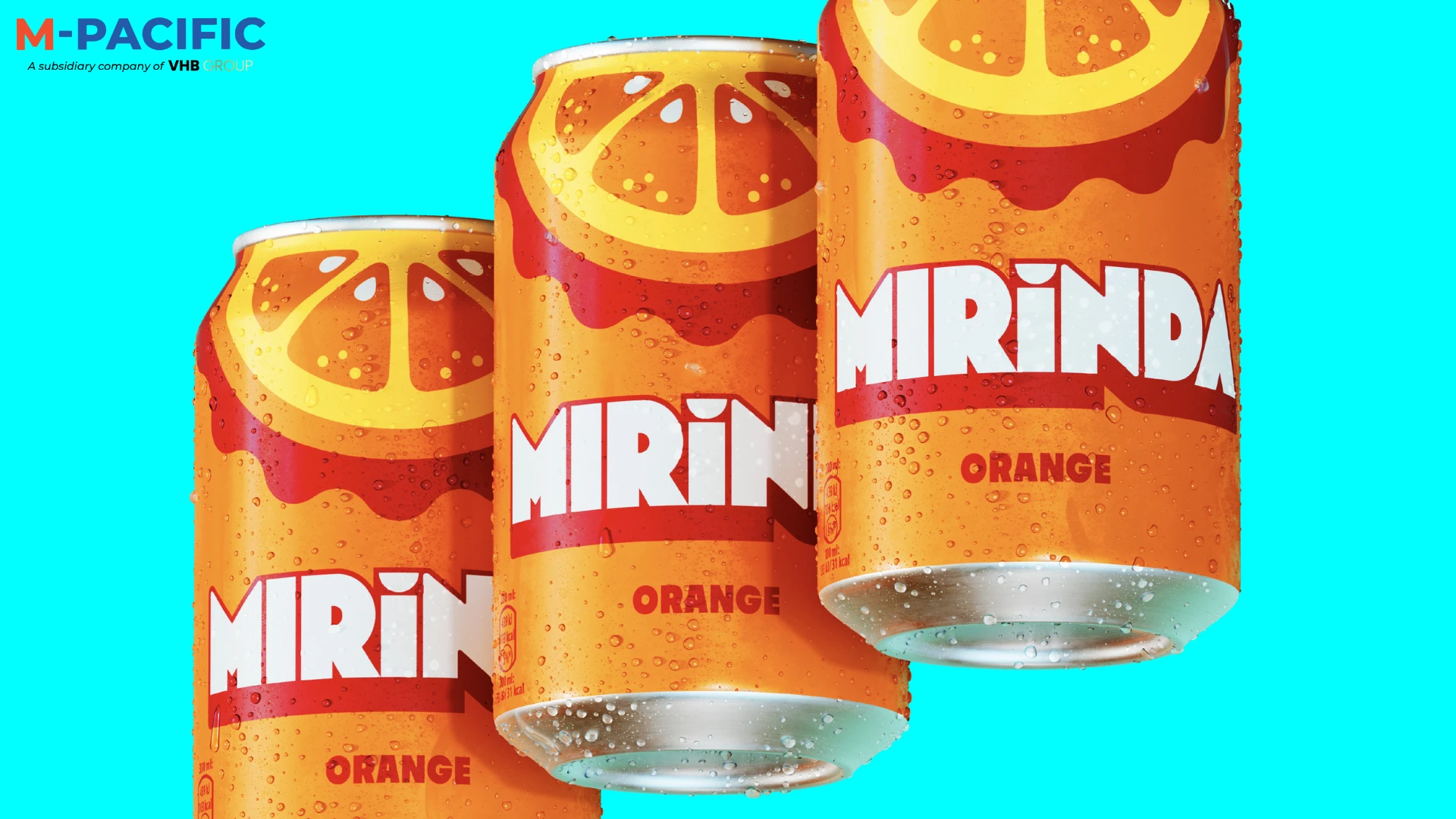
Sourcing Mirinda Soft Drink Wholesale inventory provides international B2B beverage distributors, supermarket chains, cash-and-carry wholesalers, and FMCG trading partners with a vibrant, high-velocity revenue engine in the carbonated soft drink (CSD) market. As the premier fruit-flavored carbonated beverage brand owned globally by PepsiCo, Mirinda represents an essential anchor brand for high-volume non-alcoholic beverage catalogs across international trade corridors.
For international B2B procurement managers, managing full container load (FCL) consignments of wholesale Mirinda soft drinks requires navigating complex supply chain dynamics—including regional bottling hub selection, fruit flavor segment profiling, container payload limits, sugar-tax compliance, parallel trade economics, and ocean freight temperature controls. This technical guide evaluates the operational, financial, and logistical protocols necessary to build a highly profitable distribution model.
Table of Contents
- Global Market Demand & Commercial Positioning of Wholesale Mirinda
- Product Portfolio Breakdown & Flavor Formula Dynamics
- Packaging Specifications, Container Payload Yields, and Floor-Loading Models
- B2B Sourcing Models: Franchise Bottlers vs. FMCG Consolidators
- Ocean Freight Logistics, Temperature Controls, and Payload Optimization
- B2B Landed Cost & Profitability Calculation Framework
- Import Compliance, Harmonized System Codes, and Customs Documentation
- Frequently Asked Questions (FAQ)

1. Global Market Demand & Commercial Positioning of Wholesale Mirinda
The global fruit-flavored carbonated beverage market continues to expand rapidly, with Mirinda maintaining a dominant market position across the Middle East, South Asia, Southeast Asia, Eastern Europe, and Latin America. Originally created in Spain in 1959 and acquired by PepsiCo in 1970, Mirinda serves as PepsiCo’s primary international competitor to Coca-Cola’s Fanta brand.
Adding Mirinda Soft Drink Wholesale stock to a B2B wholesale catalog delivers distinct commercial advantages:
- Pre-Sold Brand Equity: Massive international marketing investments by PepsiCo generate pre-existing consumer demand, minimizing promotional expenditures for regional wholesalers.
- High Cash Conversion Velocity: As a high-turnover FMCG staple, Mirinda stock achieves rapid inventory turnover in convenience chillers and hypermarket aisles, driving consistent working capital liquidity.
- Multi-Channel Distribution Breadth: Suitable for hypermarket retail, convenience forecourts, traditional trade bazaars, corporate office pantries, vending networks, and HoReCa venues.
2. Product Portfolio Breakdown & Flavor Formula Dynamics
Curating an optimal product mix requires selecting the right combination of Mirinda flavor variants tailored to destination market demographics and local regulatory frameworks:
Core Flavor Formulations
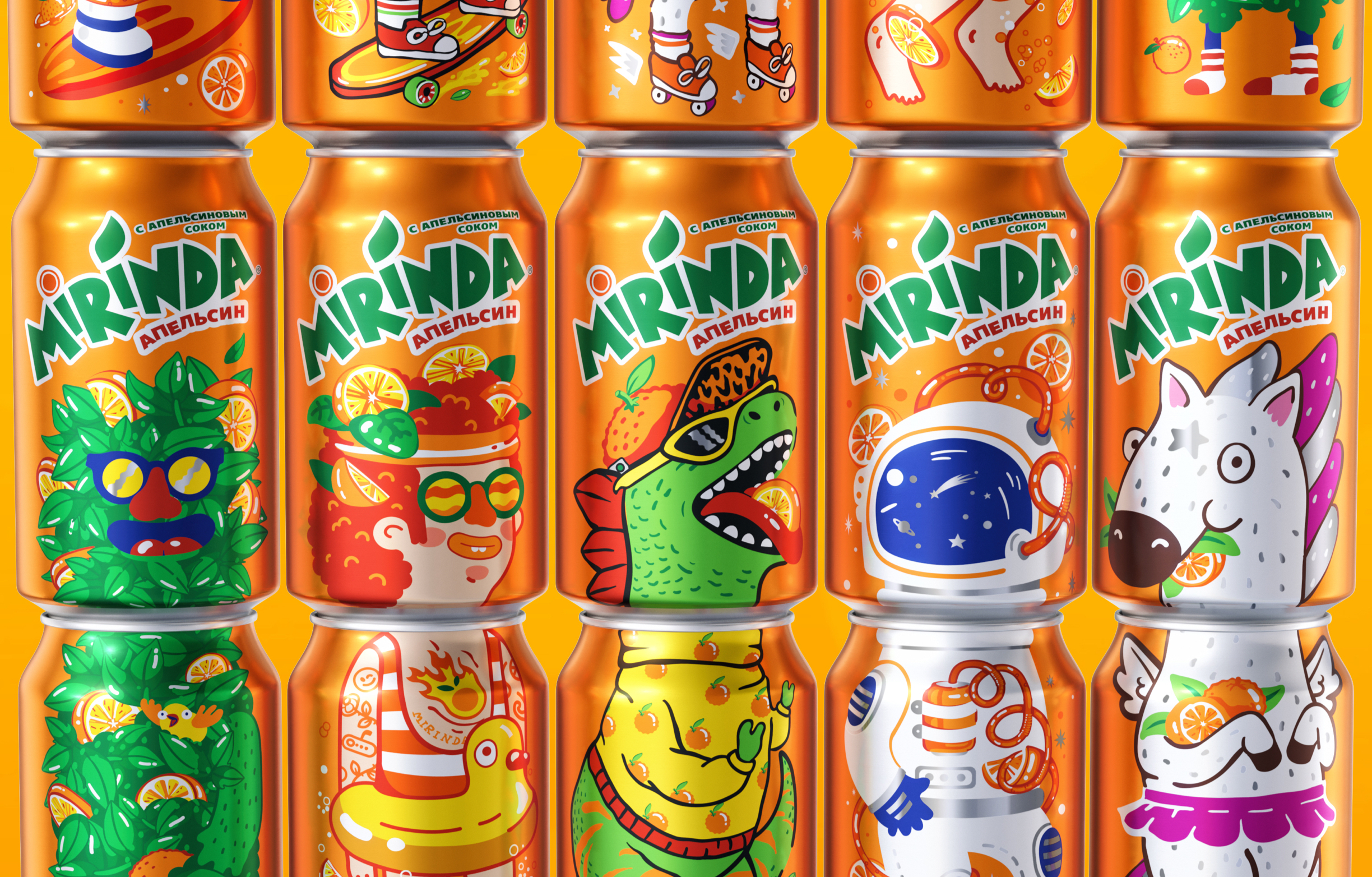
- Mirinda Orange: The global flagship flavor. Following a strategic repositioning in the 1990s, Orange Mirinda accounts for the vast majority of global brand sales, delivering a bold, vibrant citrus taste profile.
- Mirinda Strawberry & Green Cream: High-velocity regional SKUs dominating Southeast Asian markets (such as Thailand and Vietnam), providing distinct, sweet fruit profiles tailored to local palates.
- Mirinda Grape, Apple, & Citrus: Popular regional formulations across South Asia and the Middle East capturing impulse convenience purchases.
Zero-Sugar & Low-Calorie Variants
- Mirinda Free / Zero Sugar Series: Formulated with non-nutritive sweetener blends (Aspartame and Acesulfame Potassium, or Sucralose) to replicate the signature fruit taste without calories, targeting sugar-taxed markets.
3. Packaging Specifications, Container Payload Yields, and Floor-Loading Models
Selecting the appropriate packaging format directly impacts ocean freight density, shelf life, and landed unit costs. Mirinda is manufactured in diverse aluminum can and PET plastic bottle specifications.
Aluminum Cans (250ml, 320ml, 330ml, 355ml)
Aluminum cans are the industry standard for long-distance ocean export. They provide an absolute barrier against light and oxygen, guaranteeing a 12 to 18-month shelf life. Sleek cans (320ml/330ml) dominate European and Asian retail chillers, while standard 355ml (12 oz) cans remain dominant in select international markets.
PET Plastic Bottles (345ml, 440ml, 500ml, 1.45L, 1.5L, 2.0L)
PET plastic bottles serve on-the-go single-serve channels and family-sharing take-home segments. Importers must account for minor carbon dioxide (CO2) migration through plastic walls over time, resulting in a 9 to 12-month shelf life.
| Packaging Format | Unit Capacity | Trays / Cases per Pallet | Shelf Life Benchmark | Primary Retail Channel |
| Sleek Aluminum Can | 320ml / 330ml | 120 – 140 Trays (24 Cans) | 12 – 18 Months | Modern Trade / Convenience |
| Standard Aluminum Can | 355ml (12 oz) | 100 – 120 Trays (24 Cans) | 12 – 18 Months | Wholesale Clubs / Food Service |
| PET Plastic Bottle | 345ml / 500ml | 72 – 90 Cases (24 Bottles) | 9 – 12 Months | On-The-Go / Impulse Retail |
| Family PET Bottle | 1.45L / 1.5L | 40 – 60 Cases (6/12 Bottles) | 9 – 12 Months | Hypermarkets / Supermarkets |
4. B2B Sourcing Models: Franchise Bottlers vs. FMCG Consolidators
Achieving target profit margins depends on selecting the appropriate procurement pathway based on order volume and geographic flexibility.
Direct Franchise Bottler Contracts
Direct procurement contracts with authorized PepsiCo anchor bottlers (such as Suntory PepsiCo Beverage, Varun Beverages, or PepsiCo Beverages International) yield the lowest factory-gate prices. However, they require massive annual volume commitments (typically 10+ FCLs monthly) and strict adherence to territorial distribution exclusivity.
Master FMCG Consolidators
Independent wholesalers and regional distributors frequently source via master FMCG consolidators. Consolidators offer flexible minimum order quantities (1x20ft or 1x40ft FCL), competitive spot-market pricing via parallel trade routes, and mixed-container capabilities (combining Mirinda Orange, Strawberry, and Green Cream with Pepsi or Mountain Dew).
5. Ocean Freight Logistics, Temperature Controls, and Payload Optimization
Liquid cargo is weight-dense, meaning ocean containers reach legal road and vessel weight limits (“weighing out”) long before physical volumetric space is filled (“cubing out”).
Floor-Loading vs. Palletized Configurations
- Floor-Loading (Hand Stacking): Shrink-wrapped trays are stacked directly onto the container floor. This increases total case payload by 15% to 20% compared to wooden pallets, significantly reducing net ocean freight costs per unit.
- Palletized Loading (Euro / ISO Pallets): Reduces total container case capacity but enables rapid forklift offloading at automated distribution centers.
| Loading Method | Volumetric Payload Efficiency | Offloading Method | Strategic Best Fit |
| Floor-Loaded (Hand-Stacked) | 100% Volume Utilization (+15-20% yield) | Manual Hand Labor | Long-haul ocean shipping & margin optimization |
| Palletized (Euro / ISO) | 80 – 85% Volume Utilization | Automated Forklift | Automated fulfillment centers & fast turnarounds |
Thermal Shielding and Transit Stability
While carbonated sodas are shelf-stable at ambient temperatures, transit through tropical ocean routes can subject containers to temperatures exceeding 45°C. Importers utilize thermal container liners or request “below-deck” vessel stowage to prevent thermal pressure stress or container sweat (condensation) from damaging outer packaging.
6. B2B Landed Cost & Profitability Calculation Framework
Evaluating B2B profitability requires modeling all shipping, duty, and handling variables using a structured calculation sequence:
- Step 1: Determine Total Shipping Overhead = Ocean Freight Charges + Import Customs Duties & Fat/Sugar Taxes + Marine Cargo Insurance + Inland Drayage.
- Step 2: Calculate Total Landed Cost per Master Case = FOB Factory Case Price + (Total Shipping Overhead / Total Master Cases Loaded).
- Step 3: Calculate Landed Cost per Saleable Unit = Total Landed Cost per Master Case / Units per Case (e.g., 24 cans).
- Step 4: Calculate Net Profit Margin Percentage = [(Target Wholesale Unit Price – Landed Unit Cost) / Target Wholesale Unit Price] x 100.
Applying this breakdown ensures that procurement officers accurately model gross margin retention against freight volatility before committing capital.
7. Import Compliance, Harmonized System Codes, and Customs Documentation
Navigating international customs clearance requires strict compliance with food safety regulations governed by origin and destination authorities.
Mandatory Documentation Suite
- Commercial Invoice & Detailed Packing List: Itemizing exact SKU descriptions, net/gross weights, batch codes, and Harmonized System codes (HS Code 2202.10.00 for carbonated sweetened soft drinks).
- Certificate of Origin (COO): Issued by the origin Chamber of Commerce to qualify for preferential customs tariffs under bilateral trade agreements.
- Certificate of Analysis (CoA): Lab-certified verification of Brix sugar density, carbonation pressure, acidity levels, and microbiological safety.
- Compliance Sticker Labeling: Over-stickering packaging at origin warehouses with translated local ingredient listings, nutritional panels, and importer details.
8. Frequently Asked Questions (FAQ)
- What is the standard factory shelf life for wholesale Mirinda soft drinks?Aluminum cans maintain an optimal shelf life of 12 to 18 months from production. PET plastic bottles carry a 9 to 12-month shelf life due to gradual CO2 migration through plastic walls over time.
- Who owns the Mirinda soft drink brand globally?Mirinda was created in Spain in 1959 and acquired by PepsiCo in 1970, which manages its manufacturing and distribution worldwide outside North America.
- What is the universal HS Code used for importing Mirinda soft drinks?The universal Harmonized System (HS) code for carbonated sweetened fruit-flavored soft drinks like Mirinda is 2202.10.00.
- How many 330ml Mirinda can trays fit into a 40ft High Cube container when floor-loaded?When floor-loaded (hand-stacked), a 40ft High Cube container holds approximately 3,100 to 3,250 trays (24 cans per tray), totaling roughly 74,400 to 78,000 cans depending on tray packaging dimensions.
Mirinda Distribution Network & Route-to-Market FAQ
Disclaimer: Unless otherwise stated, the images used in this article are the property of their respective owners. We do not claim ownership of any third-party images featured, and they are used here strictly for informational and educational purposes. If you are the copyright holder and wish to have an image removed, please contact us.