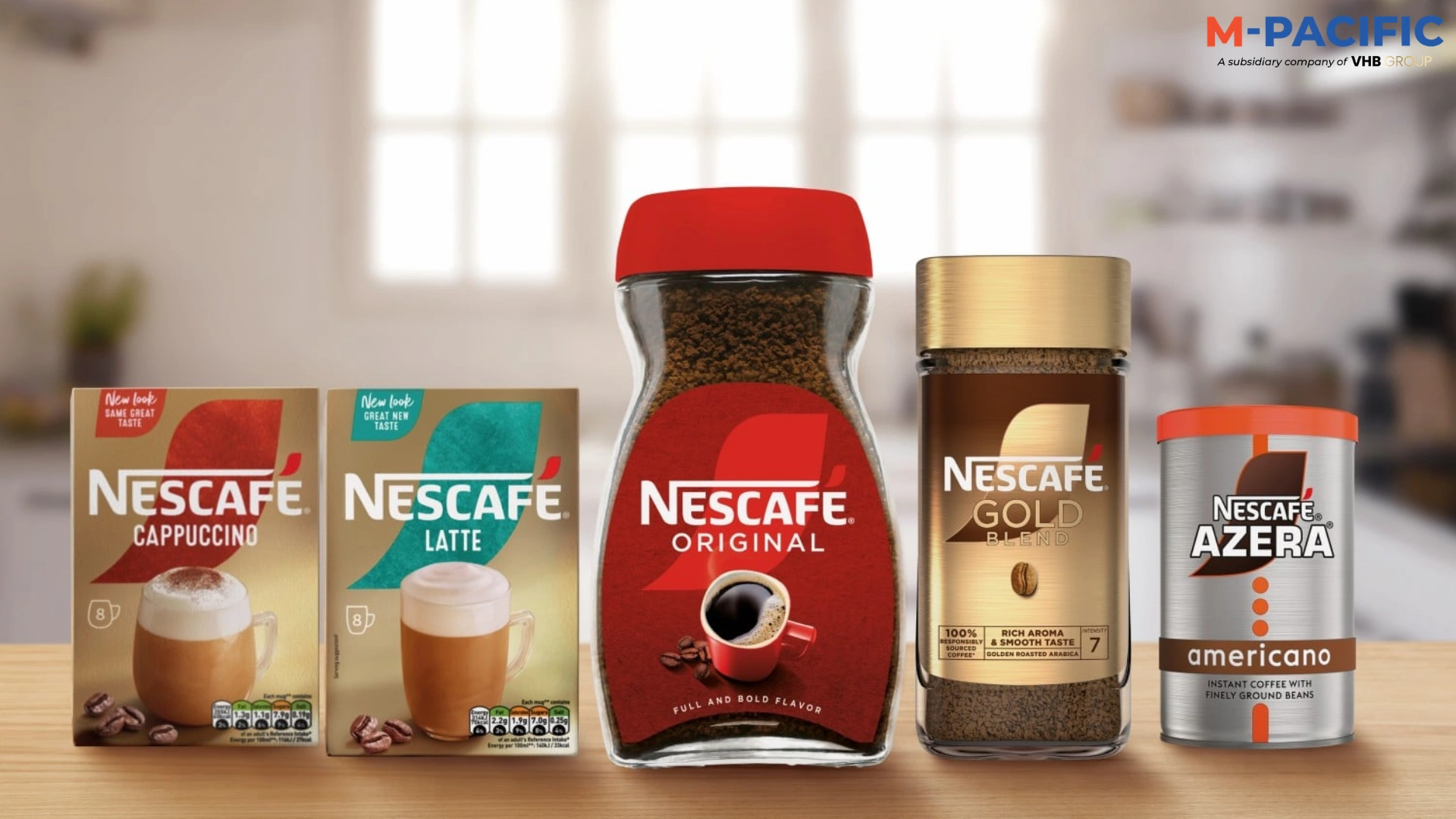
Sourcing Nescafe Coffee Bulk inventory provides international coffee distributors, B2B food service operators, hotel chains, corporate offices, vending operators, and retail networks with a high-margin, essential hot beverage commodity. Manufactured by Nestlé—the world’s premier food and beverage company—Nescafé stands as the undisputed global leader in instant coffee and commercial hot beverage solutions.
For international B2B procurement managers, sourcing full container load (FCL) consignments of wholesale Nescafé coffee requires navigating complex supply chain dynamics—including origin bean blend selection, instant drying technology (spray-dried vs. freeze-dried), bulk packaging formats, nitrogen flushing protection, and food safety compliance. This technical guide evaluates the operational, financial, and logistical protocols necessary to build a highly profitable distribution model.
Table of Contents
- Global Market Demand & B2B Commercial Positioning of Wholesale Nescafé
- Instant Coffee Processing Chemistry: Spray-Dried Agglomerated vs. Freeze-Dried Gold
- Packaging Specifications, Container Payload Yields, and Catering Format Matrix
- B2B Sourcing Models: Nestlé Professional B2B vs. FMCG Export Consolidators
- Storage Stability, Moisture Vapor Barriers, and Shelf-Life Physics
- B2B Landed Cost & Profitability Calculation Framework
- Import Compliance, Harmonized System Codes, and Customs Documentation
- Frequently Asked Questions (FAQ)

1. Global Market Demand & B2B Commercial Positioning of Wholesale Nescafé
The Nescafe Coffee Bulk market continues to expand rapidly, with instant coffee representing a major share of total volume due to its long shelf life, rapid preparation speed, and consistent quality. Invented by Nestlé in 1938, Nescafé commands massive global brand recognition across retail grocery, food service, institutional catering, and office coffee systems.
Adding Nescafe Coffee Bulk stock to a B2B catalog delivers distinct commercial advantages:
- Pre-Sold Global Equity: Unmatched consumer trust minimizes promotional costs for B2B distributors and food service operators.
- Exceptional Margin Stability: High value-to-weight ratio yields excellent profitability per ocean freight container load.
- Multi-Segment Versatility: Suitable for retail supermarket shelves, hotel breakfast buffets, workplace pantries, commercial vending machines, and hospital/airline catering.
2. Instant Coffee Processing Chemistry: Spray-Dried Agglomerated vs. Freeze-Dried Gold
The physical quality, aroma profile, and price point of wholesale Nescafé depend on the instant coffee drying technology utilized during manufacturing:
Spray-Dried & Agglomerated Coffee (Nescafé Classic)
Liquid coffee extract obtained from roasted coffee beans is sprayed as a fine mist into a high-temperature drying tower. The water evaporates instantly, leaving fine coffee powder. The powder is then re-wetted to form larger, soluble granules (agglomeration).
- Primary Advantage: Highly cost-effective; rapid solubility in hot or cold water; robust, dark-roasted flavor profile ideal for mass catering and vending.
Freeze-Dried Premium Coffee (Nescafé Gold)
Concentrated liquid coffee extract is frozen into a solid block at -40°C, broken into uniform granules, and placed inside a vacuum sublimation chamber. Under low vacuum pressure, ice sublimates directly into gas without melting, preserving delicate aromatic compounds.
- Primary Advantage: Superior taste and rich aroma closely mirroring fresh espresso; light golden granule appearance commanding premium wholesale price points.
3. Packaging Specifications, Container Payload Yields, and Catering Format Matrix
Nescafé is packaged in diverse consumer and industrial formats tailored to specific commercial channels.
Commercial Packaging Options
- Glass Jars (100g, 200g): Premium retail packaging equipped with airtight foil seals, offering an absolute barrier against moisture.
- Bulk Catering Tins (500g, 1kg, 2.4kg): Heavy-duty aluminum tins designed for commercial food service, back-of-house kitchens, and workplace pantries.
- Single-Serve Sticks & Sachets (1.8g – 20g): Portion-controlled single-serve stick packs for hotel rooms, airlines, and on-the-go travel hospitality.
| Packaging Format | Unit Capacity | Units per Master Case | Cases per 20ft FCL | Primary Retail / B2B Target |
| Glass Jar | 100g / 200g | 12 / 24 Jars | 1,200 – 1,500 Cases | Supermarket Retail / Grocery |
| Single-Serve Sticks | 1.8g Stick Packs | 1,000 Sticks / Case | 1,100 Cases | Hotels / Airlines / Hospital Catering |
| Catering Tin | 500g / 1kg | 6 Tins / Case | 900 Cases | Commercial Food Service / Offices |
| Bulk Refill Pouches | 280g / 500g | 12 Pouches / Case | 1,400 Cases | Vending Machines / Refill Channels |
4. B2B Sourcing Models: Nestlé Professional B2B vs. FMCG Export Consolidators
Commercial buyers access Nescafé inventory through two primary procurement pathways:
Direct Nestlé Professional B2B Contracts
Enterprise food service distributors, hotel groups, and national supermarket chains establish direct contracts with Nestlé Professional.
- Key Advantage: Direct factory access, guaranteed lot freshness, customized dispensing equipment support, and tier-one pricing.
- Trade-Off: Requires substantial annual volume commitments and formal contract approval.
FMCG Export Consolidators
Independent wholesalers and regional trading firms source via master FMCG consolidators offering parallel trade stock.
- Key Advantage: Lower minimum order quantities (single FCL containers) and mixed-container capabilities (combining Nescafé Classic with Nescafé Gold, Coffeemate, or Milo).
5. Storage Stability, Moisture Vapor Barriers, and Shelf-Life Physics
Instant coffee granules are extremely hygroscopic—they actively absorb ambient water vapor from the air if exposed to humidity.
- Moisture Protection Mechanics: Wholesale packaging utilizes hermetically sealed aluminum foil membranes, multi-layer laminated pouches, or airtight aluminum tin lids to keep internal relative humidity under 3%.
- Nitrogen Flushing: Oxygen inside packaging is replaced with inert nitrogen gas during high-speed filling to prevent lipid oxidation and preserve volatile coffee aromas.
- Factory Shelf Life: When stored in original unopened packaging between 15°C and 25°C, Nescafé instant coffee maintains a factory shelf life of 24 months.
6. B2B Landed Cost & Profitability Calculation Framework
To evaluate total procurement cost across ocean transport routes, procurement teams apply a structured step-by-step cost breakdown:
- Step 1: Determine Total Shipping Overhead = Ocean Freight Charges + Import Customs Duties + Marine Insurance + Inland Drayage.
- Step 2: Calculate Landed Cost per Master Case = FOB Master Case Price + (Total Shipping Overhead / Total Master Cases Loaded).
- Step 3: Calculate Landed Cost per Individual Unit = Landed Cost per Master Case / Saleable Units per Case (e.g., 24 jars or 1,000 sticks).
- Step 4: Calculate Unit Gross Profit Margin (%) = [(Target B2B Selling Price – Landed Unit Cost) / Target B2B Selling Price] x 100.
7. Import Compliance, Harmonized System Codes, and Customs Documentation
Clearing international customs without administrative delays requires complete documentation verified by origin accredited testing laboratories:
- Commercial Documentation: Commercial Invoice, Detailed Packing List, and Bill of Lading (B/L).
- Harmonized System Code: HS Code 2101.11.11 or HS Code 2101.11.20 (Extracts, essences, and concentrates of coffee).
- Certificate of Analysis (CoA): Lab verification of moisture content (under 4%), caffeine percentage, solubility speed, and microbiological safety.
- Health & Free Sale Certificates: Issued by origin government food safety agencies confirming fitness for human consumption.
Wholesale Nescafé Sourcing & Logistics FAQ
Disclaimer: Unless otherwise stated, the images used in this article are the property of their respective owners. We do not claim ownership of any third-party images featured, and they are used here strictly for informational and educational purposes. If you are the copyright holder and wish to have an image removed, please contact us.