Evaluating Tide Detergent Wash Performance Facts provides essential technical data for B2B home care buyers, commercial laundry managers, product developers, and retail category directors. Understanding the surfactant chemistry, multi-enzyme stain removal complexes, water hardness buffering, and cold-water cleaning mechanics of Tide detergent is critical when evaluating wash performance, cost per wash load, and regulatory compliance for international distribution.
Tide represents one of the world’s most scientifically tested laundry detergent brands. Built upon continuous cleaning chemistry innovations since its launch in 1946, Tide formulations combine active anionic and non-ionic surfactants with targeted biological enzymes and optical brighteners. This technical guide analyzes the chemical, physical, and performance facts governing Tide detergent formulations.
Table of Contents
- The Innovation History and Fabric Care Science of Tide
- Surfactant Mechanics: Anionic, Non-Ionic, and Micellar Soil Encapsulation
- Multi-Enzyme Complex Science: Targeted Biological Stain Elimination
- Water Hardness Chelation, Builders, and pH Stabilization
- Cold-Water Washing Efficiency and HE Turbo Clean Technology
- Frequently Asked Questions (FAQ)
1. The Innovation History and Fabric Care Science of Tide
Tide was launched in the United States in 1946 by Procter & Gamble as the world’s first heavy-duty synthetic laundry detergent. Unlike traditional soap flakes that reacted with hard water minerals to form insoluble soap scum, Tide’s synthetic surfactant-builder formulation cleaned effectively in hard water without leaving mineral deposits.
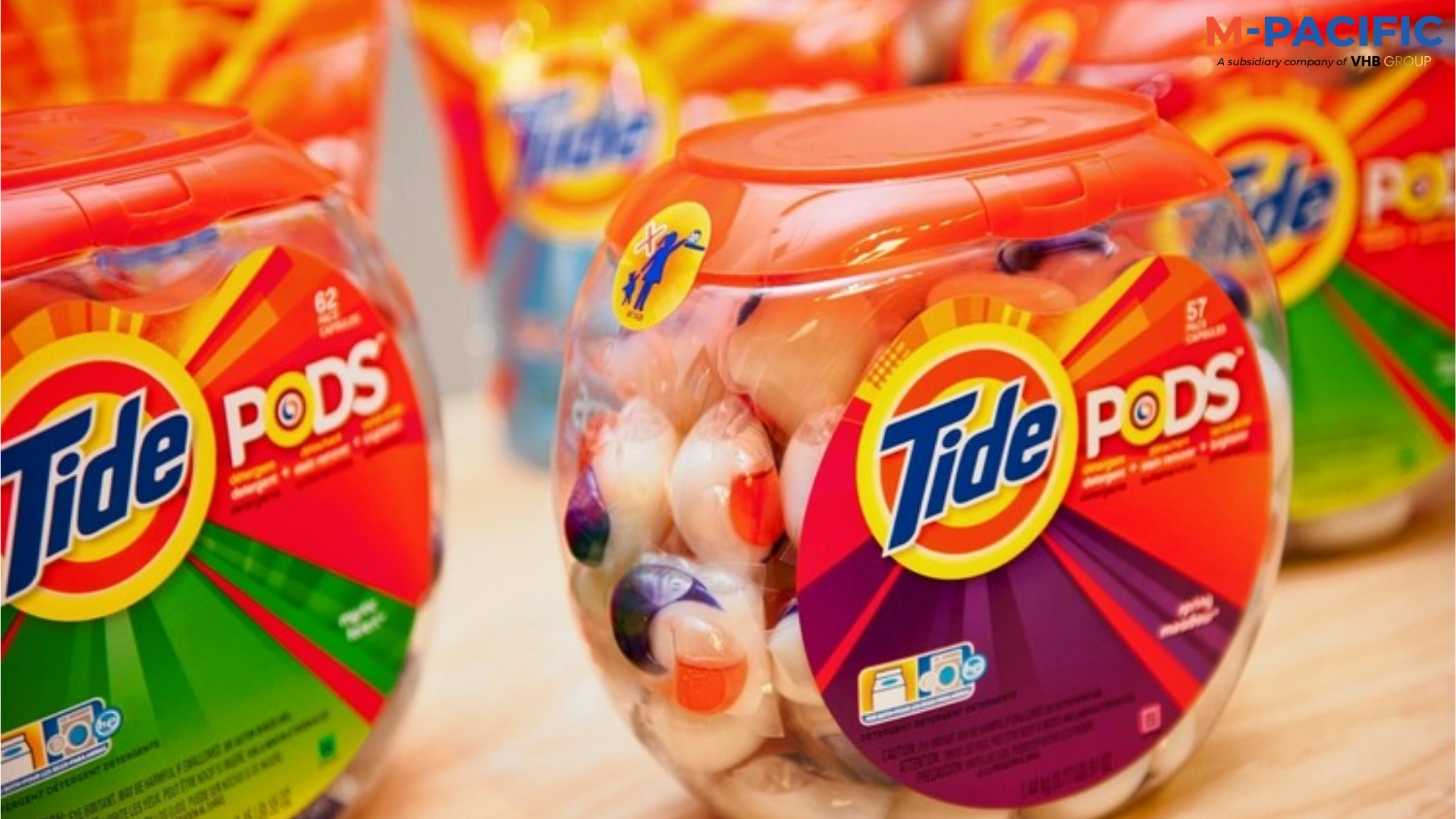
Over subsequent decades, P&G continuously upgraded Tide’s formula—introducing liquid formats in 1984, concentrated Ultra formulas, HE (High Efficiency) low-suds technology, and unit-dose liquid capsules (Tide PODS) in 2012.
2. Surfactant Mechanics: Anionic, Non-Ionic, and Micellar Soil Encapsulation
Tide removes stubborn organic soils, body fats, and particulate dirt through an engineered surfactant matrix:
Anionic Surfactant Action (Linear Alkylbenzene Sulfonate – LAS)
Positively charged water molecules attract the hydrophilic head of LAS molecules, while the hydrophobic tail attaches to greasy soil particles on fabric fibers. Washing agitation rolls up greasy soils into spherical micelles, which remain suspended in wash water and rinse away cleanly.
Non-Ionic Surfactant Action (Alcohol Ethoxylates)
Non-ionic surfactants carry zero electrical charge, making them highly effective at emulsifying non-polar oily stains (grease, body sebum, motor oil) even in cold water temperatures.

3. Multi-Enzyme Complex Science: Targeted Biological Stain Elimination
Tide Detergent Wash Performance Facts formulations incorporate a proprietary multi-enzyme cocktail engineered to break down complex organic stain polymers into water-soluble fragments:
┌─────────────────────────────────────────────────────────────────┐
│                    TIDE MULTI-ENZYME COMPLEX                    │
├──────────────────┬──────────────────────┬───────────────────────┤
│ Protease Enzyme  │ Amylase Enzyme       │ Lipase & Cellulase    │
├──────────────────┼──────────────────────┼───────────────────────┤
│ • Blood & Grass  │ • Gravy & Sauce      │ • Cooking Oils & Sebum│
│ • Egg & Milk     │ • Starch Polymers    │ • Micro-Fibril Trimming│
│ • Cleaves Peptides│ • Solubilizes Sugars │ • Color Restoration   │
└──────────────────┴──────────────────────┴───────────────────────┘
- Protease (Subtilisin): Cleaves peptide bonds in tough protein stains (blood, grass, food residues, body soils) into soluble amino acids.
- Amylase: Hydrolyzes complex insoluble starch molecules (found in gravies, sauces, pasta, and chocolate) into soluble sugars.
- Lipase: Hydrolyzes insoluble triglyceride lipids (butter, grease, skin oils) into glycerol and fatty acids.
- Cellulase: Selectively trims damaged, micro-fibril fuzz from cotton fibers, smoothing fabric surfaces to restore original color brightness and prevent pilling.
4. Water Hardness Chelation, Builders, and pH Stabilization
Hard water contains dissolved calcium ($Ca^{2+}$) and magnesium ($Mg^{2+}$) ions that bind to anionic surfactants, rendering them inactive. Tide incorporates advanced water-softening builders to neutralize mineral hardness:
Polycarboxylates and Citric Acid
Polycarbonate polymers and sodium citrate act as chelating agents that bind calcium and magnesium ions tightly, preventing them from interfering with active surfactants or precipitating onto fabric fibers.
Alkalinity Buffering (pH 9.5 to 10.5)
Tide heavy-duty powders maintain a slightly alkaline wash pH of 9.5 to 10.5 using sodium carbonate and sodium silicate. Alkalinity swells cotton fibers slightly, helping lift ground-in dirt while neutralizing acidic soils.
5. Cold-Water Washing Efficiency and HE Turbo Clean Technology
Modern laundry formulations are optimized for energy-saving cold-water wash cycles and High-Efficiency (HE) washing machines:
HE Turbo Clean Technology
Front-load and top-load HE washing machines use up to 80% less water than traditional agitator machines. Tide HE Turbo Clean formulas utilize quick-collapsing suds suppressors (silicone polymers) that prevent oversudsing while maintaining high cleaning concentration.
Cold-Water Active Polymers
Tide Coldwater formulations incorporate specialized non-ionic surfactants that remain fully soluble at temperatures down to 10°C (50°F), saving heating energy without sacrificing stain removal.
Tide Wash Performance FAQ
Disclaimer: Unless otherwise stated, the images used in this article are the property of their respective owners. We do not claim ownership of any third-party images featured, and they are used here strictly for informational and educational purposes. If you are the copyright holder and wish to have an image removed, please contact us.