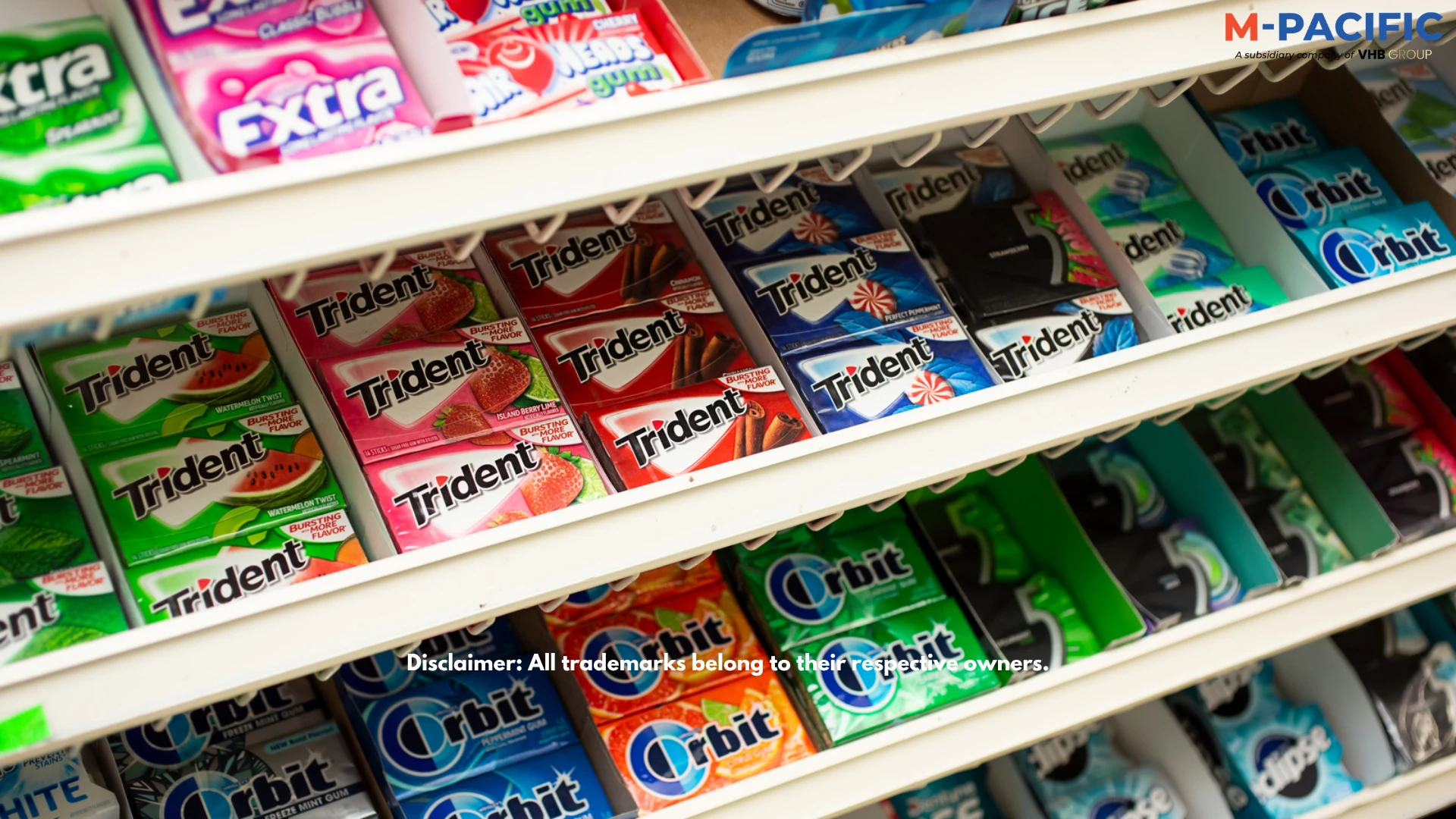
Exploring Trident Chewing Gum Import Origin parameters provides confectionery importers, retail category managers, and wholesale buyers with deep insights into how brand heritage, Mondelēz International global manufacturing architecture, and regional ingredient adaptations govern product quality and trade economics. While all Trident Chewing Gum adheres to Mondelēz global quality standards, regional manufacturing hubs tailor sweetener profiles, packaging languages, and flavor intensities to local market demands.
Evaluating origin geography allows procurement directors at M-Pacific to secure origin-traceable supply chains, optimize regional tariff structures, and manage parallel trade opportunities.
Table of Contents
- Historical Heritage: From American Chicle in 1964 to Global Confectionery Leader
- Mondelēz International’s Global Manufacturing Architecture for Chewing Gum
- Regional Formulation Adaptations: North America, Latin America, and Europe
- Comparative Analysis of Regional Trident Manufacturing Hubs
- International Import Compliance, Labeling Regulations, and Parallel Trade
- Frequently Asked Questions (FAQ)

1. Historical Heritage: From American Chicle in 1964 to Global Confectionery Leader
The history of Trident began in 1964 in the United States when the American Chicle Company (later Warner-Lambert) invented the first national sugar-free chewing gum. Formulated with saccharin and later polyols, Trident proved that chewing gum could freshen breath without causing dental cavities.
[1964: USA Launch]           ──► First National Sugar-Free Gum Invented by American Chicle
                                      │
                                      ▼
[1970s "4 out of 5" Campaign]──► Established Clinical Dental Authority Worldwide
                                      │
                                      ▼
[2000s Innovation Era]       ──► Launch of Trident White, Trident Layers & Pocket Bottles
                                      │
                                      ▼
[Modern Era: Mondelēz Global]──► World's #1 Selling Sugar-Free Chewing Gum Brand
Acquired by Cadbury Schweppes and subsequently integrated into Mondelēz International, Trident expanded globally to become the world’s leading sugar-free chewing gum brand.
2. Mondelēz International’s Global Manufacturing Architecture for Chewing Gum
Mondelēz International manufactures Trident Chewing Gum across a network of specialized confectionery plants located near major consumer markets:
- North American Hubs (United States / Mexico): Production facilities supplying the US, Canadian, and Latin American trade corridors.
- European Hubs (Poland & Spain): Specialized gum manufacturing plants serving the European Union and Middle East.
- Latin American Hubs (Brazil): Facilities producing Trident for South American markets.
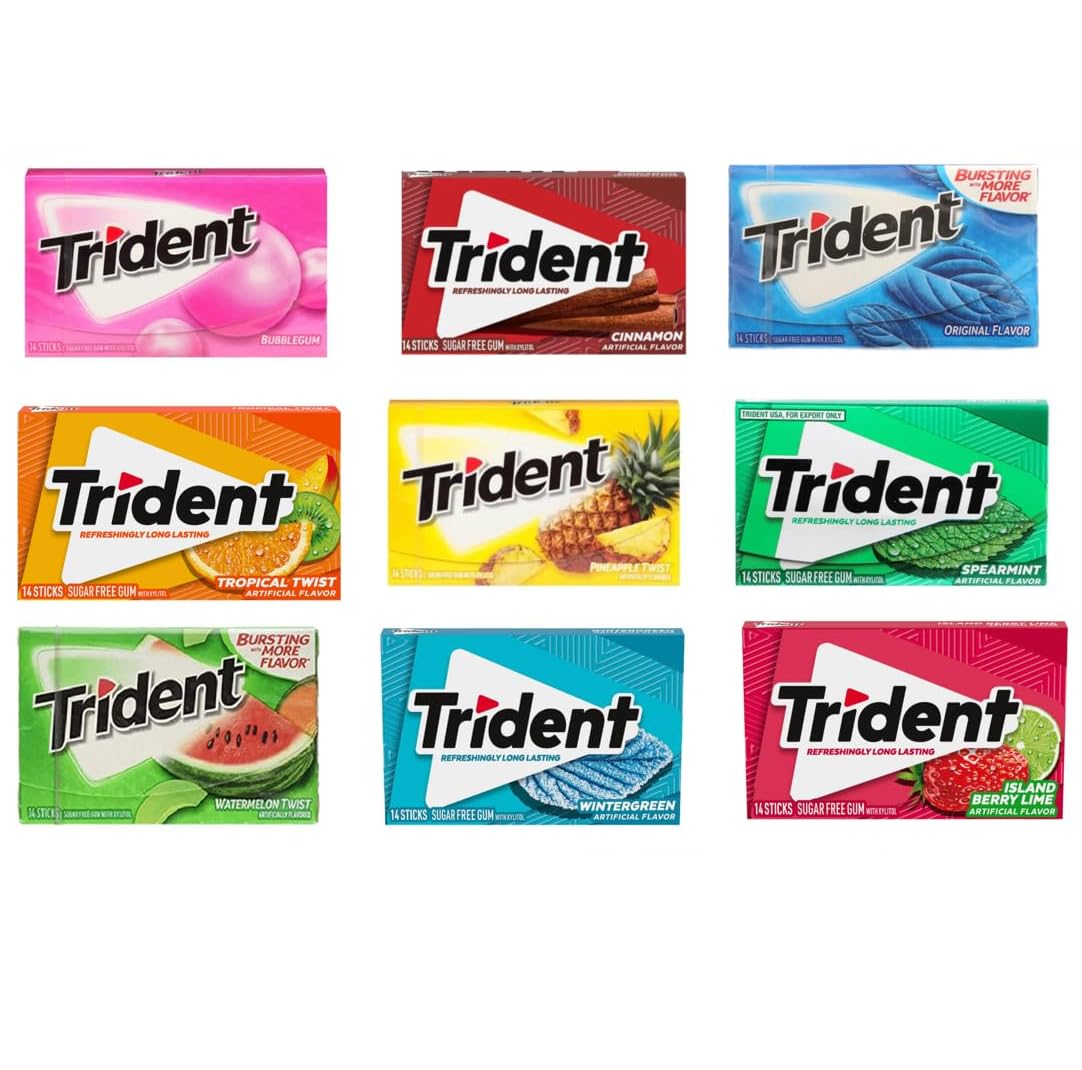
3. Regional Formulation Adaptations: North America, Latin America, and Europe
Mondelēz adapts Trident Chewing Gum formulations slightly to align with regional food additive regulations and consumer taste preferences:
North American Formulations
Engineered for long-lasting sweetness curves, utilizing specific blends of Aspartame, Sucralose, and Acesulfame Potassium to sustain flavor during extended chewing sessions preferred by US consumers.
European & Latin American Formulations
Governed by European Food Safety Authority (EFSA) regulations regarding polyol and artificial sweetener limits. Formulations often highlight natural colorings and emphasize subtle, refined mint profiles.
4. Comparative Analysis of Regional Trident Manufacturing Hubs
The following matrix compares primary regional origin hubs for Trident Chewing Gum exported by M-Pacific:
| Manufacturing Hub | Primary Supply Markets | Packaging Languages | Key Regional Variants | Commercial Trade Advantage |
| United States / Mexico | Americas, Asia-Pacific, Export | English / Spanish | Spearmint, Tropical Twist, Layers | High global brand authority, massive export capacity. |
| Poland (Mondelēz EU) | Europe, Middle East, UK | Multilingual European | Trident Max, Fresh Mint | Strict EU compliance, high-quality polyols. |
| Brazil (Mondelēz Brazil) | South & Central America | Portuguese / Spanish | Trident Fresh, Fruit Lines | High regional volume capacity. |

5. International Import Compliance, Labeling Regulations, and Parallel Trade
Navigating international trade in Trident Chewing Gum requires ensuring full regulatory compliance at the destination port:
Over-Stickering and Phenylalanine Disclosures
When importing Trident stock across international borders, local food safety laws require translated compliance labels. Over-stickers must disclose full polyol ingredient lists (Xylitol, Sorbitol), artificial sweeteners, allergen warnings (e.g., “Contains a source of phenylalanine” for aspartame), net weight, manufacturing origin, and regional distributor details.
Parallel Trade Arbitrage
Price differentials between manufacturing regions create parallel trade opportunities for international B2B traders. Importers leverage currency shifts to source authentic Trident inventory from high-yield origin hubs like Mexico or the US at competitive landed costs.
Trident Chewing Gum Import Origin FAQ
Disclaimer: Unless otherwise stated, the images used in this article are the property of their respective owners. We do not claim ownership of any third-party images featured, and they are used here strictly for informational and educational purposes. If you are the copyright holder and wish to have an image removed, please contact us.