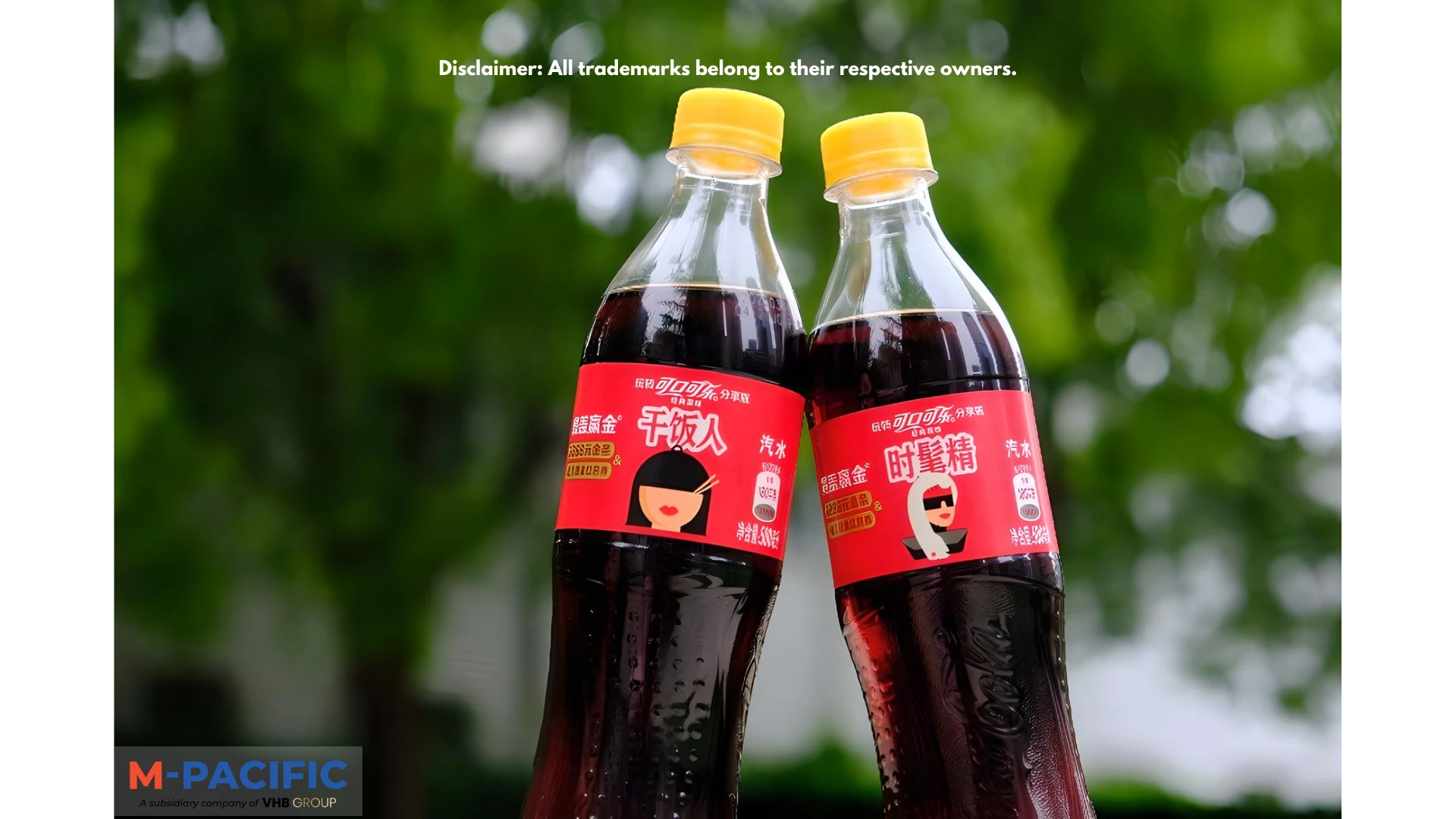
Sourcing Chinese Coca-Cola Soft Drink Bulk inventory provides international beverage distributors, supermarket chains, cash-and-carry wholesalers, Asian grocery networks, and FMCG trading partners with a high-velocity revenue engine in the global carbonated soft drink (CSD) market. Bottled under authority of The Coca-Cola Company by master franchise bottling conglomerates in China—primarily COFCO Coca-Cola and Swire Coca-Cola—Chinese Coca-Cola has emerged as a high-demand parallel trade commodity worldwide, prized for its distinct sleek aluminum can designs, authentic sucrose/HFCS formulation options, and competitive FOB export pricing.
For B2B procurement managers and supply chain directors working with trading consolidators like M-Pacific, managing full container load (FCL) consignments of wholesale Chinese Coca-Cola requires evaluating complex logistical and commercial variables. Procurement teams must analyze canister volume specifications (330ml sleek vs. 330ml standard vs. 500ml PET), floor-loading ocean freight weight optimization, sugar-tax regulatory compliance, Chinese-language over-stickering, and customs clearance protocols. This technical guide evaluates the operational, financial, and logistical frameworks necessary to establish a highly profitable distribution model.
Table of Contents
- Global Market Demand and Parallel Trade Dynamics of Chinese Coca-Cola
- Product Portfolio Breakdown: Classic, Zero Sugar, and Flavor Lines
- Carbonation Science, Sugar Profiling, and Packaging Integrity
- Packaging Specifications, Container Freight Yields, and Floor-Loading Models
- B2B Sourcing Pathways: COFCO / Swire Franchises vs. FMCG Consolidators
- Landed Cost and Gross Margin Calculation Framework
- Import Compliance, Harmonized System Codes, and Customs Documentation
- Frequently Asked Questions (FAQ)

1. Global Market Demand and Parallel Trade Dynamics of Chinese Coca-Cola
The global carbonated soft drink market continues to generate tens of billions of dollars annually. Chinese-manufactured Coca-Cola has captured significant market share across international parallel trade corridors, driven by the global expansion of Asian grocery chains, Chinese restaurant networks, and consumer interest in imported beverage variants.
Adding bulk Chinese Coca-Cola inventory to a wholesale portfolio delivers distinct commercial advantages:
- Unmatched Pre-Sold Brand Equity: Operates under the world’s most recognized beverage trademark, requiring zero localized promotional expenditure to drive retail velocity.
- Distinct Aesthetic Appeal: Chinese-character lithograph printing on sleek 330ml aluminum cans creates high visual impulse conversion in Asian grocery aisles and trendy urban dining spots.
- Freight Cost Advantage: High container loading efficiency (up to 3,100+ trays per 40ft High Cube container) reduces landed logistics overhead per can.
2. Product Portfolio Breakdown: Classic, Zero Sugar, and Flavor Lines
Curating an optimal Chinese Coca-Cola inventory mix requires selecting the right combination of variants tailored to destination market demographics:
Core High-Velocity Lines
- Chinese Coca-Cola Classic (Red Can): The iconic flagship formula delivering the signature cola taste, carbonated saturation, and balanced sweetness profile.
- Chinese Coca-Cola Zero Sugar (Black Can): Formulated with non-nutritive sweetener blends (Aspartame and Acesulfame Potassium) to deliver classic cola flavor with zero sugar calories.
Specialty Flavor and Limited Edition Lines
- Chinese Coca-Cola Vanilla / Cherry: High-demand flavor extensions packaged in sleek aluminum cans.
- Chinese New Year & Festive Limited Edition Cans: Collectible seasonal aluminum cans featuring Chinese Zodiac artwork and cultural motifs, driving massive sales spikes in Q1 trade corridors.

3. Carbonation Science, Sugar Profiling, and Packaging Integrity
Chinese Coca-Cola formulations adhere strictly to global Coca-Cola quality specifications while reflecting Chinese agricultural sourcing:
High Carbonation Saturation (3.7 to 4.0 Volumes CO2)
Chinese Coca-Cola is carbonated to a high density of 3.7 to 4.0 volumes of CO2, creating sharp micro-bubbles that enhance cold sensory perception and throat fizz.
Sweetener Matrix: HFCS vs. Sucrose
Bottling plants in China utilize high-purity High-Fructose Corn Syrup (HFCS-55) or refined sucrose derived from domestic sugar crops. The sweetness profile is precisely calibrated to match global Coca-Cola Brix density standards (10.4° to 10.6° Brix).
4. Packaging Specifications, Container Freight Density, and Floor-Loading Models
Liquid carbonated beverages are weight-dense. Shipping Chinese Coca-Cola requires balancing ocean container weight limits with volume optimization.
| Packaging SKU Format | Unit Capacity | Master Unit Packing | Cartons per 40ft HC FCL | Net Payload per 40ft Container | Primary Distribution Channel |
| Sleek Aluminum Can | 330 ml | 24 Cans / Shrink Tray | 3,000 – 3,200 Trays | ~24.5 Metric Tons (Weight Limit) | Asian Supermarkets & C-Stores |
| Standard Aluminum Can | 330 ml / 355ml | 24 Cans / Shrink Tray | 2,800 – 3,000 Trays | ~24.5 Metric Tons | Wholesale Clubs & Food Service |
| Mini Aluminum Can | 200 ml | 24 Cans / Tray | 3,600 – 4,000 Trays | ~18.5 Metric Tons | Catering & On-The-Go Impulse |
| PET Plastic Bottle | 500 ml | 24 Bottles / Case | 1,800 – 2,000 Cases | ~22.5 Metric Tons | Express Stores & Forecourts |
Floor-Loading Optimization (Hand Stacking)
To maximize container weight yield, trays are floor-loaded (hand-stacked) inside standard 20ft or 40ft High Cube containers, eliminating pallet weight and volume loss.
5. B2B Sourcing Pathways: COFCO / Swire Franchises vs. FMCG Consolidators
Commercial buyers access Chinese Coca-Cola inventory through two primary procurement channels:
Master Bottling Franchises (COFCO / Swire)
Direct procurement contracts with authorized master bottlers in China—COFCO Coca-Cola Beverage Ltd. or Swire Coca-Cola Ltd.
- Advantages: Lowest factory-gate pricing, direct access to production schedules, and fresh manufacturing lots.
- Trade-Offs: Requires massive annual volume commitments (typically 10+ FCLs monthly) and adherence to regional franchise boundaries.
FMCG Export Consolidators
Independent wholesalers source via master FMCG consolidators like M-Pacific.
- Advantages: Flexible Minimum Order Quantities (MOQs starting at 1x20ft or 1x40ft FCL) and mixed-container capabilities (combining Chinese Coca-Cola with Genki Forest, Chilsung Cider, or Pocari Sweat).

6. Landed Cost and Gross Margin Calculation Framework
Procurement teams calculate net landed unit costs across ocean shipping lanes by applying a structured calculation process:
- Step 1: Determine Total Shipping Overhead = Ocean Freight Charges + Import Customs Duties + Marine Insurance Premiums + Local Port Drayage.
- Step 2: Calculate Landed Cost per Master Case/Tray = Free On Board (FOB) Purchase Case Price + (Total Shipping Overhead / Total Cases Loaded).
- Step 3: Calculate Landed Cost per Saleable Can = Total Landed Cost per Master Case / Saleable Cans per Case (e.g., 24 cans).
- Step 4: Calculate Net Profit Margin Percentage = [(Target Wholesale Unit Selling Price – Landed Unit Cost) / Target Wholesale Unit Selling Price] x 100.
7. Import Compliance, Harmonized System Codes, and Customs Documentation
Clearing beverage imports through international customs requires complete compliance documentation verified by accredited origin testing laboratories:
Mandatory Export Documentation Suite
- Commercial Shipping Documents: Master Bill of Lading (B/L), Commercial Invoice, Detailed Packing List, and Certificate of Origin (COO).
- Quality & Food Safety Certificates: Batch Certificate of Analysis (CoA) detailing Brix density, carbonation pressure, acidity, and microbiological sterility.
- Chinese-Language Over-Stickering: Destination customs require translated ingredient disclosures, nutritional panels (sodium, energy), net volume, and importer details over-stickered on the back of each can.
- Harmonized System Classification: Classified under HS Code 2202.10.10 or HS Code 2202.10.00 (Water, including mineral waters and aerated waters, containing added sugar or other sweetening matter).
Chinese Coca-Cola Wholesale Bulk FAQ
Disclaimer: Unless otherwise stated, the images used in this article are the property of their respective owners. We do not claim ownership of any third-party images featured, and they are used here strictly for informational and educational purposes. If you are the copyright holder and wish to have an image removed, please contact us.