Introduction: Navigating the B2B Soda Market
Understanding the precise Bulk 7UP Soda Facts can dramatically improve your wholesale procurement strategy within the highly competitive beverage sector. Whether you run a regional supermarket chain, a major event catering business, or a distribution warehouse, soft drinks are a high-volume, quick-turnover inventory class. Among these, 7UP—with its iconic crisp, clean, caffeine-free lemon-lime flavor profile—stands out as a reliable anchor brand. However, stocking and transporting this product at scale requires detailed structural, chemical, and logistical knowledge.
To maximize your profit margins and minimize waste, you must look beyond basic consumer marketing and focus on the technical aspects of packaging, shelf-life, and storage dynamics. This guide analyzes critical Bulk 7UP Soda Facts, equipping B2B buyers with actionable data to optimize their supply chain and ensure product freshness upon delivery.
Why Bulk Purchasing of 7UP Makes Commercial Sense
In the wholesale beverage industry, unit economics dictate your profitability. 7UP has consistently held its ground as a leading non-cola option, heavily requested across restaurants, fast-food outlets, and grocery stores worldwide. Sourcing this brand in bulk mitigates the risks associated with supply chain disruptions and secures lower price points per fluid ounce.
By buying pallets or full truckloads (FTL), distributors capitalize on economies of scale. High-volume purchases reduce secondary freight costs, slash packaging overheads, and streamline receiving operations at your distribution center. However, realizing these savings requires a deep understanding of standard logistics configurations, storage tolerances, and packaging materials.

Essential Bulk 7UP Soda Facts for Wholesale Distributors
When dealing with logistics, you are not just selling flavor; you are transporting weight, volume, and carbonation under pressure. Here are the core Bulk 7UP Soda Facts that every warehouse manager and freight coordinator must keep on hand:
- Weight Distribution: A standard case of 24/12oz aluminum cans weighs approximately 20 pounds (9.1 kg). Freight carriers must carefully balance these heavy, dense pallets to avoid exceeding legal highway axle weight limits.
- Carbonation Integrity: 7UP is carbonated to a level of roughly 3.2 to 3.7 volumes of CO2. Drastic changes in altitude or temperature can compromise this carbonation, leading to physical damage to the aluminum cans or PET plastic bottles.
- Pallet Configurations: A standard US wooden pallet (48″ x 40″) typically holds up to 100 cases of 12oz 7UP cans (stacked 10 cases per layer, 10 layers high), weighing approximately 2,000 lbs (907 kg) excluding the pallet weight itself.
Nutritional and Compositional Bulk 7UP Soda Facts
Understanding the internal composition of the beverage is crucial for regulatory compliance and catering to modern consumer preferences. Standard 7UP is sweetened with high-fructose corn syrup in the US market, while other global regions utilize real cane sugar. It features natural lemon and lime flavors, alongside citric acid for tartness, potassium citrate to regulate acidity, and calcium disodium EDTA to protect flavor integrity over long distribution cycles.
Because standard 7UP contains no sodium or caffeine, it is highly favored by health-conscious consumers looking for clean carbonated refreshments. For inventory managers, this formulation makes 7UP less prone to ingredient separation compared to complex juice-based beverages, ensuring structural consistency even after months in storage.

Logistical Packaging Options for Bulk 7UP Soda Facts
Wholesale buyers must carefully evaluate packaging formats to match their clientele’s demands. The primary formats include:
- Aluminum Cans (12oz / 355ml): These provide the highest barrier against oxygen and UV light degradation. Cans stack exceptionally well, optimize pallet space, and have the lowest rupture rate during transit.
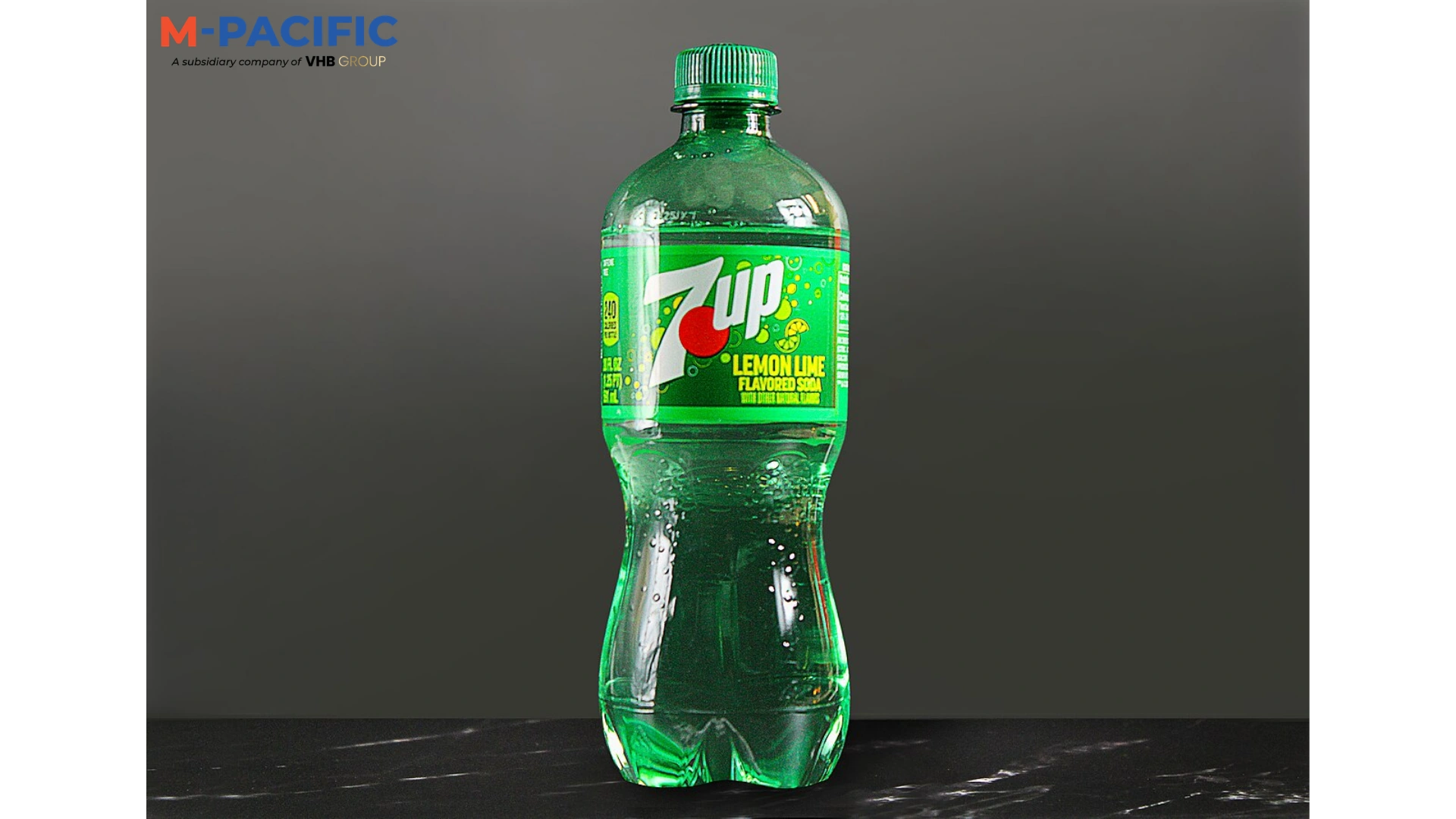
- PET Plastic Bottles (20oz / 500ml and 2-Liter): Highly convenient for retail consumers, but PET plastic is slightly gas-permeable over time. Carbon dioxide slowly escapes, reducing the optimal shelf-life compared to aluminum cans.
- Bag-in-Box (BIB) Syrup: For restaurants and bars utilizing fountain machines, 7UP syrup concentrate packaged in 3-gallon or 5-gallon bags inside heavy-duty cardboard boxes is the most economical option. This reduces shipping volume and water-transport costs.
Bulk 7UP Soda Facts: Storage, Shelf-Life, and Rotations
Ensuring that your inventory does not expire on the warehouse shelves is a critical component of logistics. Our Bulk 7UP Soda Facts analysis indicates that storage conditions heavily dictate the flavor stability and carbonation retention of the beverage.
Under optimal storage environments, 7UP aluminum cans possess a shelf life of approximately 9 to 12 months from the date of manufacture. PET bottles, on the other hand, should ideally be rotated and sold within 3 to 4 months of production to guarantee maximum carbonation freshness. To learn more about standard beverage shelf-life regulations, consult the U.S. Food and Drug Administration (FDA) guidelines on shelf-life and food labeling.

Always practice the First-In, First-Out (FIFO) inventory method. Store pallets away from direct sunlight, in a dry, temperature-controlled environment kept between 45°F and 70°F (7°C to 21°C). Extreme heat can accelerate the degradation of natural flavor oils and weaken the plastic packaging structure, whereas freezing temperatures can expand the water content, bursting the cans and ruining entire pallet levels.

7UP Packaging Dimensions & Weights Comparison
To assist your transport and logistics planning, we have compiled a structural comparison of the most common bulk configurations for 7UP.
| Packaging Format | Unit Volume | Units per Case | Approx. Case Weight | Pallet Configuration |
|---|---|---|---|---|
| Aluminum Cans | 12 oz (355 ml) | 24 Units | 20.0 lbs (9.1 kg) | 100 Cases / Pallet |
| PET Bottles | 20 oz (591 ml) | 24 Units | 33.0 lbs (15.0 kg) | 60 Cases / Pallet |
| PET Bottles (2-Liter) | 67.6 oz (2.0 L) | 8 Units | 37.5 lbs (17.0 kg) | 40 Cases / Pallet |
| Bag-in-Box Syrup | 5 Gallons (18.9 L) | 1 Unit | 54.0 lbs (24.5 kg) | 36 Boxes / Pallet |
Understanding these dimensional variations helps freight managers calculate maximum payload capacities for Class 8 shipping trucks, avoiding overweight violations on domestic highways while maximizing the product volume moved per shipment.
Frequently Asked Questions
To help you quickly address customer questions or handling issues, here are the most common inquiries regarding large-scale 7UP distribution:
Can bulk 7UP be safely stored in non-temperature controlled environments?
While short-term storage in ambient conditions is generally safe, prolonged exposure to temperatures above 85°F (29°C) accelerates carbon dioxide loss in plastic bottles and can cause flavor alterations in aluminum cans. It is always recommended to maintain stable temperature controls to ensure product freshness.
Does caffeine-free 7UP have a different shelf-life compared to other sodas?
Generally, no. The absence of caffeine does not alter the stability of the beverage. The shelf-life is primarily governed by the type of sweetener used (sugars vs. artificial sweeteners in Diet/Zero versions) and the physical packaging material (aluminum vs. PET plastic).
How can I identify the expiration date on bulk cases of 7UP?
Manufacturers print a production and expiration code directly on the neck of PET bottles or the bottom of aluminum cans. This code usually indicates the production location, date, and time, alongside a “best-by” date formatted as MM/DD/YY.
Conclusion & Actionable Summary
Successfully distributing 7UP on a wholesale scale requires a professional understanding of packaging materials, weight limits, and optimal storage parameters. Armed with these key Bulk 7UP Soda Facts, distributors can prevent premature spoilage, balance shipping weights, and select the correct packaging options to satisfy their clients’ requirements.
From maximizing pallet configurations to monitoring temperature controls, every step you optimize in the logistics process directly enhances your bottom line. If you are looking to secure a reliable, high-volume supply of top-tier soft drinks and beverage products, explore our bulk sourcing programs today.
Ready to streamline your wholesale supply chain? Contact our expert logistics team today to secure premium pricing on commercial beverage shipments.