When exploring the dynamic world of personal care, uncovering verified Pantene Haircare Facts is essential to mastering your daily hair routine. With millions of bottles sold worldwide, Pantene has established itself as an absolute titan in the beauty industry. Yet, with massive popularity comes a wave of myths, misconceptions, and scientific curiosities. How exactly does this formula work, and does it live up to its promise of healthy, shiny hair?
To help you navigate these questions, we have compiled an in-depth, scientifically backed guide on key product behaviors, historical breakthroughs, and ingredient analyses. Whether you are standardizing your home salon routine, searching for the perfect shampoo formula, or looking into commercial purchasing options like buying Pantene in bulk, understanding the formulation technology ensures you make the best choices for your hair type.
Table of Contents
- The Historical Origins of Pantene
- Unveiling the Science: Crucial Pantene Haircare Facts
- Demystifying Ingredients: Pantene Haircare Facts vs. Myths
- Pantene Haircare Facts Regarding Silicone and Buildup
- Pantene Haircare Facts for Different Hair Types
- Collection Comparison Matrix
- Frequently Asked Questions
- Conclusion & Takeaways

The Historical Origins of Pantene
Before diving into modern chemistry, we must look back to the inception of the brand. Pantene’s history began in Switzerland during World War II. In 1940, Swiss scientists discovered that Panthenol—a synthetic derivative of Vitamin B5—was remarkably effective at healing severe skin burns and tissue damage. Surprisingly, researchers noticed that areas treated with Panthenol also showed accelerated, stronger, and thicker hair growth.
This accidental breakthrough laid the foundation for the original Pantene formula, launched in Europe in 1945 by Hoffman-La Roche. The name itself is directly derived from Panthenol. In 1985, the consumer goods powerhouse Procter & Gamble acquired Pantene, launching global campaigns that revolutionized how mass-market hair solutions were presented to consumers.
Unveiling the Science: Crucial Pantene Haircare Facts
To understand the efficacy of these formulations, we must examine the chemistry of the hair shaft and how it interacts with the Pro-Vitamin nutrient blend. The human hair fiber consists primarily of keratin proteins, protected by an outer layer of overlapping scales called the cuticle. Daily styling, environmental pollution, and UV exposure damage this cuticle, stripping away natural lipids and leaving the inner cortex exposed and fragile.
At the core of all Pantene formulations is the Pro-V Nutrient Blend, which contains two active forms of Vitamin B5: Panthenol and Panthenyl Ethyl Ether. Unlike many topical ingredients that simply sit on top of the hair, research shows that these specific molecules are small enough to penetrate deep into the hair cortex. According to scientific studies compiled by the National Library of Medicine (PubChem), Panthenol functions as a highly effective humectant. It attracts atmospheric moisture and binds it to the keratin structure, increasing elasticity, minimizing split ends, and building internal resistance against mechanical breakage.
Demystifying Ingredients: Pantene Haircare Facts vs. Myths
In the digital age of beauty, several misconceptions have circulated on social media regarding drugstore hair products. Chief among these is the claim that Pantene products coat the hair in a thick layer of non-soluble wax, rendering it impossible to dye or chemically treat. When examining the chemical formulation of these shampoos and conditioners, this claim is entirely false.
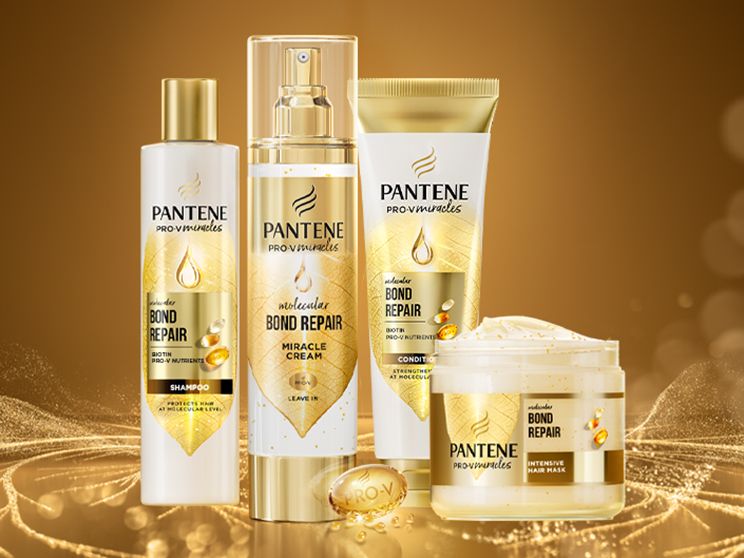
Pantene does not use wax in its products. The smoothing effect that consumers experience is actually caused by specialized, cosmetic-grade conditioning agents and silicones. These compounds are engineered to target only the damaged areas of the hair fiber. Highly charged damaged regions attract the conditioning molecules, which deposit a microscopically thin, uniform layer that fills in cuticle gaps, yielding a reflective, smooth surface.
Pantene Haircare Facts Regarding Silicone and Buildup
Silicones are a widely discussed category of cosmetics ingredients. It is a critical Pantene Haircare Facts point that not all silicones are created equal. Pantene uses specialized silicones, primarily Dimethicone and Bis-Aminopropyl Dimethicone.
Bis-Aminopropyl Dimethicone is a modified silicone that binds selectively to the damaged parts of the hair without attaching to itself. This unique property prevents the product from building up excessively on the hair shaft, even with consecutive washes. It provides targeted thermal protection and superb detangling properties while remaining easily removable with standard surfactants. For individuals who prefer silicone-free options, Pantene has developed specialized lines like the “Volume & Body” collection, which relies on lightweight polymers instead of silicones to provide lift and movement.
Pantene Haircare Facts for Different Hair Types
A common error in hair maintenance is utilizing a formula designed for a different hair texture. The brand has evolved its catalog to accommodate diverse hair profiles, from extremely fine, straight hair to high-porosity coily and curly textures.
For fine hair, excess lipid or silicone content can weigh down the roots, causing a greasy appearance. Conversely, thick, coarse, or curly hair requires highly concentrated lipids to lock in moisture and prevent frizz. Understanding these tailored formulations is essential for retail distributors or salons sourcing bulk supplies to meet their clients’ diverse needs.

Collection Comparison Matrix
To help you choose the right product, the following table details the differences between Pantene’s core product lines based on their formulation science and primary use cases:
| Collection Name | Primary Benefit | Key Active Ingredients | Best Suited For |
|---|---|---|---|
| Daily Moisture Renewal | Deep hydration and dry-out protection | Pro-V Nutrient Blend, Dimethicone, Histidine | Dry, damaged, or color-treated hair |
| Volume & Body | Lightweight fullness; 0% Silicones | Pro-Vitamin B5, lightweight styling polymers | Fine, flat, or easily weighed-down hair |
| Smooth & Sleek | Frizz control and moisture barrier creation | Argan Oil, Pro-V formula, Bis-Aminopropyl Dimethicone | Wavy, frizzy, and high-porosity hair |
| Miracle Rescue | Intense structural repair | Concentrated Pro-V, protective antioxidants | Severely heat-damaged or bleached hair |
Conclusion & Takeaways
In conclusion, understanding these essential Pantene Haircare Facts empowers you to make informed, science-based decisions for your hair health. Rather than relying on common myths, looking at chemical formulations reveals that Pantene’s use of Pro-Vitamin B5 and targeted silicones provides real structural reinforcement, heat protection, and cuticle-smoothing benefits. By matching the right product collection to your specific hair porosity and thickness, you can achieve professional-grade results from the comfort of your home.
If you are a retailer, salon owner, or distributor looking to stock these globally recognized, high-demand products, make sure to read our comprehensive guide on sourcing and wholesale purchasing to get the best value for your inventory.
Pantene Haircare Facts FAQ
Disclaimer: Unless otherwise stated, the images used in this article are the property of their respective owners. We do not claim ownership of any third-party images featured, and they are used here strictly for informational and educational purposes. If you are the copyright holder and wish to have an image removed, please contact us.