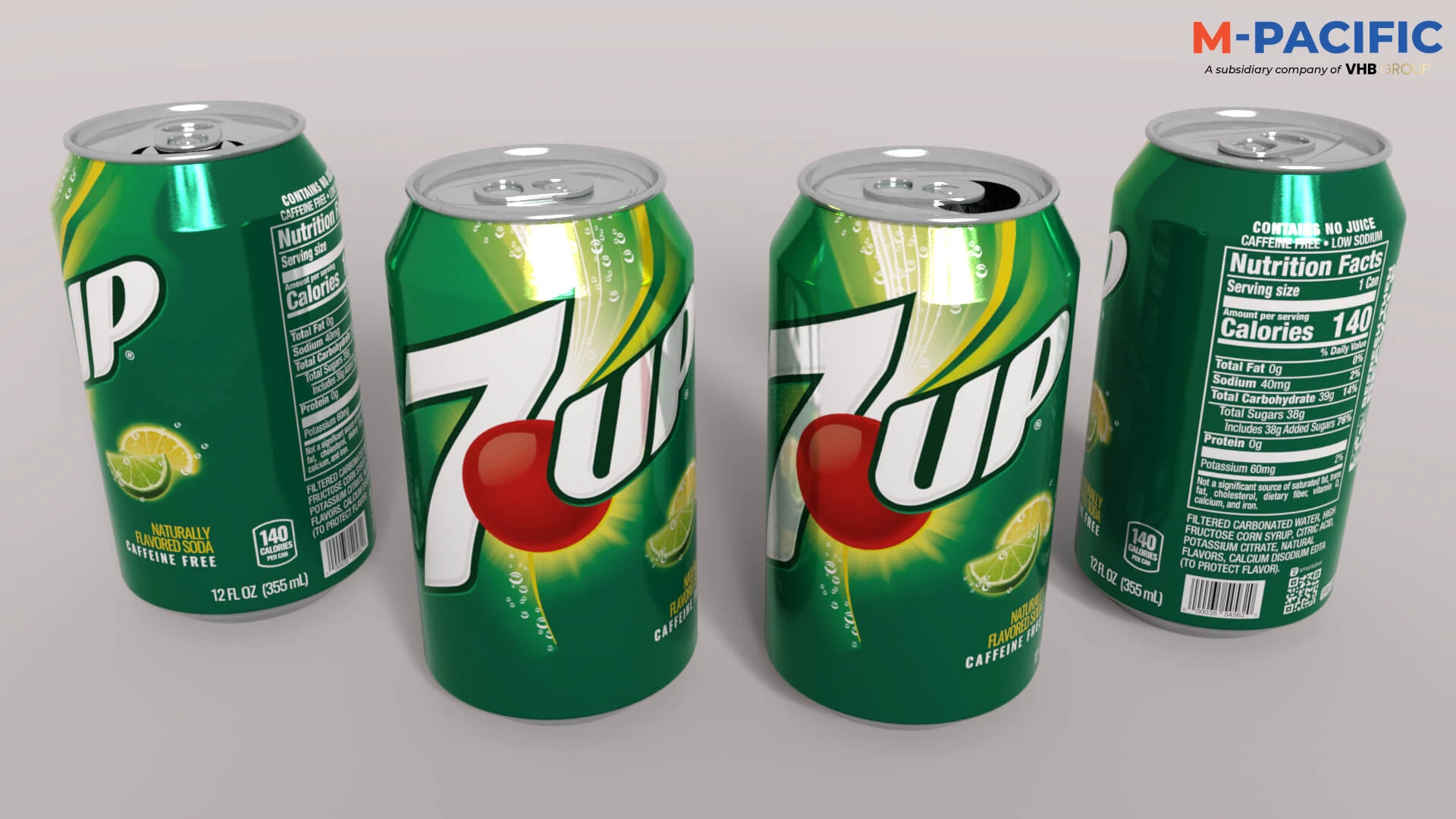
Sourcing 7 Up Soft Drink Wholesale inventory provides international B2B beverage distributors, supermarket chains, cash-and-carry wholesalers, and FMCG trading partners with an essential, high-velocity revenue engine in the carbonated soft drink (CSD) category. As one of the world’s most iconic lemon-lime beverage brands, 7 Up holds a commanding market position as a crisp, caffeine-free alternative to traditional cola sodas.
For international beverage importers, managing full container load (FCL) consignments of 7 Up requires navigating complex global supply chains—including dual corporate ownership dynamics, regional origin bottling hub selection, container weight payload limits, packaging SKU diversity, sugar-tax compliance, and parallel trade logistics. This comprehensive B2B pillar guide analyzes the technical, commercial, and logistical protocols necessary to build a highly profitable distribution model.

Table of Contents
- Global Market Demand and Corporate Ownership Structure
- Product Portfolio Breakdown for Wholesale Importers
- Packaging Formats and Container Loading Specifications
- Ocean Freight Logistics, Palletization, and Floor-Loading
- B2B Procurement Strategies, Incoterms, and Pricing Models
- Import Compliance, Food Safety Certification, and Tariff Codes
- Frequently Asked Questions (FAQ)
- Partner with Us for Your Global Beverage Sourcing Needs
1. Global Market Demand and Corporate Ownership Structure
The non-alcoholic beverage category relies heavily on established lemon-lime soft drinks to capture consumer demand across all age groups. 7 Up generates billions of dollars in annual global retail sales, holding commanding market shares across Europe, Asia-Pacific, Latin America, North America, the Middle East, and Africa.
Dual Corporate Ownership Model
A critical factor for B2B buyers is understanding 7 Up’s unique bifurcated ownership architecture established in 1986:
- United States Market: Owned and manufactured entirely by Keurig Dr Pepper (KDP).
- International Markets (Rest of World): Owned, manufactured, and distributed globally by PepsiCo through its international bottling network (e.g., Britvic in the UK, Suntory PepsiCo in Vietnam, Varun Beverages in India/Africa).
Adding 7 Up Soft Drink Wholesale stock to a wholesale catalog delivers distinct commercial advantages:
- Pre-Sold Brand Equity: Decades of multi-million-dollar global marketing campaigns generate immediate consumer pull.
- Caffeine-Free Differentiation: Serves health-conscious families, children, and evening diners seeking a refreshing soda without caffeine stimulants.
- Multi-Channel Distribution: Suitable for hypermarket retail, convenience forecourts, traditional trade bazaars, corporate office pantries, and HoReCa (Hotel, Restaurant, Catering) venues.
2. Product Portfolio Breakdown for Wholesale Importers
Curating an optimal product mix requires selecting the right combination of 7 Up variants tailored to destination market demographics:
- 7 Up Classic (Original Taste): The iconic flagship formula delivering a crisp, clear lemon-lime flavor crafted with natural citrus extracts and natural sugar, beet sugar, or high-fructose corn syrup depending on regional origin.
- 7 Up Free / 7 Up Zero Sugar: Formulated without sugar or calories using Acesulfame K and Sucralose / Aspartame. It targets health-conscious and sugar-tax-regulated markets without compromising on bold taste.
- 7 Up Mojito / Flavor Editions: Specialty European variants infused with mint or berry notes designed for young demographics and cocktail mixing channels.
- 7 Up Nimbooz / Masala Soda: Regional Indian and South Asian variants infused with natural lemon juice and spices to cater to localized palate preferences.
For deeper insights into chemical formulation and carbonation metrics, explore our guide on 7 Up Soft Drink Refreshment Facts.
3. Packaging Formats and Container Loading Specifications
Selecting the right packaging formats directly impacts freight density, shelf presence, and landed unit costs. 7 Up is manufactured in diverse metallic can, glass, and PET plastic packaging formats.
Aluminum Cans (250ml, 320ml, 330ml, 355ml)
Aluminum cans are the gold standard for ocean freight export. They provide an absolute barrier against light and oxygen, guaranteeing a 12 to 18-month shelf life. Sleek cans (320ml / 330ml) dominate modern trade and convenience chillers, while standard stubby cans (355ml) are universally used in food service and vending networks.
PET Plastic Bottles (390ml, 500ml, 1.5L, 2.0L)
PET plastic bottles serve the “on-the-go” single-serve segment (390ml / 500ml) and family sharing segments (1.5L / 2.0L). While lighter than glass, importers must account for minor $CO_2$ pressure loss over time, resulting in a slightly shorter shelf life (9 to 12 months) compared to aluminum cans.
Importers can evaluate unique container designs in our companion guide on 7 Up Soft Drink Unique Can SKUs.
4. Ocean Freight Logistics, Palletization, and Floor-Loading
Managing international logistics for carbonated soft drinks requires strict payload management. Liquid cargo is weight-dense, meaning ocean containers reach legal road and vessel weight limits (“weighing out”) long before physical volumetric space is exhausted (“cubing out”).
Floor-Loading vs. Palletized Handling
- Floor-Loading (Hand Stacking): Trays and cartons are stacked directly on the container floor. This method increases total carton payload by 15% to 20% compared to wooden pallets, significantly reducing the net ocean freight cost per unit.
- Palletized Loading: Cartons are loaded on Euro-pallets or standard ISO pallets. While it reduces total case capacity per container, it enables rapid forklift offloading at automated distribution centers.
| Packaging Format | Case Pack Configuration | Gross Weight / Case | 20ft FCL Capacity (Floor Loaded) | 40ft HC FCL Capacity (Floor Loaded) |
| 330ml Sleek Can | 24 Cans / Corrugated Tray | ~8.6 kg | ~2,350 Trays (~56,400 Cans) | ~3,150 Trays (~75,600 Cans) |
| 355ml Standard Can | 24 Cans / Corrugated Tray | ~9.3 kg | ~2,150 Trays (~51,600 Cans) | ~2,900 Trays (~69,600 Cans) |
| 500ml PET Bottle | 24 Bottles / Shrink Case | ~13.2 kg | ~1,550 Cases (~37,200 Bottles) | ~2,050 Cases (~49,200 Bottles) |
| 1.5L PET Bottle | 12 Bottles / Shrink Case | ~19.1 kg | ~1,050 Cases (~12,600 Bottles) | ~1,400 Cases (~16,800 Bottles) |
Temperature Control and Condensation Shielding
While carbonated sodas are shelf-stable at room temperature, transit through tropical ocean routes can expose containers to temperatures exceeding 45°C. Importers regularly install reflective thermal container liners or request “below-deck” vessel stowage to prevent thermal pressure stress or container sweat (condensation) from damaging corrugated trays.
5. B2B Procurement Strategies, Incoterms, and Pricing Models
Achieving target profit margins requires structuring procurement contracts with verified master exporters, licensed PepsiCo or KDP bottlers, or FMCG consolidators.
Sourcing Models: Franchise Bottlers vs. FMCG Consolidators
Direct procurement contracts with authorized bottlers require massive annual commitments (10+ FCLs per month) and exclusive territorial distribution rights. Independent wholesalers generally partner with master FMCG consolidators offering flexible minimum order quantities (1x20ft or 1x40ft FCL) and mixed-container capabilities (combining 7 Up with Pepsi, Mirinda, or Mountain Dew).
To understand regional bottling hub networks, explore our analysis of 7 Up Soft Drink Regional Origin bottling hubs.
Incoterms 2020 Framework
- Free On Board (FOB): The recommended industry standard. The seller manages inland transport, export customs, and loading at origin ports (e.g., Rotterdam, Gdynia, or Ho Chi Minh City). The buyer assumes control over ocean shipping rates, carrier routing, and marine insurance.
- Cost, Insurance, and Freight (CIF): Ideal for buyers who prefer the exporter to organize ocean freight directly to the destination discharge port.
6. Import Compliance, Food Safety Certification, and Tariff Codes
Navigating customs regulations is critical to preventing port demurrage charges and rejected shipments.
Mandatory Export Documentation Suite
- Commercial Invoice & Packing List: Itemizing exact SKU descriptions, net/gross weights, batch numbers, and Harmonized System codes (HS 2202.10.00 for carbonated sweetened beverages).
- Certificate of Origin (COO): Issued by the origin Chamber of Commerce to qualify for preferential customs tariffs under bilateral trade agreements.
- Certificate of Analysis (CoA): Issued by an accredited laboratory certifying Brix sugar levels, carbonation pressure, acidity, and microbiological safety.
- Health & Free Sale Certificate: Confirming product safety for human consumption according to health ministry standards.
Sticker Labeling and Language Compliance
If factory stock lacks native language ingredient declarations for your destination market, export consolidators can apply custom translated compliance sticker labels over original packaging at origin warehouses prior to container stuffing.
7. Partner with Us for Your Global Beverage Sourcing Needs
Partnering with an experienced FMCG export consolidator ensures seamless procurement of authentic 7 Up Soft Drink Wholesale inventory at highly competitive pricing structures. If you are ready to expand your import portfolio and secure tier-one global trade terms, contact our commercial trade sales team today to request a customized quote, explore mixed-container consolidation options, and scale your beverage distribution business globally.
7 Up Soft Drink Wholesale FAQ
Disclaimer: Unless otherwise stated, the images used in this article are the property of their respective owners. We do not claim ownership of any third-party images featured, and they are used here strictly for informational and educational purposes. If you are the copyright holder and wish to have an image removed, please contact us.