Evaluating Dove Beauty Soap Moisture Facts provides essential technical data for B2B personal care buyers, cosmetic chemists, dermatological suppliers, and retail category directors. Understanding the syndet chemistry, 1/4 moisturizing cream matrix, skin stratum corneum preservation, and neutral pH balance of Dove Beauty Bar is critical when evaluating product performance, skin mildness, and regulatory compliance for international distribution.
Dove represents one of the world’s most scientifically tested skin-cleansing products. Built upon its landmark 1957 US patent, Dove’s formulation combines mild synthetic surfactants with free fatty acids to cleanse skin without damaging natural skin lipids. This technical guide analyzes the chemical, physical, and dermatological facts governing Dove Beauty Bar formulations.
Table of Contents
- The Scientific Origin and Patent History of Dove
- Syndet Chemistry vs. Traditional Soap Saponification
- The 1/4 Moisturizing Cream Matrix: Stearic Acid and Lauric Acid Mechanics
- Stratum Corneum Hydration and pH Balance Science
- Clinical Testing, Safety Certifications, and Shelf-Life Physics
- Frequently Asked Questions (FAQ)
1. The Scientific Origin and Patent History of Dove
Dove Beauty Bar was developed during World War II when military surgeons sought a mild skin cleanser for wounded soldiers that would not irritate damaged skin or burn open wounds. Traditional soap bars stripping natural skin oils caused severe irritation on injured skin.
In 1957, Lever Brothers patented the neutral syndet bar formulation in the United States, launching Dove as a “Beauty Bar” containing 1/4 moisturizing cream. Clinical dermatological studies proved that Dove was significantly milder than traditional soap bars, establishing a new category in personal wash.
2. Syndet Chemistry vs. Traditional Soap Saponification
Understanding the chemical distinction between traditional alkali soaps and synthetic detergent (syndet) bars explains Dove’s superior skin mildness:
[Traditional Soap Saponification]
Tallow / Palm Fat + Sodium Hydroxide ──► Sodium Tallowate + Glycerin (pH 9.5 - 10.5)
                                                │
                                                ▼
                                    Alkaline Skin Damage & Dryness

[Dove Syndet Chemistry]
Sodium Lauroyl Isethionate + Stearic Acid ──► Neutral Syndet Bar (pH 6.5 - 7.5)
                                                │
                                                ▼
                                    Preserved Skin Barrier & Hydration
Traditional Soap Saponification (pH 9.5 to 10.5)
Traditional soaps are produced by saponifying animal tallow or vegetable oils with strong sodium hydroxide (lye). The resulting alkali soap molecules (such as sodium tallowate or sodium cocoate) create a high pH environment that swells the skin’s outer protein layer, stripping natural intercellular lipids and causing tightness and scaling.
Dove Syndet Formulation (pH 6.5 to 7.5)
Dove utilizes Sodium Lauroyl Isethionate—an ester synthesized from coconut fatty acids and isethionic acid. Sodium Lauroyl Isethionate cleanses gently without swelling skin proteins or disrupting the natural acid mantle.
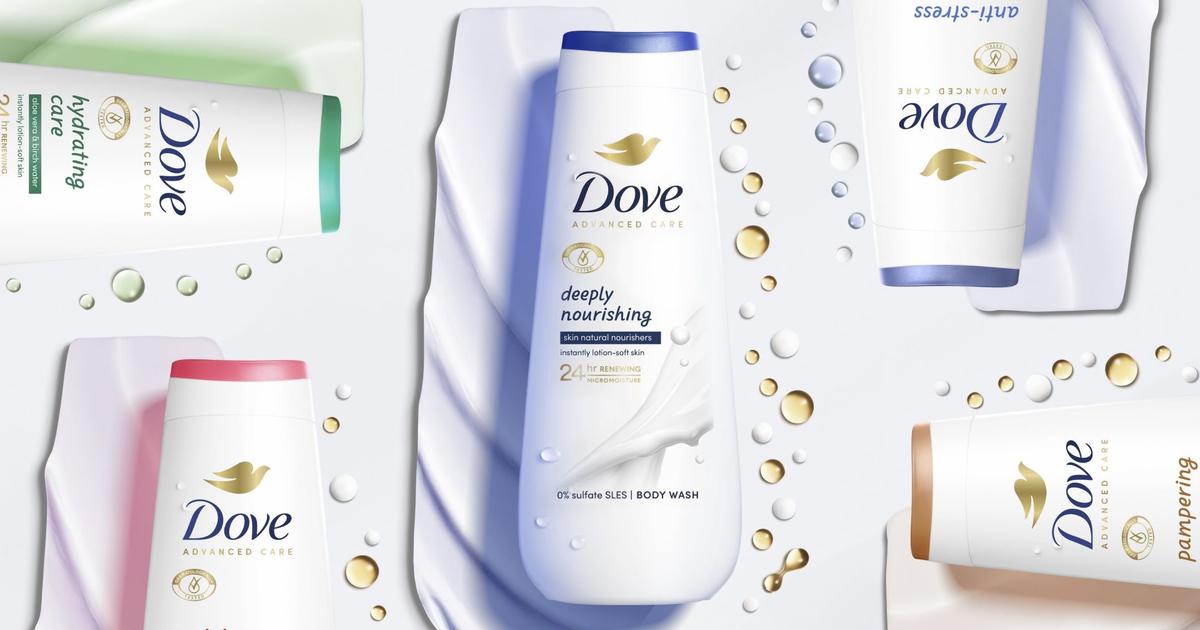
3. The 1/4 Moisturizing Cream Matrix: Stearic Acid and Lauric Acid Mechanics
The core identity of Dove is its 1/4 moisturizing cream—comprising exactly 25% of the total bar mass.
Stearic and Palmitic Acid Lipids
Dove contains high concentrations of free long-chain fatty acids, primarily Stearic Acid and Palmitic Acid. During washing, these natural lipids deposit onto the outer skin layer (stratum corneum), replacing natural skin lipids washed away by water.
Moisture Retention and Transepidermal Water Loss (TEWL)
By replenishing skin lipids during cleansing, Dove forms a microscopic protective barrier over the skin surface. Clinical measurements confirm that washing with Dove reduces Transepidermal Water Loss (TEWL) compared to washing with traditional soaps, leaving skin soft and hydrated.
4. Stratum Corneum Hydration and pH Balance Science
The stratum corneum is the outermost layer of the epidermis, consisting of dead skin cells (corneocytes) surrounded by a lipid matrix (ceramides, cholesterol, and free fatty acids).
Acid Mantle Preservation
The human skin surface maintains a slightly acidic natural “acid mantle” (pH 4.5 to 5.5) that inhibits pathogenic bacterial growth. While traditional alkaline soaps spike skin pH above 9.0 for hours, Dove’s neutral pH (6.5 to 7.5) allows the skin’s acid mantle to recover rapidly within minutes after washing.

5. Clinical Testing, Safety Certifications, and Shelf-Life Physics
Dove Beauty Bar undergoes rigorous analytical and clinical testing:
- Microbiological Quality Control: Every production lot is tested to verify zero contamination from pathogenic bacteria, yeast, or molds.
- Dermatologist Hypoallergenic Testing: Dove Sensitive Skin bars undergo human repeat insult patch testing (HRIPT) to verify zero sensitization or allergic response.
- Physical Bar Hardness & Lather Profile: Formulations are extrusion-molded to maintain a firm bar structure that resists softening in wet soap dishes while generating rich, dense cream lather.
- Factory Shelf Life: Unopened products maintain an official shelf life of 36 months from the manufacturing date under ambient storage conditions.
Dove Beauty Soap Moisture Facts FAQ
Disclaimer: Unless otherwise stated, the images used in this article are the property of their respective owners. We do not claim ownership of any third-party images featured, and they are used here strictly for informational and educational purposes. If you are the copyright holder and wish to have an image removed, please contact us.