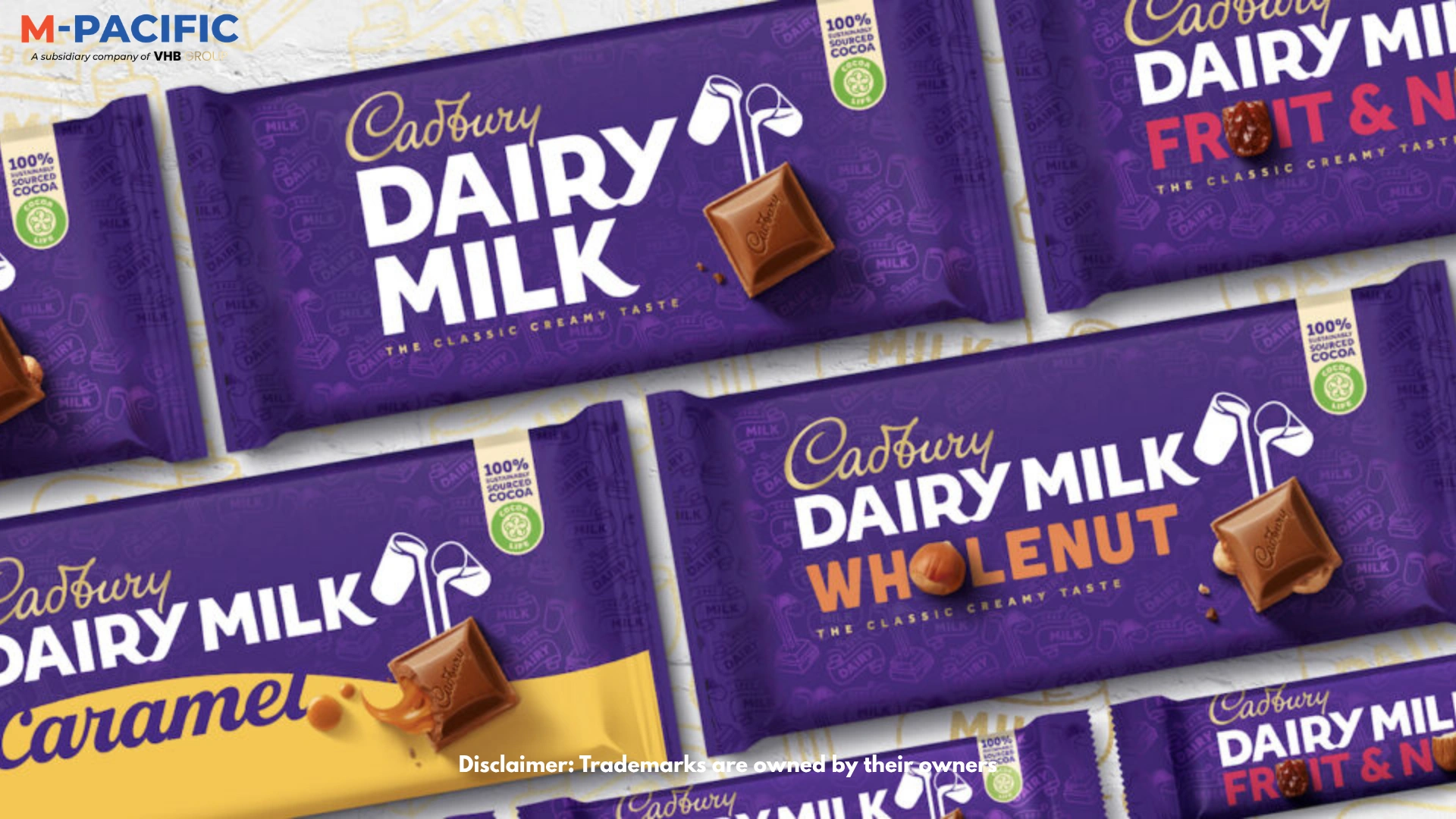
Exploring Cadbury Dairy Milk Chocolate Import Origin parameters provides confectionery importers, retail category managers, and wholesale buyers with deep insights into how brand heritage, Mondelēz International global manufacturing architecture, and regional milk sourcing adaptations govern product quality and trade economics. While all Cadbury Dairy Milk chocolate adheres to Mondelēz global quality standards, regional manufacturing hubs tailor liquid milk condensation ratios, cocoa solid percentages, and packaging languages to local market demands.
Evaluating origin geography allows procurement directors at M-Pacific to secure origin-traceable supply chains, optimize regional tariff structures, and manage parallel trade opportunities.
Table of Contents
- Historical Heritage: From Bournville, UK, to Global Confectionery Supremacy
- Mondelēz International’s Global Manufacturing Architecture for Confectionery
- Regional Formulation Adaptations: United Kingdom, Australia, India, and South Africa
- Comparative Analysis of Regional Cadbury Manufacturing Hubs
- International Import Compliance, Labeling Regulations, and Parallel Trade
- Frequently Asked Questions (FAQ)
1. Historical Heritage: From Bournville, UK, to Global Confectionery Supremacy
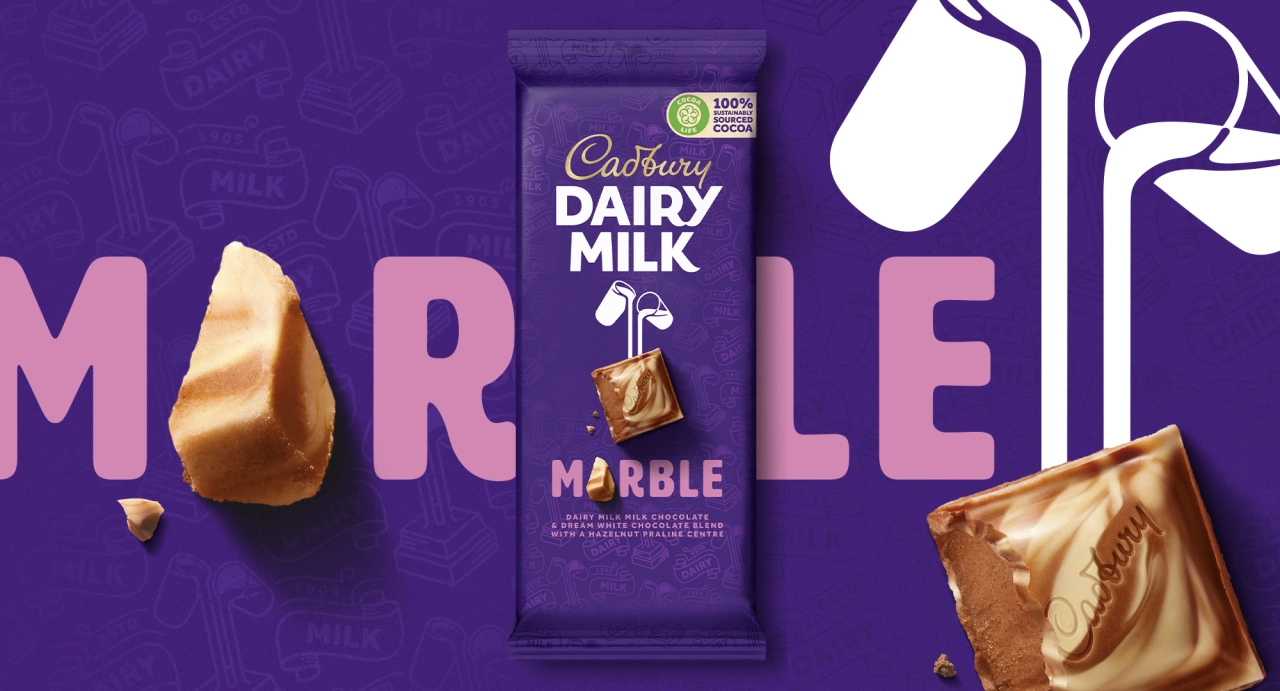
The history of Cadbury Dairy Milk began in 1824 in Birmingham, England, when John Cadbury opened a shop selling drinking chocolate. In 1879, the Cadbury brothers built a model factory village in Bournville, England, known as the “Factory in the Garden.”
In 1905, George Cadbury Jr. developed the revolutionary Cadbury Dairy Milk recipe, incorporating a higher ratio of fresh liquid milk than any competing bar. Bournville remains the historic “spiritual home” of Cadbury Dairy Milk.
2. Mondelēz International’s Global Manufacturing Architecture for Confectionery
Mondelēz International manufactures Cadbury Dairy Milk chocolate across a network of specialized confectionery plants located near major dairy farming and trade corridors:
- United Kingdom Hub (Bournville / Sheffield): The primary UK facility supplying Western Europe, North America, and global duty-free channels.
- Australian Hub (Claremont, Tasmania): Utilizes fresh liquid milk from Tasmanian dairy farms, supplying Australia, New Zealand, and Asia-Pacific export markets.
- Indian Hub (Baddi / Sri City): Large-scale production plants serving the Indian subcontinent and South Asian markets.
- South African Hub (Gqeberha / Port Elizabeth): Supplies the African continent and Indian Ocean territories.
3. Regional Formulation Adaptations: United Kingdom, Australia, India, and South Africa
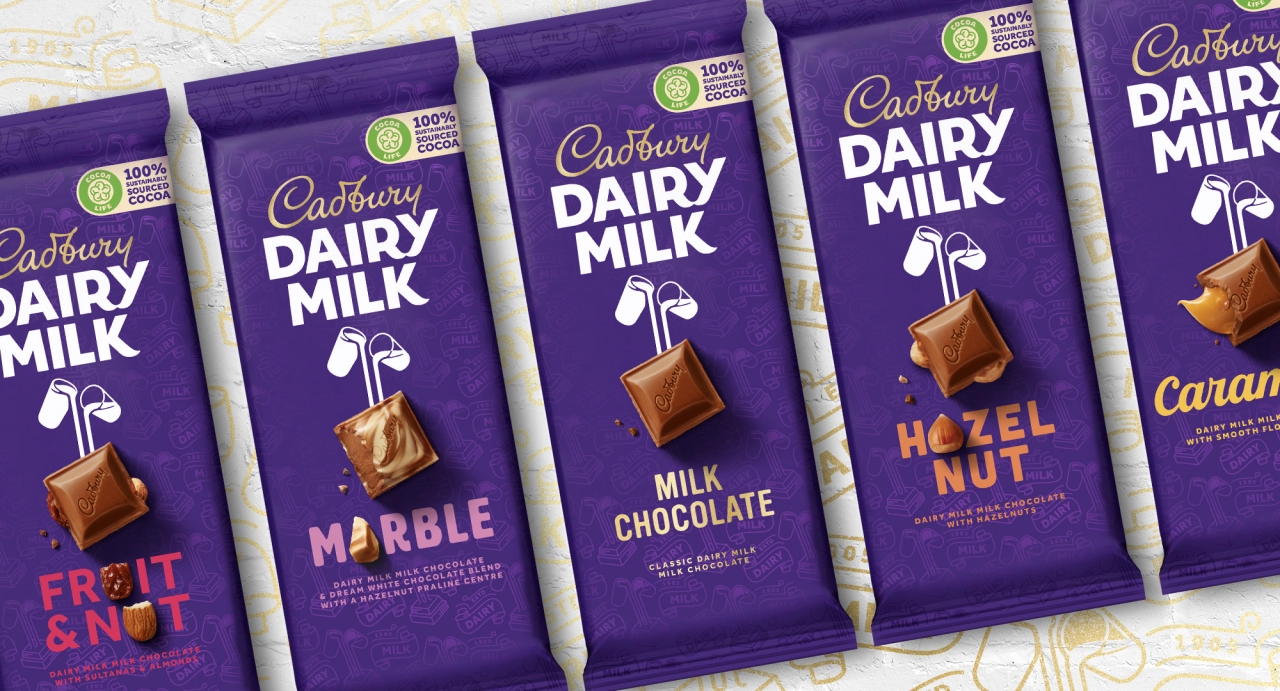
Mondelēz adapts Cadbury Dairy Milk formulations slightly to align with regional milk sourcing, climate conditions, and consumer taste expectations:
United Kingdom & European Formulations
Produced using fresh liquid milk from British dairy herds and crumb condensation technology. Known for its intense caramelized-milk aroma and soft, creamy melt.
Australian & New Zealand Formulations
Utilizes rich Tasmanian full-cream milk, yielding a smooth texture with subtle floral milk notes highly prized across Asia-Pacific trade corridors.
Indian & Warm-Climate Formulations
Formulated with slightly higher cocoa solid ratios and adjusted vegetable fat allowances (where legally permitted) to improve structural resistance against melting during distribution in warm tropical climates.
4. Comparative Analysis of Regional Cadbury Manufacturing Hubs
The following matrix compares primary regional origin hubs for Cadbury Dairy Milk exported by M-Pacific:
| Manufacturing Hub | Primary Supply Markets | Packaging Languages | Signature Flavor Profile | Commercial Trade Advantage |
| United Kingdom (Bournville) | UK, Europe, Global Duty-Free | English / Multilingual | Rich caramelized milk, classic British profile | High brand prestige, authentic heritage appeal. |
| Australia (Claremont) | Australia, New Zealand, Asia | English | Smooth, rich creamy Tasmanian dairy notes | Preferred choice across Southeast Asian import markets. |
| India (Baddi / Sri City) | South Asia, Middle East | English / Hindi | Balanced cocoa/milk, tropical heat stability | High-volume production capacity, competitive FOB pricing. |
| South Africa (Gqeberha) | Southern & East Africa | English | Firm texture, rich caramelized dairy notes | Strong African trade agreements, high volume throughput. |
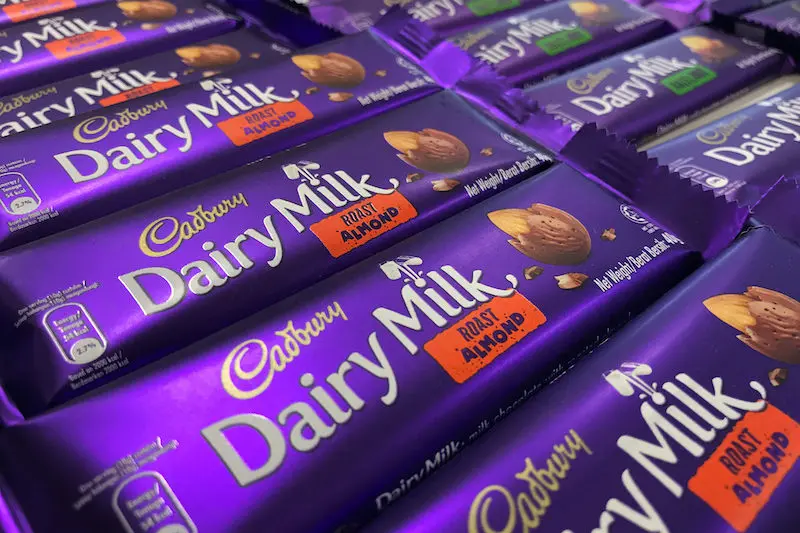
5. International Import Compliance, Labeling Regulations, and Parallel Trade
Navigating international trade in Cadbury Dairy Milk requires ensuring full regulatory compliance at the destination port:
Over-Stickering and Ingredient Disclosures
When importing Cadbury stock across international borders, local food safety laws require translated compliance labels. Over-stickers must disclose full ingredient lists, allergen warnings (milk, soy, nuts), net weight, manufacturing origin, and regional distributor details.
Parallel Trade Arbitrage
Price differentials between manufacturing regions create parallel trade opportunities for international B2B traders. Importers leverage currency shifts and regional pricing strategies to source authentic Cadbury inventory from high-yield origin hubs like the UK or Australia.
Cadbury Dairy Milk Import Origin FAQ
Disclaimer: Unless otherwise stated, the images used in this article are the property of their respective owners. We do not claim ownership of any third-party images featured, and they are used here strictly for informational and educational purposes. If you are the copyright holder and wish to have an image removed, please contact us.