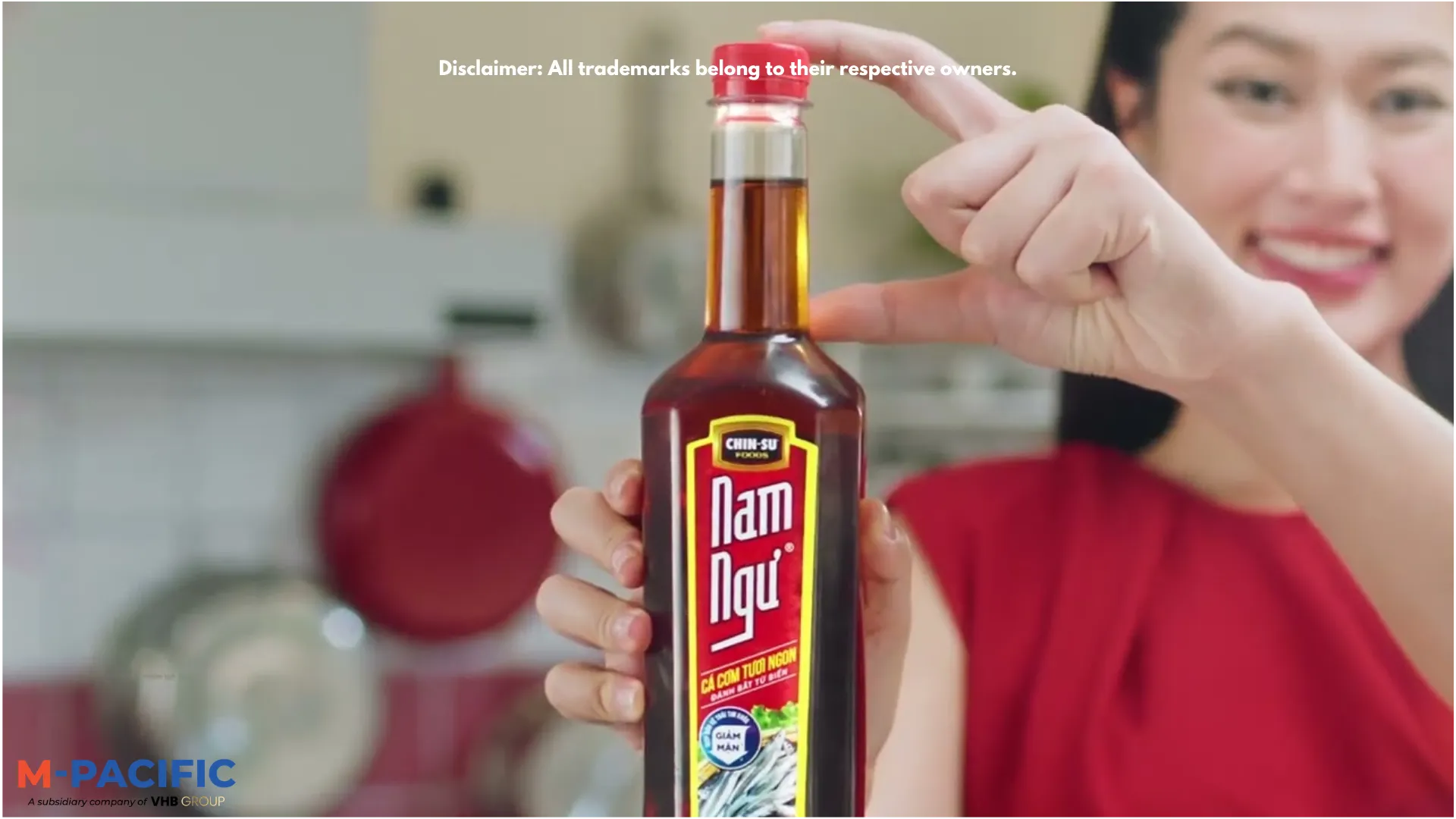
Sourcing Nam Ngư Fish Sauce Bulk inventory provides international food distributors, Asian supermarket chains, cash-and-carry wholesalers, commercial food processors, and restaurant suppliers with a high-turnover revenue engine in the global fish sauce and umami seasoning category. Manufactured by Masan Consumer Corporation—Vietnam’s leading condiment producer—Nam Ngư stands as the #1 fish sauce brand in Vietnam, commanding overwhelming domestic market share and expanding rapidly across international export markets.
For B2B procurement managers and supply chain directors working with trading consolidators like M-Pacific, managing full container load (FCL) consignments of wholesale Nam Ngư fish sauce requires evaluating product bottle specifications (glass vs. clear PET), nitrogen/protein degree levels, ocean container weight limits, salt crystallization controls, and customs clearance protocols. This technical guide evaluates the operational, chemical, and logistical frameworks necessary to establish a highly profitable distribution model.
Table of Contents
- Global Market Demand and Commercial Positioning of Nam Ngư Fish Sauce
- Product Portfolio Breakdown: Standard Anchovy, Gold Label, and Bulk 4.8L Jugs
- Anchovy Fermentation Chemistry, Nitrogen Degrees, and Amino Acid Science
- Packaging Configurations, Glass vs. PET Bottles, and Container Payload Yields
- B2B Sourcing Pathways: Masan Consumer Direct vs. FMCG Consolidators
- Landed Cost and Gross Margin Calculation Framework
- Import Compliance, Harmonized System Codes, and Customs Documentation
- Frequently Asked Questions (FAQ)
1. Global Market Demand and Commercial Positioning of Nam Ngư Fish Sauce
The global Nam Ngư Fish Sauce Bulk and umami seasoning market continues to grow, driven by the global popularity of Vietnamese cuisine (such as Pho, Bánh Mì, and Bo Bun) and consumer demand for savory, authentic fermented condiments. Nam Ngư is the dominant fish sauce brand in Vietnam, trusted by millions of households and commercial kitchens daily.
Adding bulk Nam Ngư fish sauce inventory to a B2B distribution catalog delivers distinct commercial advantages:
- Unmatched Brand Authority: As Vietnam’s leading fish sauce, Nam Ngư generates pre-sold demand across Asian grocery channels and commercial food service.
- Essential Cooking Staple: Serves as the foundational savory seasoning for dipping sauces, marinades, braising, and soups across Southeast Asian cooking.
- High Container Freight Density: Packed densely in glass or PET bottles, liquid fish sauce maximizes ocean container weight payload yield.
2. Product Portfolio Breakdown: Standard Anchovy, Gold Label, and Bulk 4.8L Jugs
Curating an optimal Nam Ngư inventory mix requires selecting the right combination of packaging SKUs and formulation lines:
Core Consumer Retail Lines
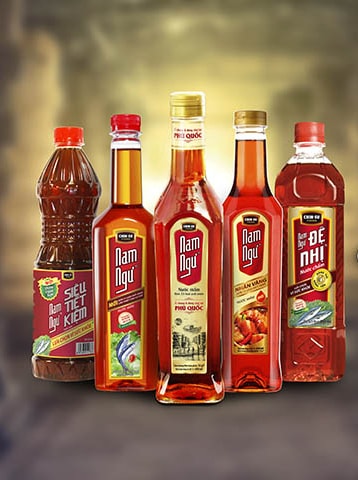
- Nam Ngư Anchovy Fish Sauce (500ml / 750ml / 900ml PET & Glass): The flagship daily household fish sauce, featuring a harmonious savory taste, golden amber color, and light anchovy aroma.
- Nam Ngư Gold Label Premium (500ml / 750ml): Premium grade formulated with higher anchovy protein content, enriched with 15 essential amino acids for deep umami mouthfeel.
Commercial Food Service Lines
- Nam Ngư Super Saver Bulk Jugs (4.8 Liters): Large-capacity heavy-duty plastic jerry cans designed specifically for commercial restaurant kitchens, catering operations, and food processing plants.
3. Anchovy Fermentation Chemistry, Nitrogen Degrees, and Amino Acid Science
Nam Ngư fish sauce is produced through traditional autolytic proteolysis of fresh marine anchovies (Stolephorus commersonii) harvested from Phu Quoc and Phan Thiet fishing grounds:
[Fresh Marine Anchovies + Sea Salt (3:1 Ratio)]
                         │
                         ▼
[12-Month Anaerobic Wooden Barrel Fermentation]
                         │
                         ▼
[Autolytic Protein Breakdown into Free Amino Acids (15+ Types)]
                         │
                         ▼
[Filtration, Pasteurization & Standardized Bottling]
Autolytic Proteolysis and Nitrogen Degrees (°N)
Fresh anchovies are mixed with pure sea salt at a 3:1 ratio and aged in large wooden barrels for 12 months. Natural proteolytic enzymes in the fish gut break down complex muscle proteins into free amino acids (including glutamic acid, lysine, and alanine). The richness of fish sauce is measured in Degrees Nitrogen (°N), representing grams of total nitrogen per liter of liquid.
Salt Saturation and Crystallization Physics
Nam Ngư fish sauce contains approximately 20% to 25% dissolved sodium chloride (salt). High salt concentration creates an environment where pathogenic bacteria cannot survive, rendering the sauce naturally shelf-stable for 12 to 24 months without synthetic chemical preservatives.
4. Packaging Configurations, Glass vs. PET Bottles, and Container Payload Yields
Nam Ngư fish sauce is packaged in both clear PET plastic bottles and premium glass bottles equipped with precision pour caps.
| Packaging SKU Format | Bottle Volume / Type | Master Unit Packing | Cartons per 20ft FCL | Net Payload per 20ft Container | Primary Distribution Channel |
| Standard PET Bottle | 500ml / 750ml PET | 24 or 18 Bottles / Case | 1,400 Cases | 16.8 Metric Tons | Supermarkets & Asian Grocery |
| Glass Bottle Premium | 500ml Glass | 24 Bottles / Case | 1,200 Cases | 18.5 Metric Tons (Heavy Glass) | Premium Retail & Specialty |
| Super Saver Commercial | 4.8 Liters Jug | 4 Jugs / Case | 1,000 Cases | 19.2 Metric Tons | Restaurants & Catering (HoReCa) |
Ocean Container Weight Payload Management
Fish sauce is a dense liquid (density ~1.20 g/cm³). Ocean containers reach legal road and vessel weight limits (21.5 to 22.5 Metric Tons) long before physical volumetric space is completely filled. 20ft containers are used exclusively for fish sauce shipping.
5. B2B Sourcing Pathways: Masan Consumer Direct vs. FMCG Consolidators
Commercial buyers access wholesale Nam Ngư inventory through two primary procurement channels:
Direct Masan Consumer Corporation Contracts
Enterprise distributors establish direct supply agreements with Masan Consumer Corporation in Vietnam.
- Advantages: Lowest factory-gate pricing, direct access to fresh production runs, and customized export labeling.
- Trade-Offs: Requires substantial annual volume commitments (typically 5+ FCLs monthly) and strict territorial exclusivity.
FMCG Export Consolidators
Independent wholesalers source via master FMCG consolidators like M-Pacific.
- Advantages: Flexible Minimum Order Quantities (MOQs starting at 1x20ft FCL) and mixed-container capabilities (combining Nam Ngư with Chin-Su, Kinh Do, or Cosy).
6. Landed Cost and Gross Margin Calculation Framework
Procurement teams calculate net landed unit costs across ocean shipping lanes by applying a structured calculation process:
- Step 1: Determine Total Shipping Overhead = Ocean Freight Charges + Import Customs Duties + Marine Insurance Premiums + Local Port Drayage.
- Step 2: Calculate Landed Cost per Master Case = Free On Board (FOB) Purchase Case Price + (Total Shipping Overhead / Total Cases Loaded).
- Step 3: Calculate Landed Cost per Saleable Bottle = Total Landed Cost per Master Case / Saleable Bottles per Case (e.g., 24 bottles).
- Step 4: Calculate Net Profit Margin Percentage = [(Target Wholesale Selling Price – Landed Unit Cost) / Target Wholesale Selling Price] x 100.
7. Import Compliance, Harmonized System Codes, and Customs Documentation
Clearing fermented food imports through international customs requires complete compliance documentation verified by accredited testing laboratories:
Essential Export Documentation Suite
- Commercial Shipping Documents: Master Bill of Lading (B/L), Commercial Invoice, Detailed Packing List, and Certificate of Origin (COO / Form D for ASEAN).
- Quality & Food Safety Certificates: Batch Certificate of Analysis (CoA) detailing total nitrogen (°N), salt percentage, histamine levels, and microbiological sterility.
- Histamine Test Report: Certified testing verifying histamine levels are below international safety limits (< 200 ppm).
- Harmonized System Classification: Classified under HS Code 2103.90.10 or HS Code 2103.90.90 (Fish sauce and preparations therefor).
Nam Ngư Fish Sauce Bulk FAQ
Disclaimer: Unless otherwise stated, the images used in this article are the property of their respective owners. We do not claim ownership of any third-party images featured, and they are used here strictly for informational and educational purposes. If you are the copyright holder and wish to have an image removed, please contact us.