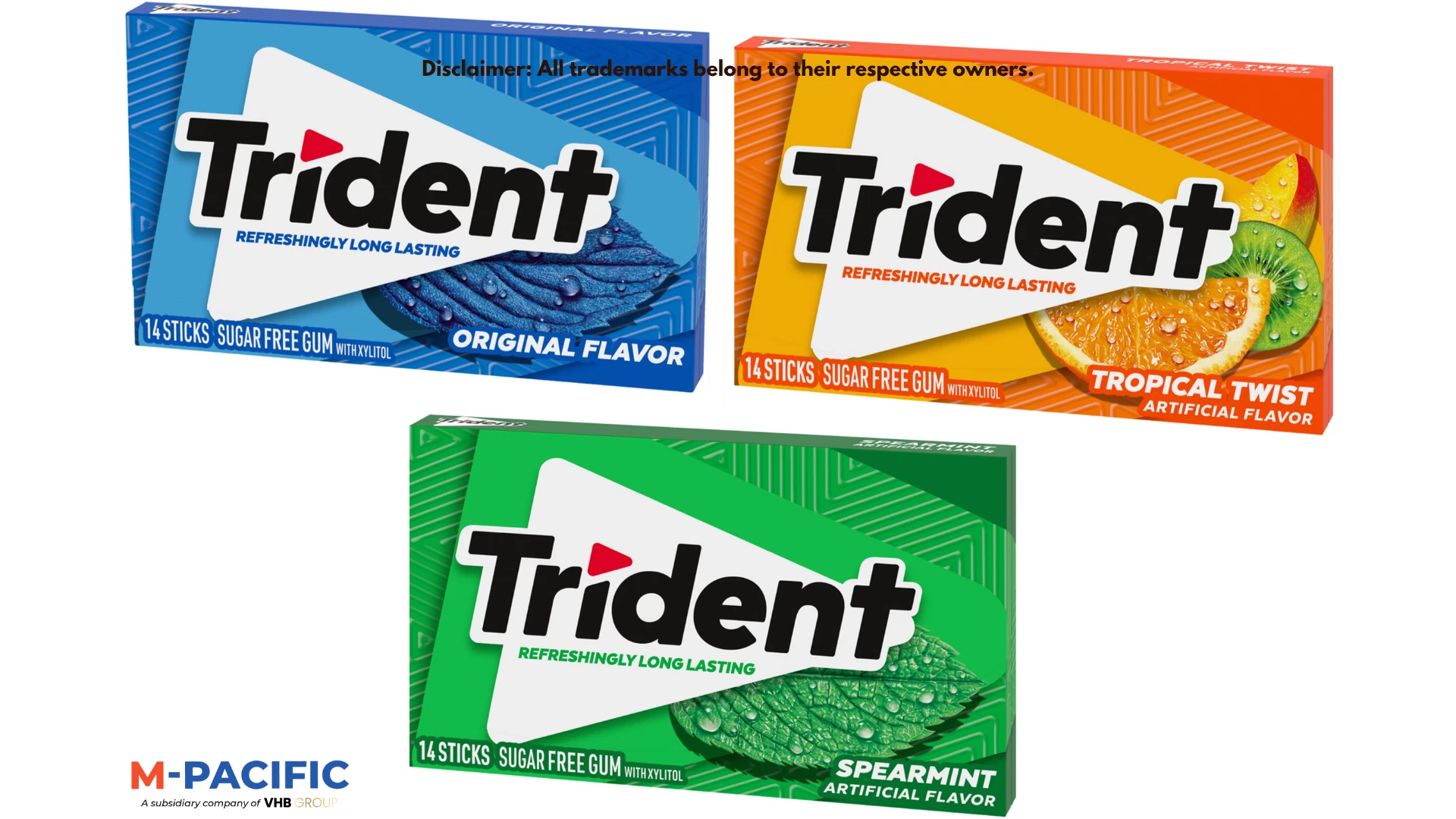
Evaluating Trident Chewing Gum Sugarfree Facts provides essential technical data for B2B confectionery buyers, food scientists, dental suppliers, retail category managers, and wholesale importers. Understanding the sugar-free polyol chemistry, Xylitol endothermic cooling, Recaldent enamel re-mineralization, and long-lasting flavor encapsulation of Trident Chewing Gum is critical when evaluating product efficacy, brand positioning, and regulatory compliance for international distribution.
Trident represents one of the world’s most scientifically tested oral care confectionery brands. Developed originally in 1964 by American Chicle (now owned by Mondelēz International), Trident was the first national sugar-free gum in the United States. This technical guide analyzes the chemical, physical, and dental facts governing Trident Chewing Gum formulations.
Table of Contents
- The Scientific Origin and Dental Heritage of Trident
- Polyol Sweetener Chemistry: Xylitol, Sorbitol, and Maltitol
- Recaldent ($CPP-ACP$) Enamel Re-Mineralization Science
- Long-Lasting Encapsulated Flavor Matrix Mechanics
- Quality Control Standards, Dietary Certifications, and Shelf-Life Physics
- Frequently Asked Questions (FAQ)
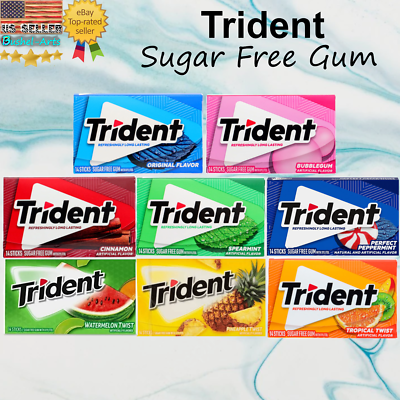
1. The Scientific Origin and Dental Heritage of Trident
Trident was developed in 1964 by the American Chicle Company in response to dental research establishing the connection between sugar consumption, oral bacterial fermentation, and tooth decay. By replacing sugar with synthetic saccharin and later polyols (Sorbitol and Xylitol), Trident created the sugar-free gum category.
In the 1970s, Trident launched its famous “4 out of 5 dentists surveyed recommend sugarless gum for their patients who chew gum” advertising campaign, establishing a clinical authority that remains a core commercial asset today.
2. Polyol Sweetener Chemistry: Xylitol, Sorbitol, and Maltitol
Trident Chewing Gum is 100% sugar-free, utilizing Polyols (Sugar Alcohols) to deliver sweetness, structural bulk, and dental benefits:
[Trident Sugar-Free Mastication]
                 │
                 ▼
[Xylitol & Sorbitol Dissolve in Saliva]
                 │
                 ├──────────────────────────────┐
                 ▼                              ▼
  [Negative Heat of Solution]         [Inhibits S. Mutans Bacteria]
  (Physical Mouth Cooling)            (Zero Acid Production / No Cavities)
- Xylitol Endothermic Cooling: Xylitol has a high negative heat of solution. As it dissolves in mouth saliva, it physically absorbs thermal energy, producing a cooling sensation on the tongue.
- Caries Prevention: Oral bacteria (Streptococcus mutans) cannot metabolize Xylitol into plaque acids, depriving bacteria of energy and preventing tooth enamel de-mineralization.
- Sorbitol and Maltitol: Function as bulk sweeteners that dissolve slowly during chewing, providing sustained sweetness release over 30+ minutes.
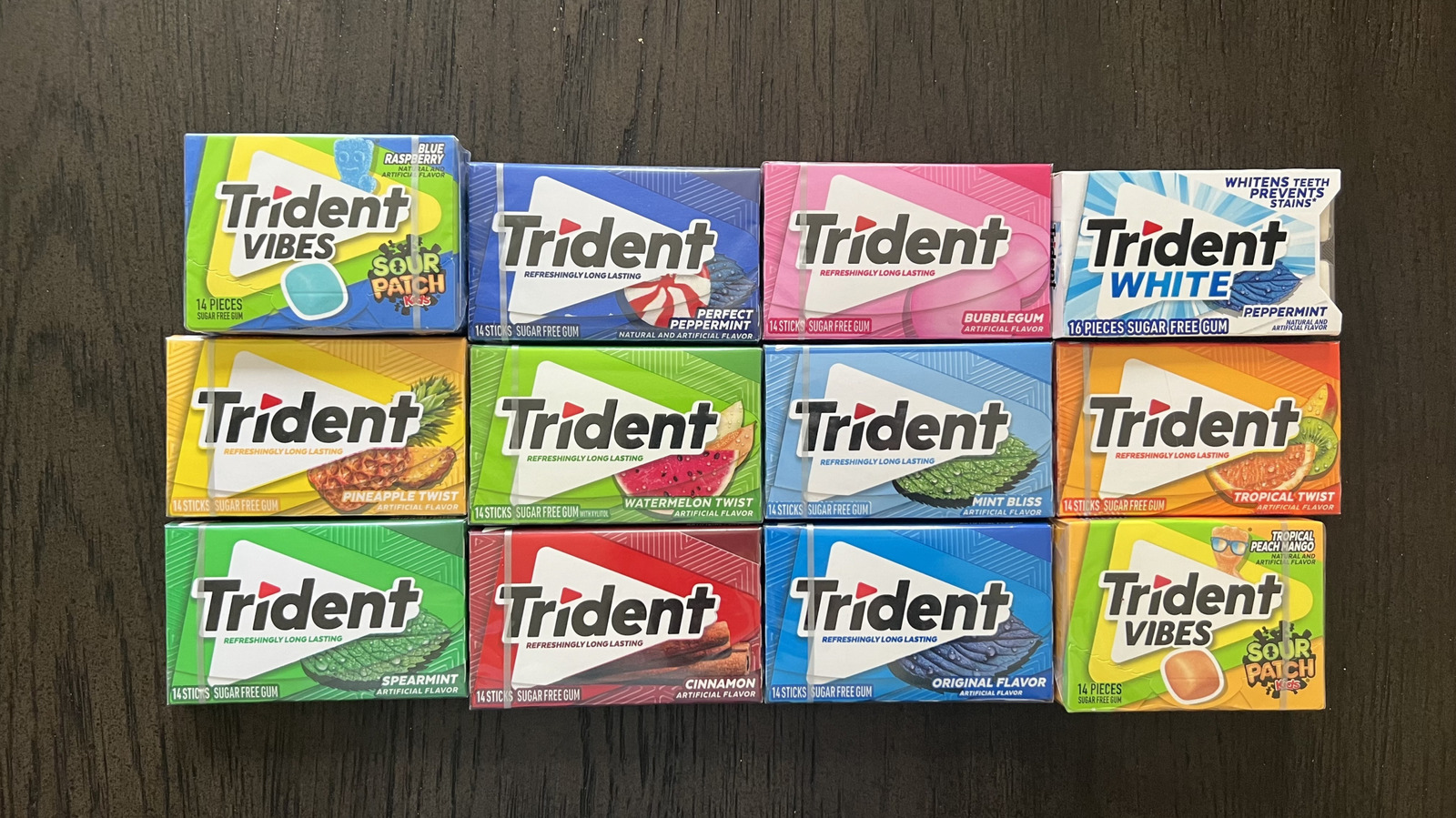
3. Recaldent ($CPP-ACP$) Enamel Re-Mineralization Science
Select premium Trident lines (such as Trident Xtra Care) incorporate Recaldent ($CPP-ACP$)—a patented milk-derived protein complex:
- Casein Phosphopeptide-Amorphous Calcium Phosphate ($CPP-ACP$): Recaldent binds to tooth surfaces, dental plaque, and surrounding soft tissue.
- Bio-Available Calcium and Phosphate: During chewing, Recaldent releases bio-available calcium ($Ca^{2+}$) and phosphate (PO_4^{3-}) ions into saliva, driving natural re-mineralization of acid-damaged enamel micro-lesions.
4. Long-Lasting Encapsulated Flavor Matrix Mechanics
To overcome the rapid flavor loss typical of traditional stick gums, Mondelēz engineers utilize Flavor Encapsulation Technology:
- Micro-Encapsulated Flavor Esters: High-potency flavor oils are encapsulated within food-grade polymer shells (like gelatin or gum arabic).
- Sequential Mastication Release: Chewing pressure sequentially ruptures these microscopic shells over time, continuously releasing fresh bursts of flavor for over 30 minutes of chewing.
5. Quality Control Standards, Dietary Certifications, and Shelf-Life Physics
Trident Chewing Gum undergoes strict analytical quality testing prior to export release:
- Microbiological Sterility: High-temperature gum base processing and low water activity ($a_w < 0.30$) render the gum commercially sterile.
- HPLC Polyol Assay: High-Performance Liquid Chromatography (HPLC) verifies that Xylitol, Sorbitol, and active sweetener percentages comply with statutory labeling claims.
- Factory Shelf Life: Unopened pocket packs and bottles maintain an official shelf life of 24 to 36 months from the manufacturing date under ambient storage conditions (15°C to 25°C).
Trident Chewing Gum Sugarfree Facts FAQ
Disclaimer: Unless otherwise stated, the images used in this article are the property of their respective owners. We do not claim ownership of any third-party images featured, and they are used here strictly for informational and educational purposes. If you are the copyright holder and wish to have an image removed, please contact us.