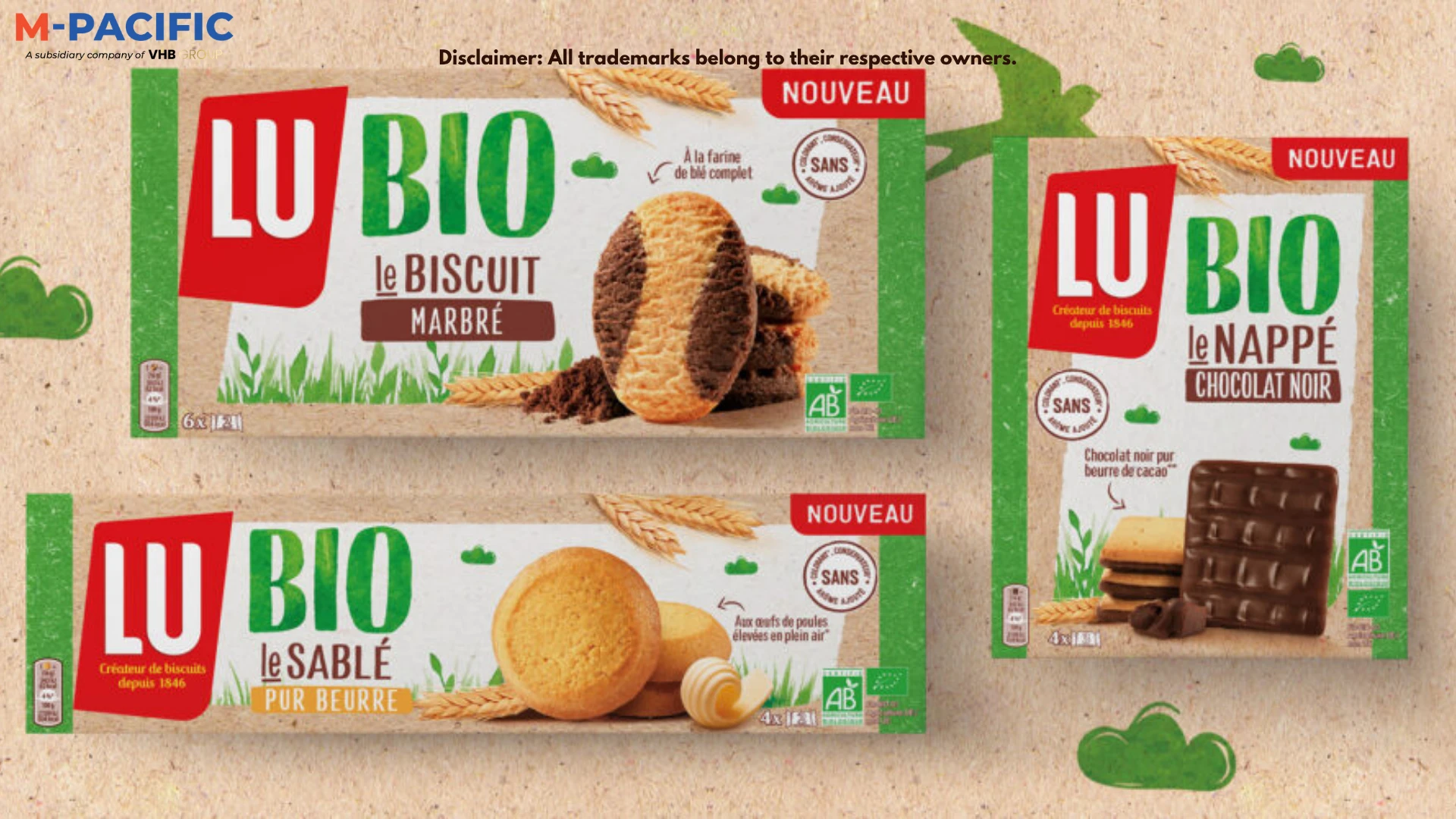
Sourcing LU French Biscuits Supply inventory provides international food distributors, specialty grocery chains, hotel groups, airline caterers, and FMCG trading partners with an iconic, high-margin revenue engine in the premium biscuit category. Manufactured by Mondelēz International—tracing its roots back to the legendary Lefèvre-Utile bakery founded in Nantes, France, in 1846—LU stands as a global symbol of French baking artistry, celebrated for signature creations such as Véritable Petit Beurre, Prince, Pim’s, and Bastogne.
For B2B procurement directors and supply chain managers working with consolidators like M-Pacific, managing full container load (FCL) consignments of wholesale LU biscuits requires evaluating product category mix, delicate butter fat preservation, moisture-barrier packaging, container payload weight-to-volume optimization, and customs clearance protocols. This technical guide evaluates the operational, financial, and logistical frameworks necessary to establish a highly profitable distribution model.
Table of Contents
- Global Market Demand and Commercial Positioning of LU Biscuits
- Product Portfolio Breakdown: Petit Beurre, Prince, Pim’s, and Bastogne
- Pure Butter Baking Science, Moisture Barrier Physics, and Texture Preservation
- Packaging Configurations, Container Freight Density, and Payload Yields
- B2B Sourcing Pathways: Mondelēz Europe Direct vs. FMCG Consolidators
- Landed Cost and Gross Margin Calculation Framework
- Import Compliance, Harmonized System Codes, and Customs Documentation
- Frequently Asked Questions (FAQ)
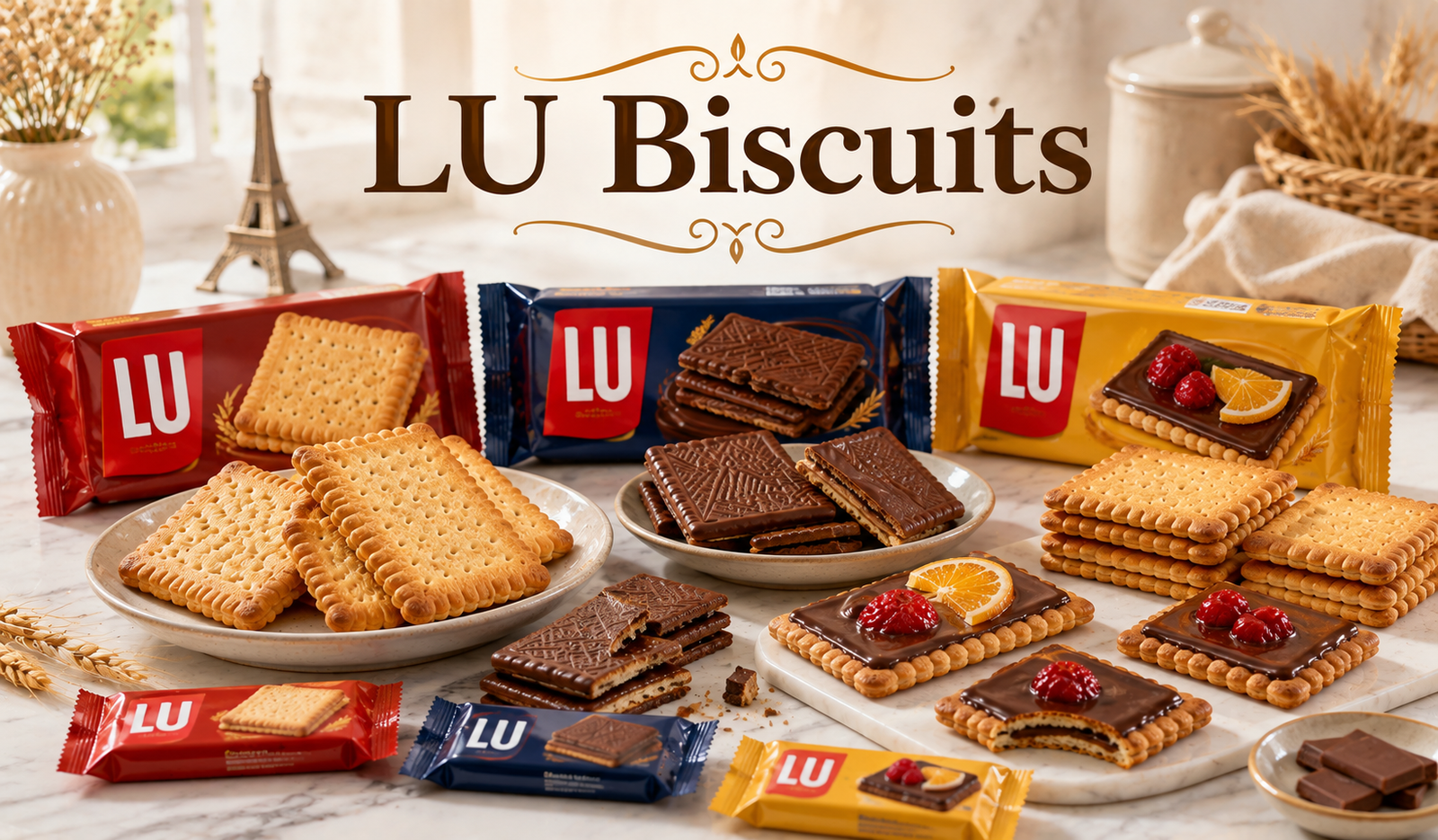
1. Global Market Demand and Commercial Positioning of LU Biscuits
The global premium biscuit market continues to expand steadily, driven by consumer affinity for European heritage, real butter ingredients, and sophisticated tea-time pairing snacks. LU commands a dominant market share across France, Western Europe, North America, French overseas territories, and international gourmet grocery markets.
Adding wholesale LU French Biscuits supply to a B2B distribution catalog delivers distinct commercial advantages:
- Unmatched Pre-Sold Heritage Authority: Over 175 years of French baking heritage generate powerful consumer trust and willingness to pay premium price points.
- Multi-Channel Distribution Breadth: Operates dual footprints across high-volume retail grocery (supermarkets, hypermarkets, specialty food halls) and premium food service (hotels, airline catering, corporate pantries).
- Exceptional Sales Value Density: High retail price per kilogram relative to physical cube volume yields strong gross profit margin density per ocean shipping container.
2. Product Portfolio Breakdown: Petit Beurre, Prince, Pim’s, and Bastogne
Curating an optimal LU inventory mix requires balancing historic flagship lines with high-velocity chocolate and fruit-filled variants:
Historic Flagship Lines
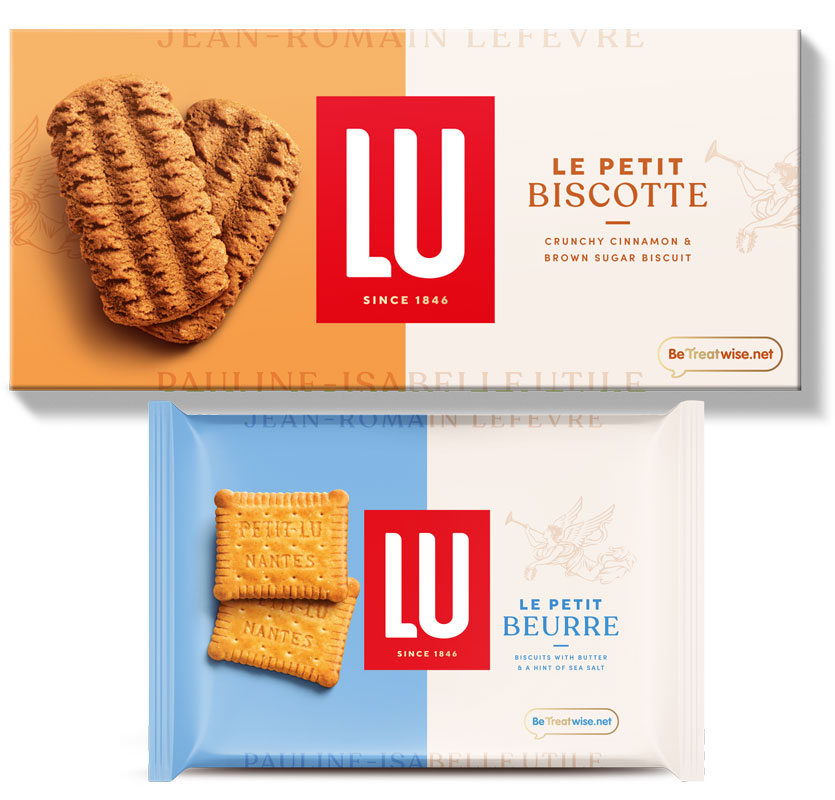
- LU Véritable Petit Beurre: The legendary rectangular butter biscuit created in 1886. Formulated with 13% real French butter, flour, sugar, and milk, recognized by its four corner ears (representing the 4 seasons) and 52 teeth (representing the 52 weeks of the year).
- LU Bastogne: A crunchy Belgian-style speculoos biscuit baked with candidate sugar syrup and aromatic cinnamon.
Chocolate and Fruit-Filled Lines
- LU Prince: The leading European sandwich biscuit, featuring two crispy wheat biscuits filled with rich chocolate or vanilla cream.
- LU Pim’s: A delicate sponge cake disc topped with a tangy fruit jam center (Orange, Raspberry, or Pear) and coated with crisp dark European chocolate.
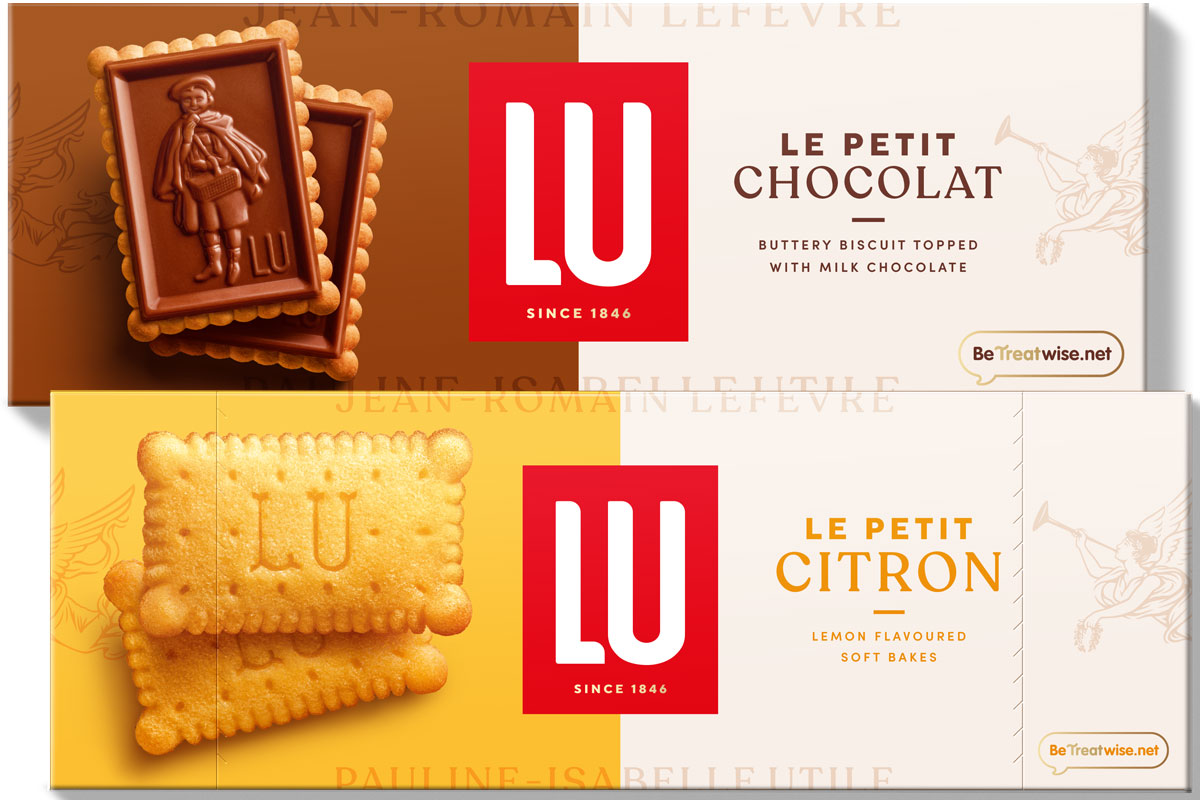
- LU Petit Écolier: Classic Petit Beurre biscuits topped with a thick slab of milk, dark, or white hazelnut chocolate embossed with the schoolboy icon.
3. Pure Butter Baking Science, Moisture Barrier Physics, and Texture Preservation
LU biscuits rely on precise European baking chemistry and protective barrier packaging to maintain crispness over long ocean voyages:
[Wheat Flour + Pure French Butter (13%+) + Sugar]
                        │
                        ▼
[Continuous Tunnel Baking (Moisture Reduction < 1.5%)]
                        │
                        ▼
[Automated Flow-Wrap in Metallized Polypropylene Film]
                        │
                        ▼
[Pristine Crispy French Biscuit with 12-15 Month Shelf Life]
Pure Butter Fat Crystallization
Flagship lines like Petit Beurre contain over 13% pure butter fat. During baking, butter fat coats flour proteins, limiting gluten formation to create a delicate, crispy fracture texture. To prevent lipid oxidation and butter rancidity, oxygen contact must be minimized.
High-Barrier Metallized Flow-Wrap Laminates
LU roll packs and tray boxes utilize a 3-ply flexible laminate (Oriented Polypropylene / Metallized PET / Polyethylene). The metallized aluminum layer provides an absolute barrier against moisture vapor transmission and light, shielding delicate butter fats from photo-oxidation and preserving crispness (moisture content below 1.5%) over a 12 to 15-month shelf life.
4. Packaging Configurations, Container Freight Density, and Payload Yields
LU biscuits offer high volumetric freight density, packing tightly into corrugated master cartons for efficient ocean shipping:
| Product SKU Line | Packaging Unit | Master Case Packing | Payload per 20ft FCL | Primary Distribution Target |
| Petit Beurre Roll | 200g Roll Pack | 24 Packs / Case | 1,500 – 1,700 Cases (~12.5 Tons) | Supermarkets & Pharmacies |
| Prince Sandwich Roll | 300g Roll Pack | 20 Packs / Case | 1,400 – 1,600 Cases (~13.0 Tons) | Hypermarkets & Grocery Aisles |
| Pim’s Cake Box | 150g Box | 24 Boxes / Case | 1,200 – 1,400 Cases (~7.5 Tons) | Gourmet Food Halls & Specialty |
| Petit Écolier Box | 150g Box | 18 Boxes / Case | 1,400 – 1,600 Cases (~8.5 Tons) | Premium Retail & Duty-Free |
5. B2B Sourcing Pathways: Mondelēz Europe Direct vs. FMCG Consolidators
Commercial buyers access wholesale LU French Biscuits inventory through two primary procurement channels:
Direct Mondelēz Europe Contracts
Enterprise distributors establish direct annual purchasing agreements with Mondelēz Europe (France).
- Advantages: Lowest factory-gate pricing, direct access to fresh manufacturing lots, customized promotional allowance support, and guaranteed supply continuity.
- Trade-Offs: Requires massive annual volume commitments (typically 5+ FCLs monthly) and strict territorial distribution restrictions.
FMCG Export Consolidators
Independent wholesalers source via master FMCG consolidators like M-Pacific.
- Advantages: Flexible Minimum Order Quantities (MOQs starting at 1x20ft FCL) and mixed-container capabilities (combining LU with Cadbury, Trident, or Kinh Do).
6. Landed Cost and Gross Margin Calculation Framework
Procurement teams calculate net landed unit costs across ocean shipping lanes by applying a structured calculation process:
- Step 1: Determine Total Shipping Overhead = Ocean Freight Charges + Import Customs Duties + Marine Insurance Premiums + Local Port Drayage.
- Step 2: Calculate Landed Cost per Master Case = Free On Board (FOB) Purchase Case Price + (Total Shipping Overhead / Total Cases Loaded).
- Step 3: Calculate Landed Cost per Saleable Unit = Total Landed Cost per Master Case / Saleable Units per Case (e.g., 24 packs).
- Step 4: Calculate Net Profit Margin Percentage = [(Target Wholesale Selling Price – Landed Unit Cost) / Target Wholesale Selling Price] x 100.
7. Import Compliance, Harmonized System Codes, and Customs Documentation
Clearing food imports through international customs requires complete documentation verified by origin accredited testing laboratories:
Mandatory Export Documentation Suite
- Commercial Shipping Documents: Master Bill of Lading (B/L), Commercial Invoice, Detailed Packing List, and Certificate of Origin (COO / EUR.1 for European trade).
- Quality & Food Safety Certificates: Batch Certificate of Analysis (CoA) detailing moisture, fat, sugar percentage, and microbiological sterility.
- Harmonized System Classification: Classified under HS Code 1905.31.00 (Sweet biscuits) or HS Code 1905.90.90 (Pastries and cakes – Pim’s).
LU French Biscuits Supply FAQ
Disclaimer: Unless otherwise stated, the images used in this article are the property of their respective owners. We do not claim ownership of any third-party images featured, and they are used here strictly for informational and educational purposes. If you are the copyright holder and wish to have an image removed, please contact us.