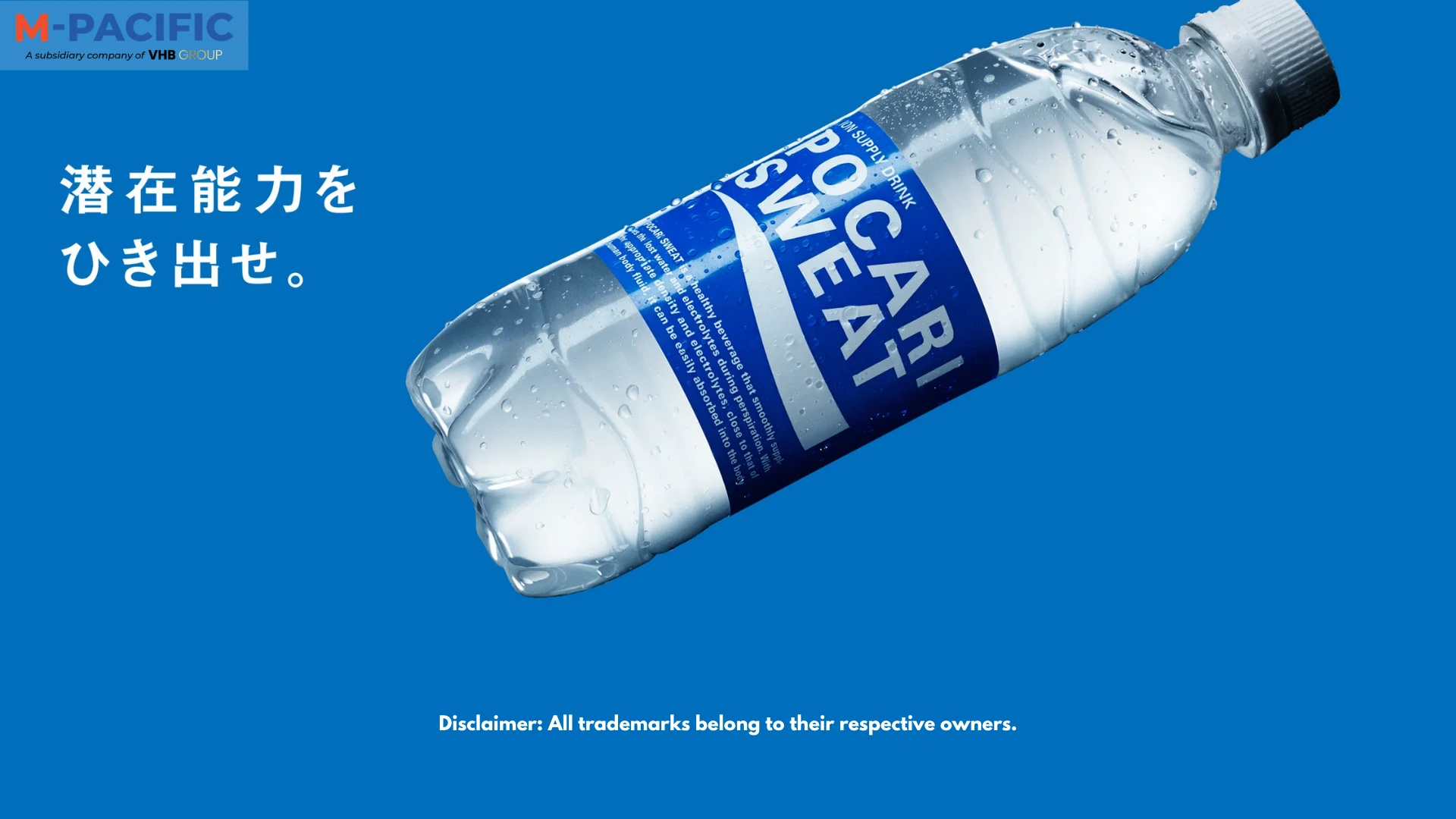
Sourcing Japanese Pocari Sweat Drink Wholesale inventory provides international beverage distributors, supermarket chains, cash-and-carry wholesalers, sports nutrition suppliers, and FMCG trading partners with an essential, high-velocity revenue engine in the global isotonic rehydration category. Manufactured by Otsuka Pharmaceutical Co., Ltd.—one of Japan’s premier pharmaceutical and beverage conglomerates established in 1921—Pocari Sweat stands as Asia’s leading ion-supply drink, celebrated for its scientific electrolyte balance mirroring human body fluid composition.
For B2B procurement managers and supply chain directors working with trading consolidators like M-Pacific, managing full container load (FCL) consignments of wholesale Pocari Sweat requires evaluating product packaging SKUs (PET bottles vs. aluminum cans vs. sachet powders), volumetric ocean freight yields, thermal transit controls, and customs clearance protocols. This technical guide evaluates the operational, financial, and logistical frameworks necessary to establish a highly profitable distribution model.
Table of Contents
- Global Market Demand and Commercial Positioning of Pocari Sweat
- Product Portfolio Breakdown: PET Bottles, Aluminum Cans, and Powder Packs
- Ion-Supply Chemistry: Electrolyte Osmolality and Rapid Cellular Hydration
- Packaging Configurations, Container Freight Density, and Payload Yields
- B2B Sourcing Pathways: Otsuka Pharmaceutical Direct vs. FMCG Consolidators
- Landed Cost and Gross Margin Calculation Framework
- Import Compliance, Harmonized System Codes, and Customs Documentation
- Frequently Asked Questions (FAQ)
1. Global Market Demand and Commercial Positioning of Pocari Sweat
The global isotonic and functional sports drink market continues to expand rapidly, driven by consumer focus on daily hydration, wellness, and physical recovery. Pocari Sweat commands an exceptional market presence across Japan, Southeast Asia, East Asia, the Middle East, and Western export markets.
Adding wholesale Pocari Sweat inventory to a B2B distribution catalog delivers distinct commercial advantages:
- Unmatched Clinical Authority: Developed by a pharmaceutical company, Pocari Sweat benefits from deep consumer trust as nature’s ultimate rehydration solution.
- Rapid Cash Conversion: As a daily functional health beverage, Pocari Sweat moves rapidly through pharmacies, convenience forecourts, and supermarket beverage aisles.
- High Sales Value Density: Premium functional positioning commands higher retail selling prices per liter compared to standard soft drinks, yielding strong profit margins per ocean container.
2. Product Portfolio Breakdown: PET Bottles, Aluminum Cans, and Powder Packs
Curating an optimal Pocari Sweat inventory mix requires selecting the right combination of packaging formats tailored to target consumer channels:
Core Ready-To-Drink (RTD) Lines
- Pocari Sweat PET Bottles (350ml / 500ml / 900ml / 1.5L): The primary retail line packaged in signature blue and white ergonomic PET plastic bottles.
- Pocari Sweat Aluminum Cans (245ml / 330ml): Cold-chilling aluminum cans engineered for fast-drinking convenience stores and vending machines.
Powder and Concentrated Lines
- Pocari Sweat Powder Sachets (13g / 74g Packets): Dehydrated electrolyte powder sachets that reconstitute in water to make 200ml or 1.0L of isotonic drink, offering ultra-high freight weight efficiency for long-distance transport.
3. Ion-Supply Chemistry: Electrolyte Osmolality and Rapid Cellular Hydration
Pocari Sweat rehydrates the human body faster than pure water through precise physiological chemistry:
[Dehydrated Body Cells + Low Plasma Volume]
                     │
                     ▼
[Pocari Sweat Ingestion (Isotonic Solution ~280-300 mOsm/kg)]
                     │
                     ▼
[Balanced Ions ($Na^+$, $K^+$, $Ca^{2+}$, $Mg^{2+}$) Match Body Fluid]
                     │
                     ▼
[Rapid Small Intestine Osmotic Absorption & Water Retention]
Isotonic Osmolality Calibration
Pocari Sweat is formulated to match the human body’s natural fluid osmolality (280 to 300 mOsm/kg). When consumed, the isotonic fluid passes through the stomach wall and absorbs rapidly across the small intestine into the bloodstream.
Essential Electrolyte Matrix
Contains precise ratios of sodium ($Na^+$), potassium ($K^+$), calcium ($Ca^{2+}$), and magnesium ($Mg^{2+}$) ions paired with a mild carbohydrate concentration (5.5% glucose/sucrose), enabling optimal cellular fluid retention during heat stress or physical exertion.
4. Packaging Configurations, Container Freight Density, and Payload Yields
Pocari Sweat RTD bottles are dense liquids (density ~1.03 g/cm³), requiring ocean containers to balance weight limits with physical volume.
| Packaging SKU Format | Standard Unit Volume | Master Unit Packing | Cartons per 20ft FCL | Net Payload per 20ft Container | Primary Distribution Channel |
| Medium PET Bottle | 500 ml | 24 Bottles / Case | 1,400 Cases | 17.3 Metric Tons | Supermarkets & Pharmacies |
| Large Family Bottle | 900 ml / 1.5 Liter | 12 or 8 Bottles / Case | 1,200 Cases | 17.5 Metric Tons | Hypermarkets & Wholesale Clubs |
| Aluminum Can | 245 ml / 330 ml | 24 Cans / Case | 1,800 Cases | 15.0 Metric Tons | Vending Machines & C-Stores |
| Powder Packet Box | 13g x 5 Sachets | 20 Boxes / Case | 2,200 Cases | 3.5 Metric Tons (Low Weight) | Sports Supply & Military |
5. B2B Sourcing Pathways: Otsuka Pharmaceutical Direct vs. FMCG Consolidators
Commercial buyers access wholesale Pocari Sweat inventory through two primary procurement channels:
Direct Otsuka Pharmaceutical Contracts
Enterprise distributors establish direct supply agreements with Otsuka Pharmaceutical Co., Ltd. in Tokyo, Japan, or regional operating subsidiaries (e.g., Amerta Indah Otsuka Indonesia).
- Advantages: Lowest factory-gate pricing, direct access to fresh manufacturing lots, and promotional allowance support.
- Trade-Offs: Requires substantial annual volume commitments (typically 5+ FCLs monthly) and strict territorial distribution exclusivity.
FMCG Export Consolidators
Independent wholesalers source via master FMCG consolidators like M-Pacific.
- Advantages: Flexible Minimum Order Quantities (MOQs starting at 1x20ft or 1x40ft FCL) and mixed-container capabilities (combining Pocari Sweat with Chilsung Cider, Chinese Coca-Cola, or Genki Forest).

6. Landed Cost and Gross Margin Calculation Framework
Procurement teams calculate net landed unit costs across ocean shipping lanes by applying a structured calculation process:
- Step 1: Determine Total Shipping Overhead = Ocean Freight Charges + Import Customs Duties + Marine Insurance Premiums + Local Port Drayage.
- Step 2: Calculate Landed Cost per Master Case = Free On Board (FOB) Purchase Case Price + (Total Shipping Overhead / Total Cases Loaded).
- Step 3: Calculate Landed Cost per Saleable Unit = Total Landed Cost per Master Case / Saleable Units per Case (e.g., 24 bottles).
- Step 4: Calculate Net Profit Margin Percentage = [(Target Wholesale Selling Price – Landed Unit Cost) / Target Wholesale Selling Price] x 100.
7. Import Compliance, Harmonized System Codes, and Customs Documentation
Clearing isotonic drink imports through international customs requires complete compliance documentation verified by accredited testing laboratories:
Essential Export Documentation Suite
- Commercial Shipping Documents: Master Bill of Lading (B/L), Commercial Invoice, Detailed Packing List, and Certificate of Origin (COO).
- Quality & Safety Certificates: Batch Certificate of Analysis (CoA) detailing electrolyte concentrations ($Na^+$, $K^+$), Brix density, and microbiological sterility.
- Harmonized System Classification: Classified under HS Code 2202.99.90 / 2202.90.90 (Electrolyte sports drinks / non-alcoholic functional beverages).
Pocari Sweat Wholesale FAQ
Disclaimer: Unless otherwise stated, the images used in this article are the property of their respective owners. We do not claim ownership of any third-party images featured, and they are used here strictly for informational and educational purposes. If you are the copyright holder and wish to have an image removed, please contact us.