Selecting the correct Japanese KitKat Flavors Pack SKUs is a critical operational step for FMCG importers, international supermarket chains, and wholesale distributors aiming to capture the lucrative sweet biscuit market. The manufacturing lines offer a highly specific range of multi-pack bags and premium gift boxes engineered to meet diverse consumer consumption habits—from daily pantry stocking to high-volume holiday gifting and travel retail.
For global procurement teams who are currently optimizing their Japanese KitKat Flavors Bulk import strategy, familiarizing yourself with the exact physical dimensions, gram weights, and corrugated master carton configurations of these SKUs is absolutely mandatory. This knowledge allows supply chain directors to perfectly maximize voluminous ocean container payloads (in refrigerated reefers) and forecast accurate gross profit margins prior to ordering.
Table of Contents
- Understanding Core Mini Multi-Pack Formats
- Rigid Box and Gifting Formats
- Carton Packaging and Master Logistics for Japanese KitKat Flavors Pack SKUs
- How Retail Packaging Drives Velocity
- Conclusion

Understanding Core Mini Multi-Pack Formats
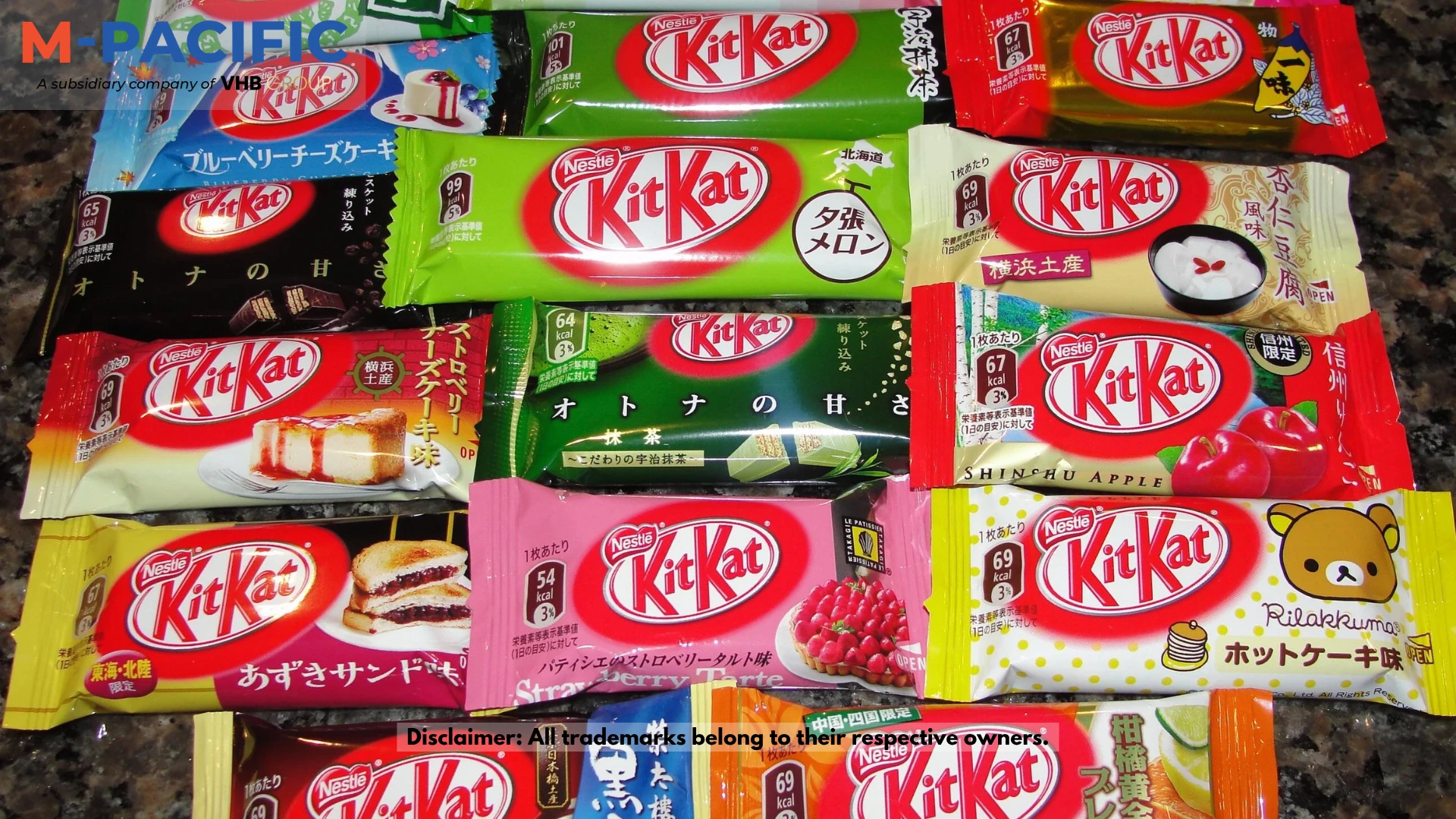
The foundation of any successful FMCG confectionery portfolio begins with the core, high-turnover product variants. The standard multi-pack bags are universally recognized by the iconic logo and bright, flavor-specific color-coding, making them instantly identifiable on crowded retail shelves.
The 10 to 14 Piece Mini Bags
The undisputed flagship product in the export lineup is the multi-pack bag containing individually wrapped “mini” bars (each roughly 11g). In recent years, Nestlé Japan transitioned from glossy plastic outer bags to matte, recyclable paper-based packaging for sustainability. These specific SKUs (often containing 10, 12, or 14 minis depending on the flavor density) offer the optimal volume for household pantries. This format is meticulously designed to sit on standard shelving or in checkout displays, accounting for a massive percentage of international export volume.
Rigid Box and Gifting Formats
To aggressively compete in the travel retail and gifting sector, the manufacturing facilities produce high-end rigid cardboard boxes. Integrating these specialty bulk packs into your wholesale container load dynamically diversifies your retail offering.
Souvenir and Regional Boxes
Unlike the standard bags designed for domestic consumption, the premium souvenir boxes (often containing 10 to 20 individually wrapped minis) are explicitly designed for gifting (Omiyage culture). These boxes feature high-end graphics denoting specific Japanese prefectures or seasonal events (like Sakura cherry blossoms). Operationally, the rigid cardboard prevents any product breakage during transit and commands a significantly higher retail price point, offering superior margins.

Carton Packaging and Master Logistics for Japanese KitKat Flavors Pack SKUs
When procuring these products in bulk, buyers do not purchase individual retail bags; they purchase heavy-duty master cartons. A deep understanding of the Japanese KitKat Flavors Pack SKUs packaging configurations is absolutely essential for calculating exact landed costs and effectively managing warehouse operations.
| SKU Variant | Package Content | Retail Format | Master Carton Strategy | Primary Retail Channel |
| Standard Mini Bag | 10 – 14 Minis | Paper/Plastic Outer Bag | 12 – 24 Bags per Carton | Supermarkets, Asian Grocers |
| Souvenir Box | 10 – 20 Minis | Rigid Cardboard Box | 12 Boxes per Carton | Travel Retail, Gifting |
| Single Mini | 1 Mini (11g) | Flow-Wrap Foil | Bulk Display Carton | Convenience Stores, Kiosks |
How Retail Packaging Drives Velocity
The physical design of the product packaging plays a massive role in consumer purchasing behavior and product safety. The highly visible branding acts as a visual anchor in the biscuit aisle, instantly drawing the consumer’s eye to unique flavor profiles like “Matcha Latte” or “Strawberry”.

Crucially, the individual inner wrappers provide an absolute moisture barrier. This prevents the delicate wafers from absorbing humidity and becoming soft, while simultaneously protecting the fat-based chocolate coatings from oxidizing during long, temperature-controlled ocean transit. Furthermore, the modern paper-based outer bags appeal heavily to eco-conscious consumers, driving increased sales in Western European and North American retail environments.
Conclusion
Mastering the catalog of available packaging formats is the baseline for executing a highly profitable international FMCG import strategy. By understanding the distinct physical and commercial differences between the traditional mini bags and the premium rigid gifting boxes, distributors can selectively curate perfect reefer container loads that guarantee rapid stock liquidation in their specific target markets. To optimize your wholesale inventory and secure the best FOB pricing, reach out to your designated procurement consolidator today.
KitKat Packaging SKUs FAQ
Disclaimer: Unless otherwise stated, the images used in this article are the property of their respective owners. We do not claim ownership of any third-party images featured, and they are used here strictly for informational and educational purposes. If you are the copyright holder and wish to have an image removed, please contact us.